


He Actively Needs an Enemy
Most athletes tolerate criticism; Cristiano Ronaldo actively courts it. He has famously stated, 'I don't mind people hating me, because it pushes me'. This isn't just a tough-guy persona; it’s a core psychological strategy. In a revealing interview, he went
further, admitting, 'I need an enemy. It is part of the business'. For Ronaldo, the boos from an away crowd or a scathing article from a pundit aren't obstacles. They are fuel. He has trained himself to reframe that hostile energy, which would cause many players to shrink, as a direct challenge. This explains his incredible record in high-pressure away games, where the environment is most hostile. He doesn't just endure the negativity; he metabolises it into focus and determination, manufacturing motivation where others find only pressure.
Unshakeable, Almost Obsessive, Self-Belief
Central to Ronaldo’s mental arsenal is a profound and unwavering belief in his own abilities. This isn't simple confidence; it’s a deep-seated conviction built on years of relentless work. When faced with criticism that contradicts his positive self-perception, a state of cognitive dissonance is created. Because his belief in himself is so strong and non-negotiable, his brain resolves this conflict by dismissing the external criticism and using the energy from that contradiction to work even harder to prove it wrong. He doesn't chase records; he believes records will come to him as a natural result of his dedication to excellence. This allows him to approach every match, no matter the stakes, with a calm conviction that he has the capacity to deliver. It’s a self-belief born from discipline, not from arrogance.
Visualising Success Before It Happens
Another key, though less public, aspect of his mental preparation is the use of visualisation. Sports psychologists note that Ronaldo mentally rehearses success before he even steps onto the pitch. He reportedly visualises himself scoring goals, executing difficult plays, and winning matches. This technique is a powerful tool used by many elite athletes to build confidence and reduce anxiety in high-pressure moments. By repeatedly 'pre-living' a successful outcome in his mind, he strengthens the neural pathways associated with that success. When the moment arrives in a real game—a last-minute free kick or a crucial penalty—his mind has already been there and done that. It transforms a moment of immense pressure into a familiar scenario, allowing him to block out distractions and execute with extreme focus.
Reframing Failure as a Lesson
While his public persona is one of near-perfection, Ronaldo’s mindset is also defined by his resilient response to setbacks. He views failure not as a final verdict, but as an opportunity to learn and grow. This 'growth mindset' is crucial. Instead of dwelling on a mistake, he focuses on self-compassion balanced with accountability. After missing a critical penalty for Manchester United as a young player, he took responsibility but didn't engage in destructive self-criticism. He emphasized learning from the error. This ability to reset mentally prevents setbacks from spiraling. For him, criticism and failure are data points. They provide information on where to improve, making his relentless pursuit of perfection even more efficient. He understands that adversity is an inevitable part of the journey.
The Discipline of a Meticulous Routine
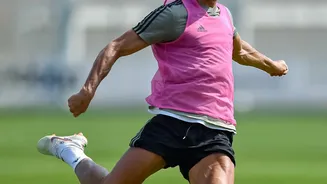
Ronaldo's legendary work ethic is not just about physical training; it's a mental trick in itself. His famously strict diet, fitness regimen, and daily routines create a foundation of discipline that translates directly into mental stability. This unwavering commitment provides a sense of control and predictability in a career filled with chaos and uncertainty. When external factors like media criticism or fan pressure become overwhelming, his routine is a grounding force. By focusing on the immediate, controllable tasks—the next training session, the next healthy meal—he compartmentalises pressure and stays focused on the 'now'. This discipline ensures he is always in peak condition, which in turn feeds his self-confidence and reinforces his belief that he is prepared for any challenge. It’s a cycle where physical discipline builds mental fortitude, and mental fortitude demands physical discipline.