







From Rockets to Roads
A significant challenge in space travel is overcoming Earth's gravity. Every gram counts. To solve this, the Indian Space Research Organisation (ISRO) has spent decades perfecting ultra-lightweight, super-strong materials like carbon fibre composites
for its launch vehicles and satellites. These materials need to withstand extreme temperatures and forces while being as light as possible. Now, this expertise is finding a crucial application in a completely different vehicle: the electric car. The biggest hurdle for electric vehicles (EVs) is 'range anxiety', largely driven by the weight of their batteries. By using these space-age composites to build car bodies and components, manufacturers can drastically reduce a vehicle's weight. A lighter car requires less energy to move, which means the same battery can take it much further. This transfer of technology makes EVs more practical and appealing, directly accelerating the transition away from fossil-fuel-powered transport.
The Battery Breakthrough
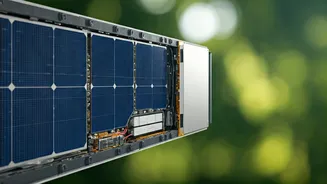
Satellites and space capsules are isolated islands of technology hurtling through a vacuum. They need their own reliable, long-lasting, and high-density power sources. For years, ISRO has been developing its own lithium-ion (Li-ion) batteries specifically for this purpose. These aren't your standard phone batteries; they are designed for extreme reliability and performance in the harshest conditions. In a landmark move, ISRO's Vikram Sarabhai Space Centre (VSSC) decided to transfer this technology to commercial industry. The goal? To help create a domestic ecosystem for manufacturing Li-ion batteries. This has profound implications for India's green energy goals. Not only does it support the EV industry, but it also provides a solution for grid-scale energy storage. As India expands its solar and wind power capacity, storing that intermittent energy is vital. High-performance, locally-produced batteries, born from space research, are a key part of that puzzle.
Fuel for a Greener Future
ISRO is one of the few space agencies in the world to master cryogenic engine technology, which uses super-cooled liquid hydrogen and liquid oxygen as propellant. This is one of the most efficient and powerful forms of chemical propulsion, but it's also incredibly complex to handle fuels at temperatures below -250°C. This deep expertise in cryogenics is now becoming unexpectedly valuable for the 'green hydrogen' economy. Green hydrogen is produced using renewable energy and is seen as a clean fuel of the future for heavy industry and long-haul transport. However, storing and transporting hydrogen safely and efficiently is a major challenge. ISRO's decades of experience in managing liquid hydrogen for its GSLV rockets give India a unique head start in developing the infrastructure, safety protocols, and storage technologies needed to make the hydrogen economy a reality.
An Eye in the Sky for Earth's Health
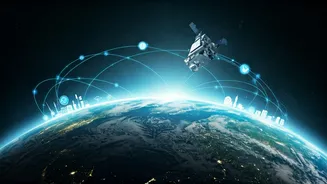
Beyond technological spin-offs, India's space program contributes to green initiatives in a more direct way: data. ISRO's vast constellation of Earth Observation satellites provides a constant stream of high-resolution data on our planet's health. These satellites are the unsung heroes of environmental management. They monitor deforestation in real-time, track the health of agricultural crops to optimise water use, measure air and water pollution levels in our cities, map coastal erosion, and provide invaluable data for predicting and mitigating the effects of climate change, like cyclones and floods. This ability to see the big picture from space allows policymakers to make smarter, data-driven decisions to protect our environment. In this sense, the space program acts as our planet's check-up, giving us the information we need to heal it.