





Know Your Furniture's True Size
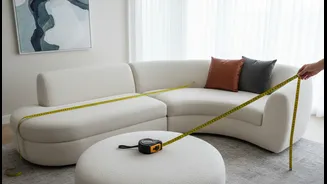
Before you can measure your home, you need the exact dimensions of the piece you want to buy. Look on the product page online or ask in-store for the height, width, and depth. For larger items like sofas and armchairs, there is a fourth, critical measurement:
the diagonal depth. This is measured from the bottom front corner of the furniture to the top back corner. Delivery teams often tilt furniture to navigate tight spaces, and this diagonal measurement is the key to knowing if a piece can pivot through a tricky doorway. Always measure the furniture at its widest points, including arms or decorative overhangs. A good trick is to use painter's tape on your floor to mark out the furniture's footprint to get a real sense of its scale in your room.
Measure the Complete Delivery Path
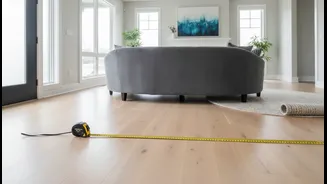
A successful delivery depends on the entire journey from the truck to the final room, not just the front door. Think like a delivery professional and walk the path yourself, measuring every single point of entry and passage. This includes the main entrance, all interior doorways, hallways, and stairwells. Use a metal tape measure for accuracy and write everything down. Note any potential obstructions along the way, like wall-mounted light fixtures, radiators, or low-hanging ceiling fans that could get in the way. The narrowest point in this entire path is your most important measurement; if the furniture can't pass that spot, it won't matter how wide your front door is.
Doorways: The First Hurdle
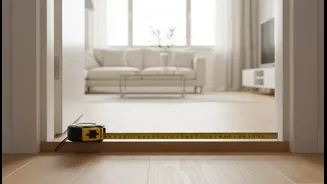
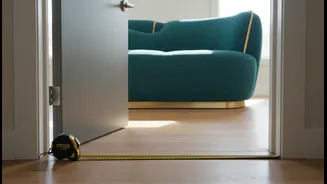
When measuring a doorway, you need the clear opening space. Measure the height from the floor to the top of the door frame and the width from one side of the frame to the other. Remember to account for how the door swings open and the space taken up by the door itself. If a door opens into a narrow hallway, you also need to measure the clearance from the edge of the open door to the opposite wall, as this is the true space you have to make a turn. The basic rule is that your doorway's width must be greater than at least one of the furniture's key dimensions: its depth, height, or diagonal depth. If it is, the piece can usually be angled through.
Stairwells and Tight Corners
Stairs are often the most challenging part of a delivery. Start by measuring the width of the staircase, making sure to account for handrails or banisters that reduce the usable space. Next, check for ceiling height. Measure from the bottom step up to the ceiling, and also at any landings where the furniture will need to be turned. A low ceiling over a landing can prevent a tall item from being stood upright to make a pivot. For turns in hallways or on stair landings, measure the width, depth, and ceiling height of the landing space. These corners are where the delivery team will need room to stop and reposition the item.
For Apartments: The Lift is Key
If you live in an apartment building, the lift is a critical checkpoint that is often forgotten. Do not assume your furniture will fit just because it's a large lift. First, measure the height and width of the lift's door opening. Then, measure the interior of the lift cabin: the height, width, and depth. Just like with a sofa, you should also measure the lift's interior diagonal, from the bottom front corner to the top back corner. Pay attention to any handrails or control panels inside the lift that might reduce the available space. It's always a good idea to inform your building management about an upcoming large delivery, as they may have a designated service elevator with more clearance.