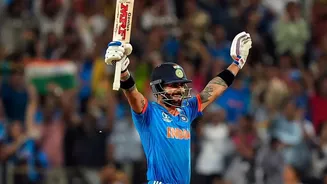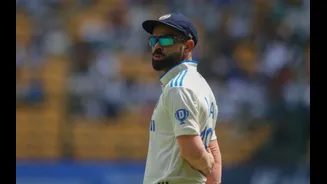






Virat Kohli: The Unshakeable Spirit
Before he became the 'King' of modern cricket, a young Virat Kohli faced a bitter rejection that could have derailed his career. During state selection trials for the Delhi U-15 team, he performed well but was overlooked. Kohli later revealed that his father
was told a bribe was needed to secure his spot. His father, a man of principle, flatly refused, stating that his son would play on merit or not at all. A heartbroken Kohli cried for hours, unable to understand the injustice. However, that incident instilled in him a fierce determination to be so good that he could not be ignored. He channelled his anger and disappointment into his training, a fire that would fuel his journey to becoming not just a star for Delhi, but the captain of India and one of the greatest batsmen in the history of the sport.
Sourav Ganguly: A Rejection That Changed Everything
Sourav Ganguly, the 'Prince of Kolkata' and the man credited with revolutionising Indian cricket's mindset, once had his dreams of being a fast bowler dashed. As a teenager, he attended the famed MRF Pace Foundation, hoping to hone his skills under the legendary Australian pacer Dennis Lillee. After observing Ganguly, Lillee delivered a blunt verdict: he wasn't cut out for fast bowling and should give it up. Instead, Lillee advised the young cricketer to focus entirely on his batting. While it must have been a tough pill to swallow, this rejection proved to be a masterstroke. Ganguly took the advice to heart, redirecting his energy to his batting. He evolved into one of the world's most elegant and destructive left-handed batsmen, a visionary captain who led India with aggression and flair, changing the team's fortunes forever.
Shane Warne: Too Slow, Not Tall Enough
Interestingly, the man who would become the greatest leg-spinner of all time never intended to be a professional cricketer. Shane Warne's first love was Australian Rules Football. However, his dreams were shattered when the St Kilda Football Club rejected him for being 'too slow and not tall enough'. Heartbroken, Warne turned his focus to cricket, a sport that had been just a hobby. Even his early cricketing journey had its hurdles; he was famously given a challenging time at the Australian Cricket Academy. But the rejection from his first-choice sport forced him to find his true calling. With a ball in his hand, he discovered an innate talent that he nurtured into a global phenomenon. His 708 Test wickets stand as a monumental testament to how one door closing can lead to a far more glorious path opening.
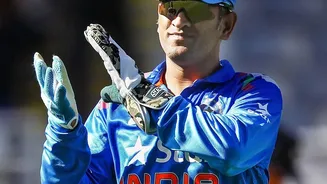
MS Dhoni: The Outsider from Ranchi
MS Dhoni's story is less about a single academy rejection and more about a prolonged struggle against a system that often overlooked talent from smaller cities. Unlike his contemporaries who came through established junior systems, Dhoni, from Ranchi, had to fight for every opportunity. In his early career, he was not selected for the U-19 national team, a common stepping stone for future stars. Later, he was even overlooked by East Zone selectors for the prestigious Duleep Trophy. These setbacks were compounded by the financial pressures of working as a ticket collector for the railways. Yet, Dhoni's resolve never wavered. His unique style and incredible finishing power eventually became impossible to ignore, culminating in a legendary career as India's most successful captain, who proved that talent can blossom anywhere.
Sunil Gavaskar: Dropped from the College Team
It’s hard to imagine that Sunil Gavaskar, the 'Little Master' who was the first batsman to score 10,000 Test runs, once failed to make his own college team. During his time at St. Xavier's College, the future Indian captain was dropped from the cricket team. This early setback was a blow to the young batsman, but it failed to deter him. Gavaskar's career is a masterclass in technical perfection and immense concentration, qualities he honed relentlessly. He used every rejection and challenge as fuel. This was a man who famously stood up to the mighty West Indian pace battery without a helmet and came out on top. Being dropped by his college team was merely a footnote in a career built on unshakeable self-belief and a relentless pursuit of excellence that made him one of cricket's alltime greats.