





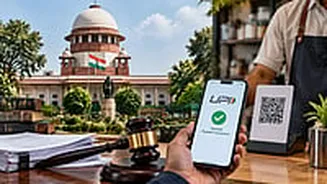
The Big Question: Is UPI Still Free?
Yes, for the vast majority of users and transactions, UPI remains completely free. The recent announcements have caused a lot of confusion, but the key takeaway is this: as a consumer, you will not be charged for making UPI payments. Person-to-Person
(P2P) payments, like sending money to friends or family, are unaffected and remain free regardless of the amount. The changes exclusively apply to certain Person-to-Merchant (P2M) transactions, and the new charge is levied on the merchant, not the customer.
The Core Change: Merchant Discount Rate (MDR)
Effective October 15, 2026, a Merchant Discount Rate (MDR) will apply to select P2M UPI transactions. MDR is a fee that merchants pay to their bank or payment service provider for processing digital payments. This is not a new concept; it already exists for credit and debit card payments. The new rule introduces a 0.4% MDR on UPI payments made to eligible merchants for transactions with a value above ₹2,000. So, if you pay a merchant ₹3,000 via UPI, the merchant will have to pay an MDR of ₹12. You, the customer, will still only pay ₹3,000.
Understanding the Thresholds and Caps
The new MDR only kicks in for transactions above ₹2,000. According to the National Payments Corporation of India (NPCI), this means over 95% of merchant transactions will remain unaffected, as they fall below this amount. For larger transactions, there’s also a cap. The 0.4% rate applies until the transaction value reaches ₹75,000. For any payment of ₹75,000 or more, the MDR is capped at a flat ₹300. This prevents excessive charges on very high-value transactions. For example, a payment of ₹1 lakh would attract the ₹300 cap, not ₹400.
What About Small Shops and Kiranas?
The framework includes specific protections for small businesses. Small merchants who are categorised under the P2PM (Person-to-Person-Merchant) framework and receive up to ₹1 lakh per month through UPI QR codes are completely exempt from MDR. This ensures that local vegetable vendors, tea stalls, and neighbourhood kirana stores can continue to accept digital payments without incurring any new costs. The government has made it clear that these changes are not intended to burden the small merchants who form the backbone of the retail economy.
Who Does This Affect and Why?
The MDR primarily affects medium and large businesses that process a significant volume of high-value UPI transactions. The government has stated that merchants are not permitted to pass this cost on to customers. So, you should not see an extra charge added to your bill for using UPI. The introduction of MDR is aimed at creating a sustainable financial model for the UPI ecosystem. As transaction volumes have surged, the costs of maintaining the infrastructure, ensuring cybersecurity, and driving innovation have also grown. The revenue from MDR will be distributed among the banks, payment apps, and other service providers that keep the UPI system running smoothly.
Are There Any Special Cases?
Yes, some specific sectors have concessional rates. For industries with very thin margins, such as railways, telecom, insurance, and fuel, a flat MDR of just ₹5 will apply on transactions above ₹2,000, instead of the 0.4% rate. This is a targeted approach to ensure that the charges are viable across different types of businesses. It is important to note that this new MDR framework is for UPI payments made directly from a bank account. Interchange fees on transactions made via PPIs (prepaid instruments like wallets) continue to apply as before.