




You may never fly over the liquid methane rivers or touch down on the organic sand dunes of Saturn's largest moon, but your name can. NASA is offering the public a once-in-a-lifetime chance to be part of a historic mission to an alien world.
A Journey to a Mysterious Moon
NASA is inviting
people from all over the world to add their names to a microchip that will travel aboard the Dragonfly mission to Titan. This distant moon has long fascinated scientists because it is one of the most Earth-like worlds ever discovered. It has a thick atmosphere, weather systems, and a surface rich with the complex organic materials that could be the building blocks of life. Exploring Titan could help us answer fundamental questions about how life began on our own planet.
Meet Dragonfly: A Nuclear-Powered Drone
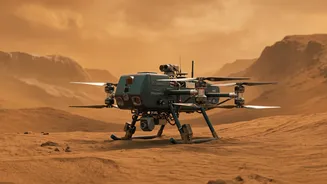
The Dragonfly mission is unlike any other. Instead of a stationary lander or a wheeled rover, NASA is sending a car-sized, drone-like rotorcraft with eight blades. This design is possible because Titan's atmosphere is four times denser than Earth's, making flight much easier. The nuclear-powered vehicle will launch in July 2028 and, after a long journey through space, arrive at Titan in 2034. Once there, it will fly between dozens of promising locations, hopping across the moon's diverse landscapes to collect and analyze samples. Its primary mission is to search for 'prebiotic chemistry' — the chemical processes that occurred on Earth before life emerged.
How To Add Your Name to the Mission
Becoming a symbolic passenger on this incredible journey is simple and free. NASA has set up a website for its 'Journey to Titan' campaign, where anyone can submit their name. The process is straightforward: just visit the official NASA portal, enter your details, and you will receive a personalised digital 'boarding pass' as a souvenir of your participation. You can also choose to sign up for a virtual guest program to receive regular email updates on the mission's progress, from its construction on Earth to its daring exploration on Titan. The deadline for submissions is currently set for January 15, 2027.
A Tradition of Cosmic Connection
This isn't the first time NASA has invited the public to send their names into the cosmos. These campaigns are a longstanding tradition to connect people with the science their tax dollars fund. Similar initiatives have seen millions of names travel to Mars on rovers like Perseverance and journey toward Jupiter's icy moon on the Europa Clipper spacecraft. The Dragonfly mission, however, could become the most distant destination ever reached by these symbolic 'passengers' on a craft intended to land on another world. Nicky Fox, an associate administrator at NASA, said the agency is excited to 'bring humanity along for the journey of a lifetime'. It’s a way for everyone to share in the wonder of space exploration and the quest to unlock the secrets of the universe.