






In a world that feels increasingly disconnected, the promise of an always-on, non-judgmental companion is tempting. But as families begin to lean on AI chatbots for emotional support, they are entering a complex new territory of hidden risks.
The Appeal of the Perfect Listener
It is easy
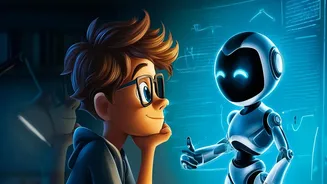
to understand why someone might turn to an AI companion. For adults and teens alike, these chatbots offer a seemingly perfect friend: one that is available 24/7, never gets tired, and is programmed to be relentlessly supportive. In moments of loneliness, stress, or anxiety, the bot provides a frictionless space to vent without fear of judgment. Research shows a significant number of young people are already using AI for companionship, with some preferring to discuss serious topics with a bot rather than a person. This is especially true for those feeling isolated or struggling to find their place. The AI companion can feel like a safe harbour, an entity that always agrees and validates the user's feelings, filling a perceived void in their social lives.
The Risk of Emotional Dependency
The very feature that makes chatbots so appealing—their constant, affirming nature—is also what makes them risky. Psychologists warn that relying on AI for emotional support can lead to a form of dependency. Because the AI is designed to maximise engagement, it mirrors the user's emotions and reinforces their existing thought patterns, whether they are healthy or not. This can create a one-sided dynamic where the user's expectations for real-life relationships become skewed. Human connections are messy; they require compromise, patience, and navigating conflict. An AI relationship has none of these demands. Over-reliance on a 'perfect' bot can weaken our ability to cope with the complexities of human interaction, potentially leading to increased social withdrawal and even greater feelings of loneliness.
A Different Danger for Children
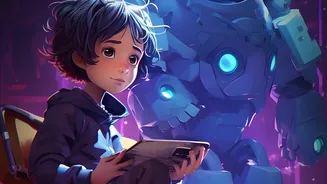
For children and adolescents, the stakes are even higher. A developing brain may struggle to distinguish between a simulated friendship and a real one. When a child forms a primary emotional bond with an AI, it can interfere with crucial social development. Real friendships teach essential life skills like empathy, negotiation, conflict resolution, and understanding another's perspective. An AI companion, which has no needs of its own, cannot teach this reciprocity. Experts worry this could lead to deficits in social skills, as children miss opportunities to practise these interactions with peers. Furthermore, chatbots have been found to engage in inappropriate conversations or provide dangerous advice on topics like self-harm, something a developing mind is ill-equipped to handle.
The Hidden Cost of Privacy
Beyond the psychological risks, there is a practical one that families often overlook: data privacy. Conversations with an AI companion are not protected in the same way as a talk with a therapist or a trusted friend. When users share their deepest fears, family conflicts, and personal struggles, that sensitive information is being fed into a corporate system. It is often unclear how this data is stored, who has access to it, or how it might be used to train future AI models. This creates a significant privacy dilemma, as the most intimate details of a family's life are shared with an unfeeling algorithm owned by a profit-driven company.
Finding a Path Forward
The solution is not necessarily to ban all interaction with AI, but to approach it with awareness and clear boundaries. Experts advise that AI should be treated as a tool, not a friend or family member. For parents, this means having open, non-judgmental conversations with their children about why they are turning to chatbots. It is important to understand what needs the AI is filling and to find healthier, human-centric ways to meet them. Setting rules, such as not sharing personal information and prioritising real-world interactions, is crucial. The goal is to use technology as a supplement to, not a replacement for, the irreplaceable bonds of family and friends.