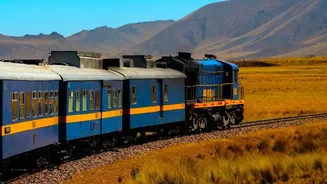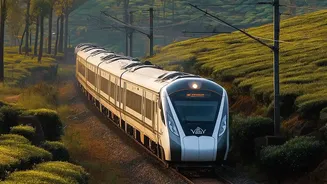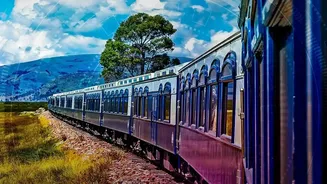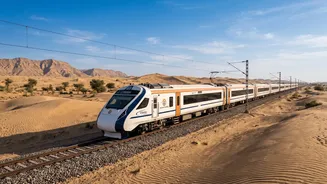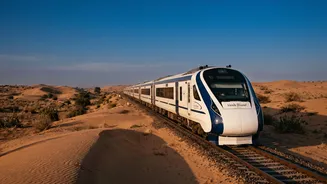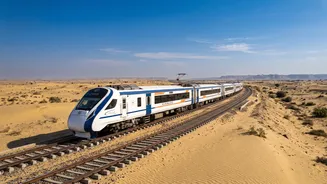



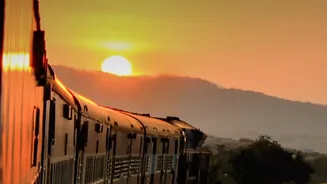


Rajasthan's vast desert landscape is iconic, and now, it's traversed by India's premier semi-high-speed train. So which Vande Bharat route cuts through this arid terrain, connecting its historic cities with modern speed and comfort?
The Primary Desert Corridor Route
While no single Vande
Bharat Express runs 'throughout' the entirety of Rajasthan's vast Thar Desert, the train that most directly serves its heartland is the Jodhpur-Sabarmati (Ahmedabad) Vande Bharat Express. Jodhpur, famously known as the 'Gateway to the Thar', is the starting point for this crucial service, making it the definitive Vande Bharat for the desert region. This train connects the historic Blue City with Gujarat's commercial hub, offering a high-speed link across a significant stretch of the arid landscape. Another service, the Jodhpur-Delhi Cantt Vande Bharat, also skirts parts of the desert, particularly around the Sambhar Lake region, but the Jodhpur-Sabarmati route is more centrally focused on connecting the western part of the state.
Tracing the Journey: Route and Key Stops
The Jodhpur-Sabarmati Vande Bharat Express (Train No. 12461/12462) covers a distance of approximately 449 kilometres in about six hours. This is a significant time-saving compared to the next fastest trains on the route, which take over seven hours. After departing from Jodhpur Junction, the train makes its way south, with key stops that enhance connectivity for the entire Marwar region. The scheduled halts include Pali Marwar and Falna, before reaching Abu Road. The stop at Abu Road is particularly vital, as it serves as the railhead for Mount Abu, Rajasthan's only hill station. From there, the train crosses into Gujarat, stopping at Palanpur and Mahesana before terminating at Sabarmati station in Ahmedabad. The service runs six days a week, with Tuesday being its designated day off for maintenance.
A Modern Ride Through an Ancient Landscape
Traveling on this Vande Bharat offers passengers a unique juxtaposition of modern engineering and timeless scenery. The journey begins in Jodhpur, with the Mehrangarh Fort dominating the skyline, and quickly transitions into the semi-arid plains characteristic of the region. Passengers can view the changing terrain through the train's large windows, observing the scrubland, small villages, and the unique flora and fauna of the Marwar region. The train itself provides a stark contrast, with its fully air-conditioned chair car (CC) and executive class (EC) coaches, automatic doors, and on-board catering. It represents a leap forward in passenger comfort and speed, making travel across this sometimes harsh environment more accessible and pleasant than ever before.
More Than Speed: Boosting Regional Connectivity
The introduction of the Jodhpur-Sabarmati Vande Bharat is a strategic move to bolster economic activity and tourism in western Rajasthan. By providing a fast and reliable link to Ahmedabad, it facilitates easier business travel and trade between the two major states. For tourism, the impact is twofold. It not only makes Jodhpur and its desert attractions more accessible to visitors from Gujarat but also provides a high-speed connection for tourists wishing to visit Mount Abu via the Abu Road station. This improved infrastructure is part of a broader push by Indian Railways to bring premium, high-speed rail services to all corners of the country, ensuring that even geographically challenging regions are integrated into the national network.
Rajasthan's Expanding Vande Bharat Network
The desert route is just one piece of Rajasthan's growing Vande Bharat map. As of late 2026, the state is served by several other Vande Bharat trains that connect its major cities to the national capital and other key hubs. These include the Ajmer-Chandigarh service (via Jaipur and Delhi Cantt), the Bikaner-Delhi Cantt Express, and another Vande Bharat connecting Jodhpur with Delhi Cantt. This expanding network underscores a significant upgrade in regional rail infrastructure, reducing travel times and elevating the passenger experience across the state, from the Aravalli hills to the sands of the Thar.