






What Is a Planetary Alignment?
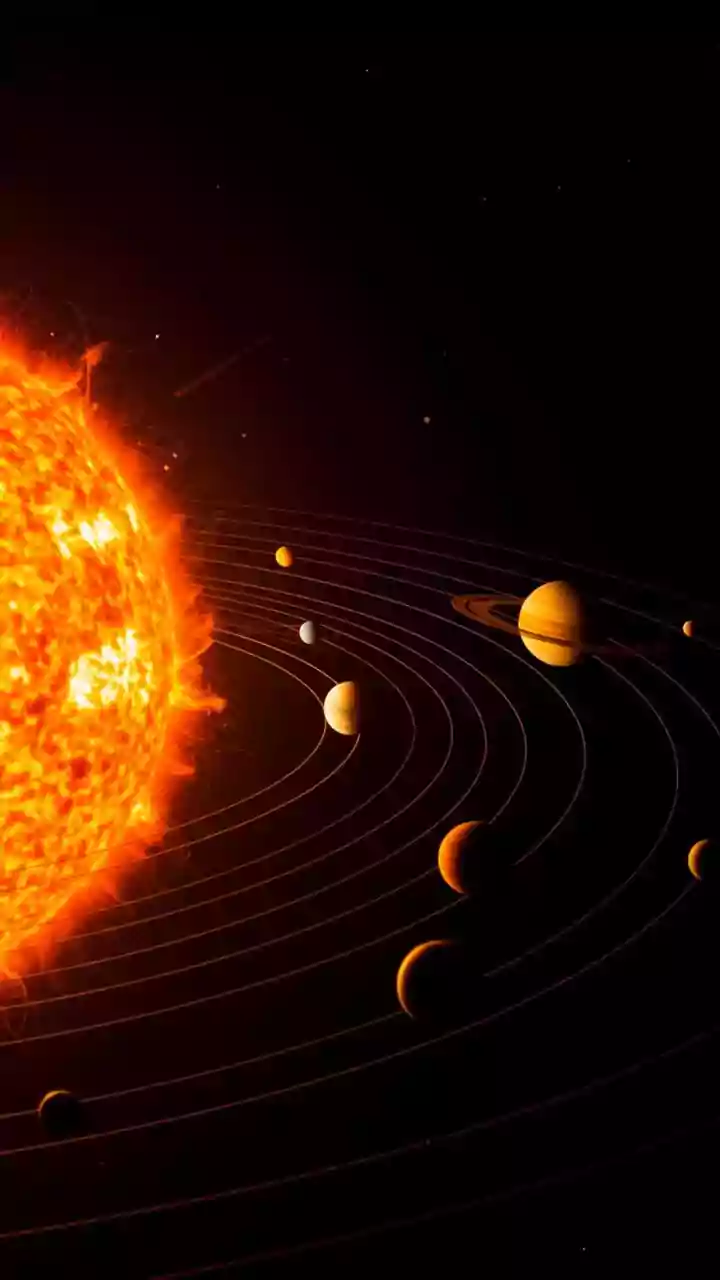
A planetary alignment, also known as a conjunction, is not an event where planets are physically lining up in a straight line out in space. Instead, it’s an amazing optical illusion from our perspective here on Earth. As the planets orbit the Sun at different
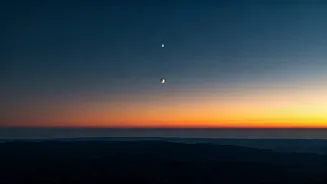
speeds and on different paths, their positions in our sky constantly shift. Occasionally, from our vantage point, two or more planets appear to pass very close to each other. Tonight’s event is a wonderful example, bringing together the innermost planet, Mercury; the brightest, Venus; and the largest, Jupiter, into a tight grouping that will be visible to the naked eye.
When and Where to Look From India
The key to spotting this celestial gathering is timing and direction. You’ll need to look towards the western sky. The best viewing window will begin about 30 to 45 minutes after sunset. This is a brief spectacle, as the planets will follow the Sun and dip below the horizon not long after. For most of India, this means looking between approximately 7:00 PM and 7:45 PM. Because the planets are described as being 'low on the horizon,' you will need a clear, unobstructed view to the west. Buildings, trees, or hills can easily block the view, so finding an open field, a rooftop, or a spot by a lake or the sea is your best bet.
How to Identify Each Planet
Even for a novice stargazer, telling these planets apart will be straightforward. The brightest point of light you’ll see will undoubtedly be Venus. Often called the 'Evening Star,' its brilliance is unmistakable and will outshine everything in the sky except the Moon. Slightly dimmer but still very bright will be Jupiter. It will appear as a steady, bright, star-like object. The real challenge, and prize, of the evening is spotting Mercury. It is the faintest of the three and will be the closest to the horizon, potentially still shrouded in the Sun’s fading glare. Look for a tiny, star-like pinprick of light near the brighter Venus. Spotting Mercury is a rewarding experience for any sky-watcher, as it is often hidden by the Sun's brightness.
Tips for the Best Viewing Experience
To maximise your chances of enjoying the show, follow a few simple tips. First, get to your viewing spot early to let your eyes adapt to the darkness as the Sun sets. Avoid looking at bright lights, including your phone screen, as this will ruin your night vision. Second, while the alignment is visible to the naked eye, a pair of binoculars will dramatically enhance the view. Through binoculars, you might be able to see the planets as tiny discs rather than points of light. You might even glimpse Jupiter’s four largest moons—Io, Europa, Ganymede, and Callisto—appearing as tiny stars flanking the giant planet. Finally, be patient. It might take a moment for your eyes to pick out faint Mercury from the twilight glow.
Is This a Rare Event?
While conjunctions involving two planets are relatively common, seeing a trio like this is a bit more special. The orbits of the planets mean these gatherings happen with some regularity, but the specific combination and their visibility can vary greatly. What makes this event particularly noteworthy is the inclusion of Mercury, the solar system’s speediest and most elusive planet. Because it never strays far from the Sun in our sky, there are only a few brief windows each year when it’s possible to see it clearly. Having it appear alongside the two other brightest planets is a fantastic opportunity for photographers and casual observers alike. It’s a beautiful, silent dance of worlds happening hundreds of millions of kilometres away.