



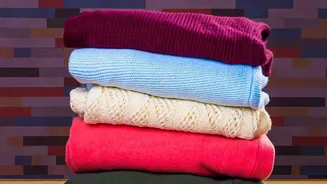
Why Wool Needs Special Attention
Before decoding the symbols, it helps to understand why wool is different. Wool fibres are made of a protein called keratin and are covered in microscopic scales. When exposed to the trifecta of heat, moisture, and agitation (like in a hot washing machine
cycle), these scales can interlock and bind together. This process, known as felting, is what causes wool garments to shrink and become dense. It’s an irreversible process, which is why following the care instructions is not just a suggestion—it's essential for protecting the fabric's structure and softness.
The Wash Tub: Temperature and Agitation
The most important symbol is the washtub. The number inside indicates the maximum water temperature in Celsius. For most wool, this will be 30°C or 40°C. Exceeding this temperature is the fastest way to cause shrinkage. A hand in the tub means hand wash only. When hand washing, use lukewarm water and a mild detergent designed for wool, gently squeezing the suds through the fabric without rubbing or wringing. Lines underneath the tub symbol indicate the machine cycle. One line means a reduced spin cycle (permanent press), while two lines signify a very gentle or dedicated wool cycle with minimal agitation. If you see a washtub with a cross through it, do not wash it at home; it requires professional dry cleaning.
The Triangle: To Bleach or Not to Bleach
The triangle symbol governs bleaching. For wool, you will almost always see a triangle with a cross through it. This means 'Do Not Bleach'. Chlorine bleach will damage and weaken the protein fibres in wool, so it's critical to use a bleach-free, gentle detergent. An empty triangle means any bleach can be used, while a triangle with two diagonal lines allows for non-chlorine (oxygen) bleach only, but these are rarely applicable to wool garments.
The Square: The Secret to Safe Drying
The square symbol provides drying instructions. A square with a circle inside means it can be tumble-dried, but this symbol will almost always have a cross through it for woollens, meaning 'Do Not Tumble Dry'. The heat and tumbling motion of a dryer is a primary cause of felting and shrinkage. Instead, the label on a wool garment will typically show a square with a horizontal line in the middle. This is the symbol for 'Dry Flat'. Wet knitwear is heavy, and hanging it can cause it to stretch out of shape under its own weight. To dry flat correctly, gently squeeze excess water out (never wring it), roll the garment in a clean towel to absorb more moisture, and then lay it on a flat surface or a mesh drying rack away from direct sunlight or heat.
The Iron: Applying Heat Safely
The iron symbol tells you how to press your garment. The dots inside the iron indicate the maximum temperature setting. For wool, this is typically one or two dots, corresponding to a cool or moderate setting (around 150°C). It is often recommended to iron wool under a damp cloth to protect the fibres from direct heat. A steam iron can also be used effectively. If the iron symbol has a cross through it, the garment should not be ironed at all. Often, simply steaming a wool garment or hanging it in a steamy bathroom is enough to release wrinkles, no ironing needed.
The Circle: When to Call a Professional
A circle symbol means the garment should be professionally dry-cleaned. Letters inside the circle, like 'P' or 'F', are instructions for the dry cleaner regarding the type of solvent to use. If a label says 'Dry Clean Only', it is best to follow that instruction, as the garment's construction or material blend may not be suited for washing with water. A circle with a cross through it means 'Do Not Dry Clean'.