








The Rise and Fall of Smart Luggage
Just a few years ago, the travel world was abuzz with ‘smart luggage’. These high-tech suitcases promised a seamless travel experience with features like built-in GPS trackers, digital scales, and, most importantly, USB charging ports powered by internal
lithium-ion batteries. The idea was to stay connected and charged on the go. However, the dream quickly ran into reality. Airlines across the globe, citing safety concerns over lithium-ion batteries in cargo holds, began banning them. Suddenly, that ‘smart’ suitcase became a liability. Travellers had to either remove the battery before checking their bag—if it was even possible—or risk having their luggage confiscated. The convenience turned into a major headache, paving the way for a return to basics.
Why 'No Ports' Is the New Premium
The move away from built-in electronics is now seen as a feature, not a flaw. A suitcase without a port is a suitcase with no strings attached. There are no worries about airline compliance, no obsolete technology to become useless in a year, and no dedicated space wasted on bulky electronics. Travellers have realised that a portable power bank, which can be easily carried in a handbag or backpack, is a far more flexible and powerful solution. This port-less design philosophy puts the focus back on the luggage’s primary function: to protect your belongings effectively. It's a declaration of independence from yet another device that needs managing, allowing travellers to focus on the journey itself.
The Lightweight Advantage
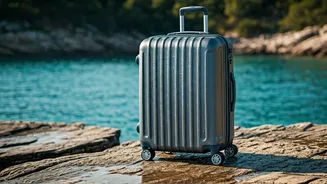
Another core pillar of this trend is the obsession with weight. With airline baggage allowances becoming stricter and fees for overweight bags skyrocketing, every gram counts. Modern luggage manufacturers are using advanced materials like polycarbonate, which is both incredibly strong and surprisingly light, to construct their shells. For soft-side luggage, high-denier, water-resistant fabrics offer durability without the bulk. A lighter suitcase is easier to lift into an overhead bin, roll through a crowded terminal, and carry up a flight of stairs at a hotel without an elevator. It reduces physical strain and gives you more capacity for your actual belongings, not the bag itself.
Embracing Weatherproof Reliability
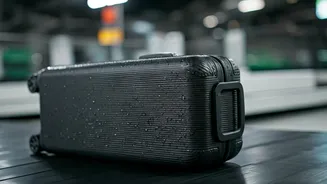
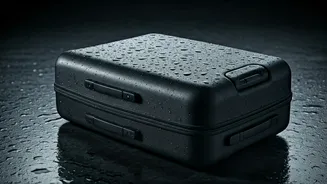
Getting caught in a downpour on your way to the hotel is a classic travel nightmare. The new wave of luggage addresses this with a strong emphasis on water resistance. This doesn't necessarily mean you can submerge your bag in a lake, but it does mean your clothes will likely stay dry during a monsoon shower. This is achieved through clever design and materials. Hardshell polycarbonate cases naturally repel water, while many soft-shell bags use tightly woven nylon or polyester with a waterproof coating. Crucially, the best designs also incorporate sealed or reverse-coil zippers, which prevent water from seeping through one of the most common points of failure. This peace of mind is invaluable, whether you’re navigating the streets of Mumbai during the rains or facing an unexpected drizzle in London.
A Return to Durability and Simplicity
Ultimately, this trend is about a shift in consumer values. Travellers are moving away from disposable, feature-heavy products towards gear that is simple, functional, and built to last. It’s a form of minimalism focused on quality over quantity. The best-in-class luggage today features sturdy, smooth-rolling wheels, robust telescoping handles, and reinforced corners. The design ethos is clean, timeless, and functional. By stripping away non-essential tech and focusing on high-quality materials and construction, these bags offer a promise of reliability. They are an investment in stress-free travel for years to come, not just a gadget for a single season.