






Meet the SE2000 Engine
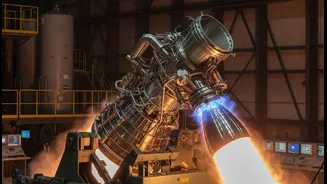
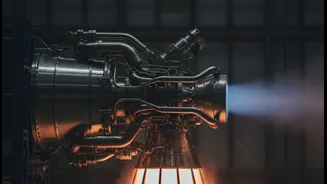
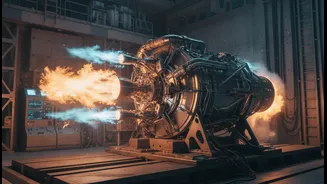
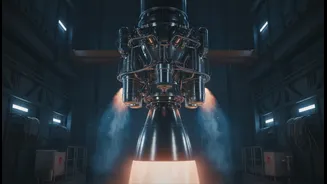
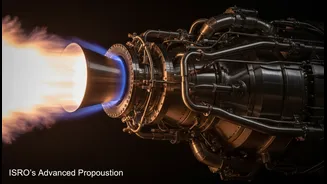
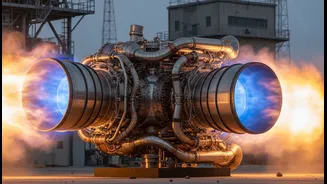
The star of the show is ISRO's new SE2000 semicryogenic engine. In late June 2026, engineers at the ISRO Propulsion Complex in Mahendragiri, Tamil Nadu, successfully conducted a hot test of the engine's power head, a critical component that acts like
the engine's heart. During the test, they pushed it to a 175-tonne thrust level, which is about 88% of its full power, a significant jump from previous tests at lower levels. This success gives ISRO immense confidence to proceed towards a full-thrust demonstration at 200 tonnes. This indigenously developed engine is a high-performance machine, and mastering this technology is a major milestone.
Why Semicryogenic Is a Game-Changer
So, what makes a semicryogenic engine special? Unlike fully cryogenic engines that use super-chilled liquid hydrogen and liquid oxygen, a semicryogenic engine uses liquid oxygen as the oxidiser but pairs it with a highly refined type of kerosene as fuel. ISRO has even developed its own special blend called 'Isrosene'. This has two huge advantages. First, kerosene is much denser than liquid hydrogen and can be stored at normal room temperature. This means the fuel tanks can be smaller and don't need complex, heavy insulation, simplifying the rocket's design. Second, this fuel combination is more efficient and powerful, providing higher thrust for every kilogram of fuel burned. It is also a cleaner, non-toxic propellant.
More Thrust Means More Power
The direct result of this new engine is a massive increase in thrust, which is the force that pushes a rocket into space. This added power is the key to unlocking the next chapter of India's space ambitions. The new SE2000 engine is being developed to power a new stage, the SC120, which will replace the current L110 liquid core stage of ISRO's most powerful rocket, the Launch Vehicle Mark III (LVM3). This upgrade will significantly boost the LVM3's payload capacity. With the new engine, the LVM3 will be able to lift heavier satellites into orbit, a crucial capability for both commercial and strategic needs.
Upgrading India's 'Bahubali' Rocket
The LVM3, often called India's 'Bahubali' rocket, is already a formidable machine, responsible for launching the Chandrayaan missions and slated to carry Indian astronauts on the Gaganyaan mission. The semicryogenic upgrade will make it even more powerful. The payload capacity to Geostationary Transfer Orbit (GTO) is expected to increase from the current 4 tonnes to 5 tonnes. For Low Earth Orbit (LEO), the capacity could rise from 8 tonnes to 10 tonnes. This means ISRO can launch heavier communication satellites, complex scientific instruments, or even multiple smaller satellites in a single flight, making launches more cost-effective. This enhancement is crucial for India's self-reliance in space and for competing in the global commercial launch market.
The Road to Gaganyaan and Beyond
A more powerful LVM3 is essential for the future of India's human spaceflight program, Gaganyaan. The increased thrust provides a greater safety margin and the ability to carry the heavier modules required for crewed missions. Looking further ahead, this technology is vital for building a future Indian space station and for undertaking ambitious deep-space missions. Mastering semicryogenic technology places India in an elite club of spacefaring nations with heavy-lift capabilities. It's a foundational step that will not only reduce our dependence on foreign launch services for heavy satellites but also cement India's position as a major player in space exploration for decades to come.