
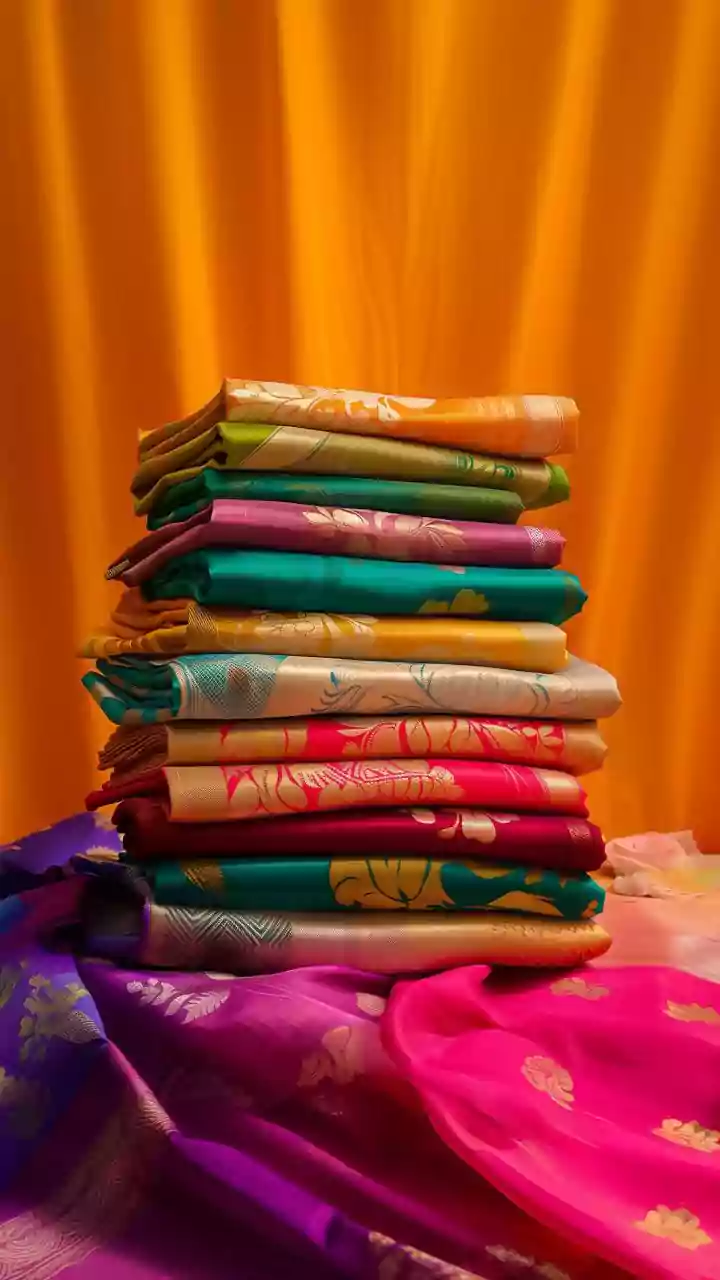





A treasured heirloom passed down through generations, the Kanchipuram silk saree is an icon of South Indian heritage. Its most defining feature is the stunning contrast between its body, border, and pallu, a detail that tells a story of artistry.
The Art of Striking Contrast
When
you picture a traditional Kanchipuram saree, the first thing that often comes to mind is its dramatic play of colours. A deep maroon body might be framed by a brilliant parrot green border, or a sunshine yellow saree could feature a rich royal blue pallu. This isn't just a design choice; it is the very essence of the Kanjivaram identity. This contrast is not merely about colour but also about design and texture. The body of the saree may be relatively plain or feature small, repeating motifs called 'buttas', while the border and pallu are densely woven with intricate patterns in shimmering gold or silver zari. This deliberate separation of elements creates a visual masterpiece that is both balanced and breathtaking.
Korvai: The Interlocking Marvel
The secret behind the Kanchipuram's distinct contrasting border lies in a centuries-old weaving technique known as Korvai. The Tamil word 'Korvai' means 'to join' or 'interlock'. This method is a marvel of manual craftsmanship, requiring two weavers to work in perfect sync on the same loom. They weave the body and the borders separately, using three shuttles—one for the body and two for the borders. At the point where the two parts meet, the weavers painstakingly interlock the threads by hand. The result is a seamless, incredibly strong join that looks almost like a faint, hand-stitched ridge. This technique is so robust that even if the saree were to tear, the border would not detach, a testament to its exceptional quality.
Petni and a Richly Woven Pallu
Similar to how the borders are joined, the richly decorated end piece, or pallu, is also attached using a special technique. Often, the pallu features a completely different colour and set of designs from the body of the saree. To achieve this, weavers use a method called 'Petni'. This involves meticulously resetting the warp threads on the loom to join the body's yarn with the pallu's yarn, thread by thread. The pallu is often the most elaborate part of the saree, a canvas for the weaver to showcase their skill with dense zari work and complex motifs that tell a story.
A Tapestry of Traditional Motifs
The designs woven into the borders and pallu are deeply rooted in South Indian culture, often inspired by temple architecture, nature, and mythology. Common motifs include the 'Mayil' (peacock), symbolising beauty and grace; the 'Manga' (mango or paisley), representing fertility and prosperity; and the 'Yaali', a mythical creature that signifies protection. The iconic 'Gopuram' or temple border, with its triangular spires, is a direct homage to the towering gateways of Dravidian temples. Other popular motifs are 'Rudraksham' beads, elephants, swans ('Annam'), and lotuses, each carrying its own unique symbolism and adding layers of meaning to the garment.
A Legacy Woven in Silk
Originating from the temple town of Kanchipuram in Tamil Nadu, this weaving tradition is believed to be over 400 years old. Weavers were historically patronised by royalty, like the Vijayanagara kings, to create silks for temple deities and royal ceremonies. Today, the Kanchipuram saree is an indispensable part of bridal trousseaus and festive wear across South India and beyond. In recognition of its unique heritage, the Kanchipuram saree was granted a Geographical Indication (GI) tag in 2005, protecting its authenticity and ensuring that only sarees woven in the Kanchipuram region can carry the name.