



The Life Support Challenge
On any crewed spacecraft, the Environmental Control and Life Support System (ECLSS) is the unsung hero. This complex network of hardware is responsible for maintaining a habitable environment by managing air pressure, temperature, humidity, and, most
critically, air quality. For short trips in low-Earth orbit, missions could rely on consumable supplies, like the single-use lithium hydroxide canisters that scrubbed carbon dioxide during the Apollo era. But for a three-year round trip to Mars, launching with all the air and water needed is simply impossible. The focus has therefore shifted from simple replenishment to sophisticated, closed-loop recycling, where every atom of oxygen and molecule of water is a precious resource to be recovered and reused.
The Carbon Dioxide Problem
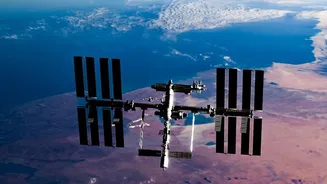
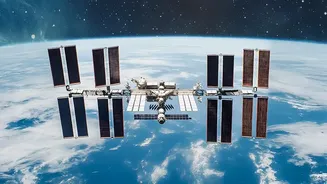
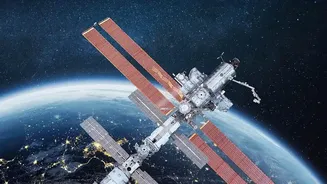
Every breath an astronaut takes releases carbon dioxide, a waste product that quickly becomes toxic in a sealed environment. On the International Space Station (ISS), the primary line of defence is the Carbon Dioxide Removal Assembly, or CDRA. This system uses beds of porous materials called zeolites, which act like a molecular sieve, trapping CO2 molecules while allowing oxygen and nitrogen to pass through. These beds are regenerative; once saturated, they can be heated and exposed to the vacuum of space, venting the captured CO2 overboard. While a massive leap from the Apollo days, this process still results in a loss of oxygen atoms that must eventually be replaced. For Mars missions, simply venting CO2 is a luxury that cannot be afforded.
New and Improved Scrubbers
Recognizing the limitations of current systems, engineers are developing the next generation of CO2 scrubbers. NASA’s 4-Bed Carbon Dioxide Scrubber is an evolution of the ISS system, designed for improved durability, efficiency, and easier maintenance—all crucial for missions far from home with no option for a repair shipment. Other promising technologies include the Thermal Amine Scrubber, which uses heated amine beds, and even liquid sorbent systems that can absorb four times more CO2 than the solid materials currently in use and require less energy to regenerate. These innovations are not just about better performance but also about creating robust, reliable hardware that can operate autonomously for years.
Closing the Oxygen Loop
Removing CO2 is only half the battle; the ultimate goal is to get the oxygen back. The ISS uses a Sabatier system which reacts captured CO2 with hydrogen to produce water and methane. The water is then split through electrolysis to regenerate breathable oxygen. However, the methane is vented into space, taking valuable hydrogen atoms with it and making the process only about 50% efficient in recovering oxygen. Future systems are being developed to close this loop almost completely. Technologies like methane pyrolysis and the Bosch process aim to break down these byproducts further, recovering the hydrogen to be used again and pushing oxygen recovery rates toward 100%. This level of efficiency is a non-negotiable requirement for a self-sufficient Mars-bound spacecraft.
More Than Just Air
A complete air revitalization system must also manage other threats to air quality. Humans and electronic equipment constantly release trace contaminants—hundreds of different volatile organic compounds—that must be filtered out. Humidity must be precisely controlled to prevent condensation from damaging equipment and to provide a comfortable environment. The water vapor from astronauts' breath and sweat is another resource that is collected and recycled back into the water supply system. Advanced systems integrate all these functions—CO2 removal, oxygen generation, trace contaminant control, and humidity management—into a single, interconnected architecture designed for maximum efficiency and minimum waste.