




The Problem with Current Batteries
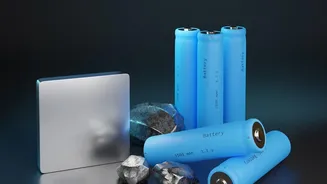
Almost every electric scooter on the road today runs on a lithium-ion battery. This technology has been a game-changer, but it has a fundamental weakness. At its core, a lithium-ion battery contains a liquid or gel-like substance called an electrolyte.
While efficient, this liquid is flammable and can degrade over time. Damage, manufacturing defects, or improper charging can lead to a dangerous situation known as 'thermal runaway', where the battery overheats and catches fire. This is the primary cause behind the EV battery fires that have raised safety concerns among consumers. Beyond safety, this liquid-based design also has limitations on how much energy it can store and how quickly it can be charged, leading to the familiar issues of limited range and long charging hours.
Enter the Solid-State Solution
A solid-state battery, as the name suggests, replaces the flammable liquid electrolyte with a solid, non-flammable material, often a thin layer of ceramic or polymer. This simple change has profound implications. Lithium ions still travel from one side of the battery to the other to store and release energy, but they now do so through a solid medium. This design is inherently more stable and robust. The risk of leaks or fire is virtually eliminated because there is no flammable liquid to begin with. This fundamental shift in architecture not only tackles the safety issue head-on but also unlocks a new level of performance potential that could make current battery technology seem archaic.
A Quantum Leap in Safety
The most immediate and compelling benefit of solid-state technology for the Indian market is the dramatic improvement in safety. By eliminating the flammable liquid electrolyte, solid-state batteries significantly reduce the risk of thermal runaway and spontaneous fires. The solid electrolyte acts as a stable barrier between the battery's positive and negative ends, preventing the formation of 'dendrites'—tiny, needle-like structures that can grow inside liquid-based batteries and cause short circuits. For a country that has seen its share of concerns over e-scooter fires, this built-in safety feature is a massive selling point that could build tremendous trust with consumers who are still hesitant to make the switch to electric.
Making Scooters More Accessible
Beyond safety, solid-state batteries promise to make electric scooters more practical and accessible for a wider audience. They boast a much higher energy density, meaning they can store more power in the same amount of space. For riders, this translates to two exciting possibilities: a scooter with a significantly longer range (potentially 50-80% more) on a single charge, or a scooter that is lighter and more affordable because it can achieve the same range with a smaller, less bulky battery pack. Furthermore, these batteries can handle much higher charging currents, potentially cutting down charging times from several hours to under 30 minutes. This combination of longer range and ultra-fast charging could finally eliminate range anxiety for good.
The Timeline for India
While the technology is incredibly promising, solid-state batteries won't be appearing on Indian roads overnight. Mass production remains a major hurdle, as the manufacturing processes are complex and currently very expensive. However, the race is on. Global automotive giants like Toyota and Nissan are targeting commercial production by 2027-2028. In India, the push is also gaining momentum. Companies like Ola Electric have announced plans to invest in and develop their own solid-state battery technology, aiming to integrate it into their scooters. Other Indian startups and research groups are also working on indigenous solid-state solutions to reduce reliance on imports. Realistically, the first premium electric scooters featuring this technology could hit the Indian market in the next few years, with wider, more affordable adoption likely to follow as manufacturing scales and costs come down.