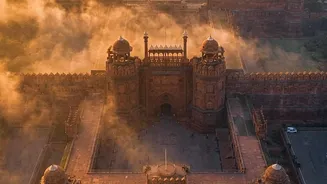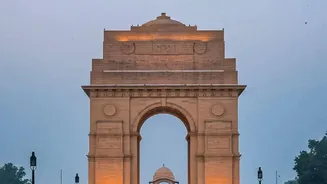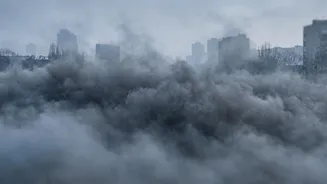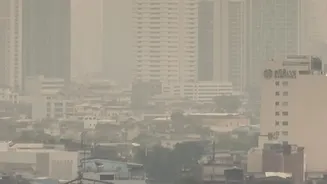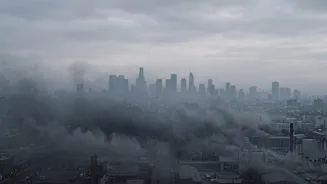





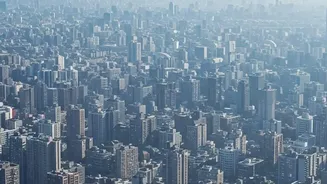
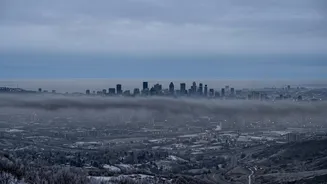
Every November, a thick, grey blanket of smog settles over Delhi, but its severity can change dramatically from one day to the next. While pollution sources are the cause, the intensity of the crisis is often dictated by an invisible force: the wind.
The Annual Recipe for Smog
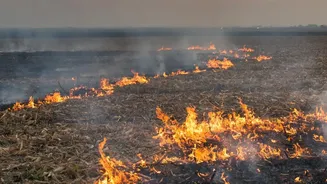
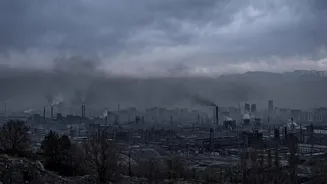
Before we talk about the weather, it's important to understand what makes up Delhi's infamous smog. The crisis is a predictable cocktail of pollutants. The primary ingredients include smoke from post-harvest stubble burning in the neighbouring states of Punjab and Haryana. Added to this are local emissions from heavy vehicular traffic, industrial exhaust, and dust from widespread construction activities. During the festive season, emissions from firecrackers can also add a sharp, temporary spike to this already toxic mix. Together, these sources pump enormous quantities of fine particulate matter, especially PM2.5, into the atmosphere. These are the tiny, harmful particles that can penetrate deep into the lungs and cause serious health issues.
Why Wind Is the Traffic Cop of Pollutants
Think of the atmosphere as a giant room and pollutants as smoke. If you open a window and turn on a fan, the smoke clears out quickly. If you close the window and the air is still, the room fills with smoke. Wind plays the role of that fan for Delhi's air. When wind speeds are high, pollutants are dispersed and carried away from the city, leading to better air quality. Conversely, when wind speeds are low or 'calm', these pollutants have nowhere to go. They stagnate and accumulate close to the ground, causing the Air Quality Index (AQI) to spike into the 'Very Poor' or 'Severe' categories. This is why you can have a relatively clear day followed by a dangerously smoggy one, even if the amount of pollution being generated remains consistent.
The Science of the Smog Trap
In winter, especially during November, a meteorological phenomenon called 'temperature inversion' makes matters significantly worse. Normally, the air closer to the ground is warmer and rises, allowing pollutants to disperse vertically. During a winter night, however, the ground cools rapidly, making the air near the surface colder and denser than the air layer above it. This warmer layer of air acts like an invisible lid, trapping the cooler, pollutant-heavy air below. This trapping effect, known as a shallow boundary layer, prevents the vertical mixing of air, meaning all the pollution from traffic, industry, and fires gets concentrated in the very air we breathe. This inversion is strongest at night and in the early morning, which is why AQI levels are often at their worst at the start of the day.
Not Just Speed, But Direction Matters
The direction of the wind is just as crucial as its speed. Throughout October and November, the prevailing winds in North India often shift to a northwesterly direction. These winds blow directly from Punjab and Haryana towards Delhi. This acts as a transport corridor, carrying the vast plumes of smoke from agricultural stubble burning and depositing them directly over the National Capital Region. The contribution of farm fires to Delhi's pollution can fluctuate from negligible to over 40% on any given day, depending almost entirely on the speed and direction of these winds. Forecasts from agencies like SAFAR (System of Air Quality and Weather Forecasting And Research) closely track wind patterns to predict how significant the impact of stubble burning will be.
The Outlook as Winter Sets In
As of early November 2026, meteorologists have warned that conditions are becoming favourable for smog. Calm winds and the onset of temperature inversions mean that emissions are likely to remain trapped. Forecasts from India's air quality warning system indicate that the air quality is expected to remain in the 'Very Poor' category in the coming days. This is because weather conditions are not expected to be favourable for dispersing pollutants. Global weather patterns like El Niño can also play a role by further reducing winter wind speeds and rainfall, potentially making smog episodes more intense and prolonged. Ultimately, the day_to_day experience of Delhi's residents during smog season is dictated by this complex interplay of local pollution and regional weather.