






The Monsoon's Official Snack
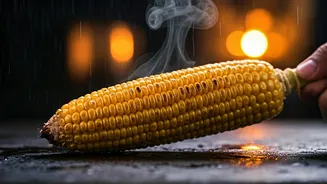
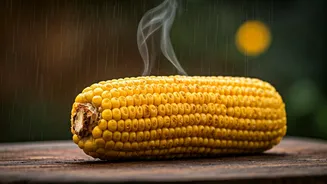
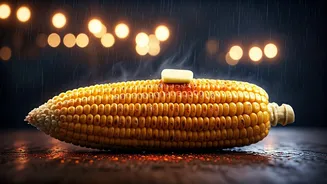
There are few sensory pairings as perfect as the smell of wet earth (petrichor) and the smoky char of corn on the cob roasting over hot coals. As the sky turns a dramatic grey and the first drops of rain begin to fall, it’s as if a switch is flipped.
Suddenly, the bhutta-wallah, who seemed to vanish during the sweltering summer, reappears. With a rustic cart, a pile of fresh corn, and a small mountain of coal, they set up shop, becoming an instant beacon for anyone seeking comfort, flavour, and a taste of the season. For millions across India, the monsoon doesn't truly feel like it has arrived until they've had their first bhutta of the year. It's not just food; it's a seasonal rite of passage, a delicious anchor that grounds us in the present moment.
An Art Form in Itself
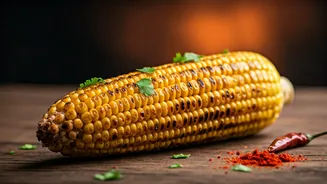
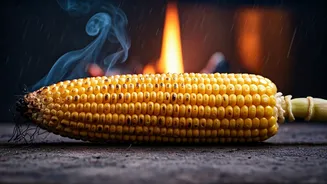
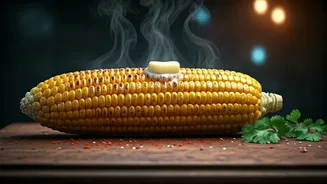
To the uninitiated, it might just look like corn being heated. But for those who have spent years watching with rapt attention, it is a performance. The process is a rustic art form. First, the careful selection of the cob—not too young, not too old. Then, the peeling back of the husk, which is often used as a handle. The corn is placed directly onto the glowing embers, and the bhutta-wallah begins the rhythmic fanning, using a piece of cardboard to control the heat, turning the cob with practiced ease. Every kernel must be perfectly kissed by the flame, resulting in a combination of tender, sweet, and satisfyingly charred bites. This is slow food at its finest, cooked with a patience that seems to mirror the long wait for the rains themselves.
The Symphony of Flavours
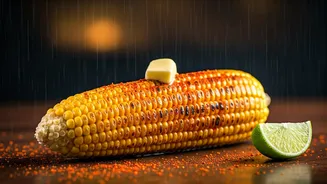
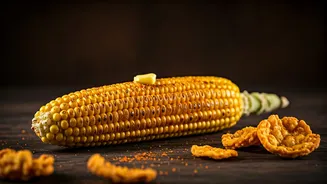
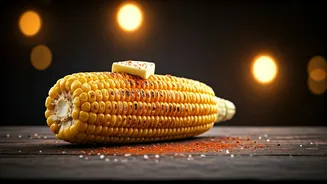
The magic doesn't end with the fire. Once the corn is roasted to perfection, it's time for the flavour alchemy. The bhutta-wallah takes half a lime or lemon, dips it into a mysterious and jealously guarded masala mix, and scrubs it vigorously across the hot kernels. The hiss is immediate and deeply satisfying. The flavour profile is a masterclass in balance. The sweetness of the corn, the smokiness from the charcoal, the sour tang of the lime, the sharp saltiness, and the fiery kick of red chili powder all come together in a perfect, explosive harmony. Each region might have its own twist on the masala—some adding black salt (kala namak), chaat masala, or a hint of roasted cumin—but the core principle remains the same: bold, unapologetic flavours designed to wake up the senses.
A Bite of Pure Nostalgia
More than the taste, bhutta is a vehicle for memory. It's the taste of childhood road trips, with the family car pulling over at the sight of a roadside stall. It's the flavour of college days, sharing a single cob with friends while huddled under a shop awning to escape a downpour. It’s the simple joy of a post-work treat, eaten on the walk home as the city lights begin to glitter on wet streets. In a world of complex dishes and fine-dining experiences, the humble bhutta offers a connection to something simpler and more authentic. It’s a shared experience that cuts across age, class, and background, uniting everyone in a moment of pure, unadulterated enjoyment.
From Street Food to Modern Menus
While the classic street-side experience remains undefeated, the appeal of bhutta has not gone unnoticed by modern chefs. Its core flavours are now being deconstructed and reimagined in cafes and upscale restaurants. You might find it as 'corn ribs' drizzled with chipotle aioli, in creamy soups, as a topping for artisanal pizzas, or tossed into sophisticated salads. This evolution is a testament to the versatility and enduring love for its flavour profile. Yet, these gourmet interpretations only serve to reinforce the power of the original. They are a nod to the street-corner classic, the one that requires no fancy plating, just an appetite and a willingness to get your hands a little messy.