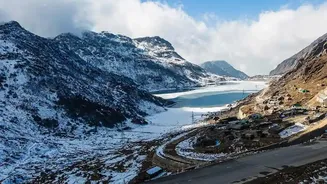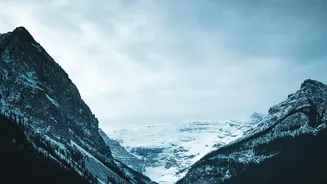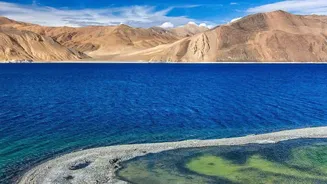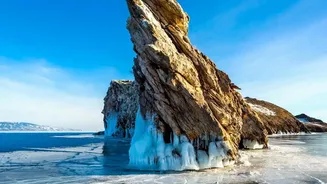



When winter arrives, it doesn't just chill the landscape; it transforms it. Across the globe, certain lakes freeze over in such spectacular fashion that they become otherworldly destinations, showcasing nature's artistry in ice.
Lake Baikal, Russia: The Soul of Siberia
Known as the 'Pearl of
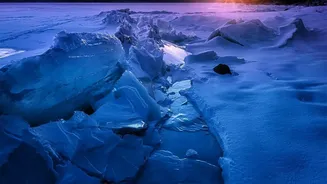
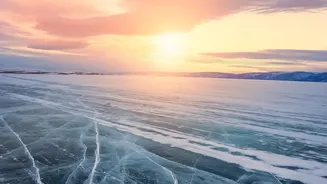
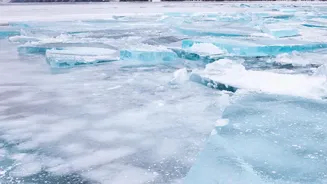
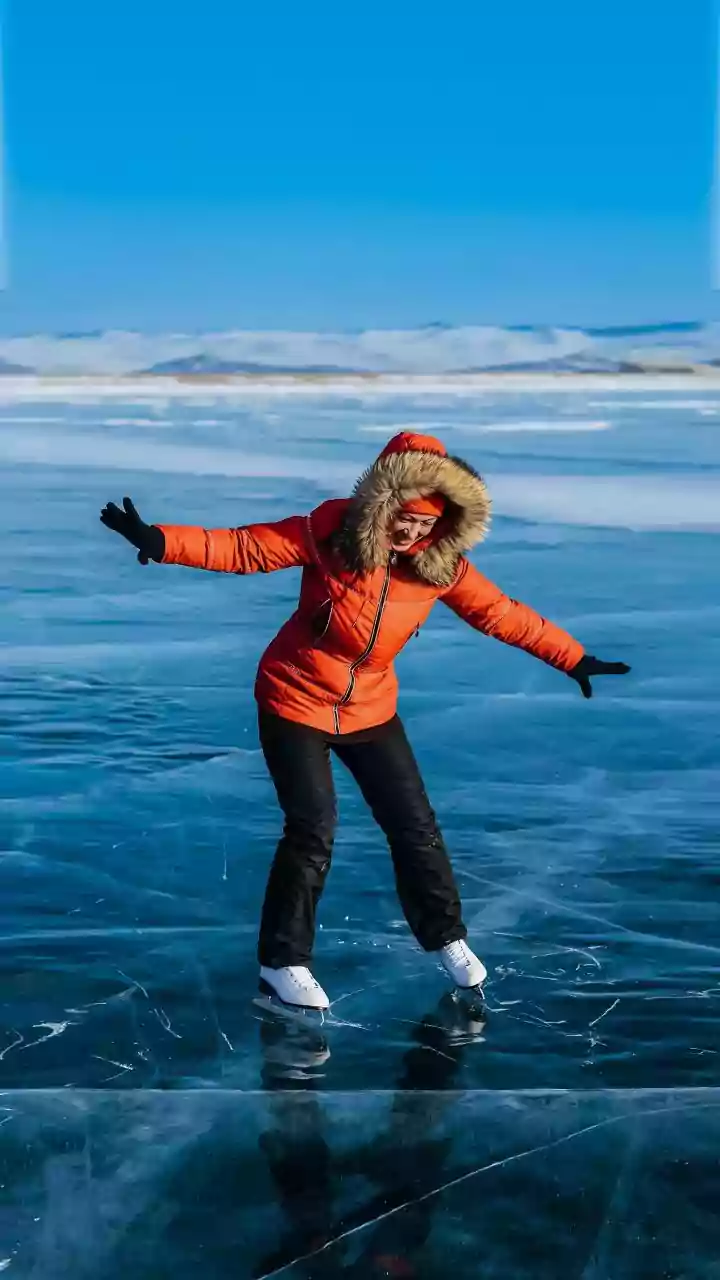
Siberia', Lake Baikal is the world's oldest and deepest lake. In winter, it hosts a spectacle of mesmerising ice phenomena. The water's purity means the ice freezes into a transparent, glass-like sheet up to 1.5 meters thick, revealing the depths below. Visitors can witness vast fields of 'ice hummocks'—shattered blocks of turquoise ice pushed up by pressure—and unique circular patterns on the surface caused by warm eddies swirling beneath. The wind-swept surface is often clear of snow, creating a natural skating rink that stretches for kilometres, making it a truly unique winter wonderland.
Abraham Lake, Canada: A Methane Masterpiece
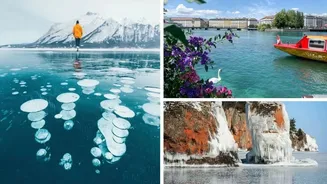
In the Canadian Rockies of Alberta lies Abraham Lake, a man-made lake with a stunning natural secret. As organic matter decomposes on the lakebed, it releases methane gas. In winter, these rising bubbles are trapped at various depths as the lake freezes, creating stacks of white, circular discs suspended in the clear ice. This phenomenon has made the lake a world-renowned destination for photographers. The best time to witness this spectacle is from mid-January to early February, when strong winds often sweep the ice surface clean of snow, polishing it to a glass-like finish and revealing the frozen bubble formations below.
Jökulsárlón, Iceland: Where Ice Meets the Ocean
Jökulsárlón is not a typical frozen lake but a glacial lagoon on Iceland's south coast, and its winter beauty is dynamic and ever-changing. Giant icebergs, some over 1,000 years old, break off from the nearby Breiðamerkurjökull glacier and float through the lagoon towards the Atlantic Ocean. The mixture of fresh and saltwater prevents the lagoon from freezing solid, allowing the icebergs—streaked with blue hues and black volcanic ash—to drift and sculpt each other. Many wash ashore on the adjacent black sand 'Diamond Beach', creating a stark and beautiful contrast of glittering ice on dark sand.
Lake Superior, USA & Canada: The Majestic Ice Caves
As the largest of North America's Great Lakes, Lake Superior puts on a rare and magnificent show in winter. Along the Apostle Islands National Lakeshore in Wisconsin, the sandstone sea caves are transformed into fantastical ice caves. When conditions are right, waves and seeping water freeze into massive icicles, flowing curtains of ice, and crystalline formations. Access is not guaranteed every year; the lake must freeze solid enough for visitors to walk across to the mainland caves. But for those lucky enough to visit when it's open, the experience of walking through these shimmering, otherworldly chambers is unforgettable.
Green Lake, Austria: The Submerged Park
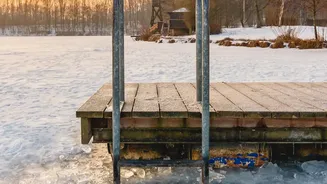
Grüner See, or Green Lake, offers a different kind of frozen wonder—one defined by its near-disappearance. In the autumn and winter, this lake in Tragöß, Austria, shrinks to a depth of only one or two metres. The surrounding park, with its hiking trails, benches, and bridges, is fully accessible. However, in the spring, meltwater from the surrounding mountains floods the area, submerging the park under metres of crystal-clear, emerald-green water. While its most famous state is when it's a deep summer lake, its quiet, shallow, and often partially frozen state in winter offers a tranquil and starkly beautiful scene, turning the area into a serene, snow-covered landscape.