





What Exactly is a Mudra?
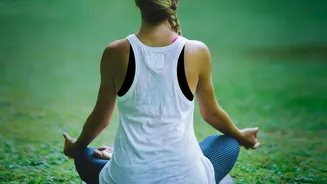
The word 'mudra' is a Sanskrit term meaning 'seal' or 'gesture'. In yogic traditions, mudras are specific hand positions believed to channel the body's vital life force energy, known as prana. Think of them as a physical intention-setter. Just as certain
postures align the body, these hand gestures are thought to influence our energy and state of mind, helping to guide awareness inward during meditation or even quiet moments at your desk.
Introducing the Hakini Mudra
The Hakini Mudra is named after the Hindu deity Hakini, who is associated with the 'third eye' or Ajna chakra. This energy centre, located on the forehead between the eyebrows, is traditionally considered the seat of intuition, intellect, and higher cognition. Because of this connection, the Hakini Mudra is often called the 'Brain Power Mudra' or the 'Mudra for the Mind'. It is believed to give the practitioner power over their own mind, enhancing focus and memory.
A Simple Guide to Practice
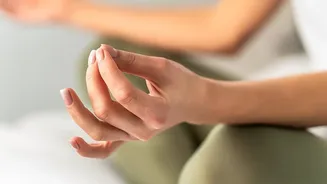
Performing the Hakini Mudra is straightforward and can be done almost anywhere. Start by finding a comfortable seated position, keeping your spine tall but relaxed. Bring both hands up in front of your chest, palms facing each other but not touching. Gently bring the fingertips of your right hand to meet the corresponding fingertips of your left hand — thumb to thumb, index to index, and so on. Your hands will form a soft, dome-like shape. Keep the touch light and your shoulders relaxed. For a deeper practice, you can inhale while touching your tongue to the roof of your mouth and exhale as you relax it. Gaze gently upwards toward your third eye.
The Purported Benefits for Mind and Memory
The primary benefits associated with Hakini Mudra are mental. Practitioners and yoga traditions claim it enhances memory, sharpens concentration, and promotes clear thinking. By creating this specific hand position, it's believed you can improve coordination between the right and left hemispheres of the brain. The left hemisphere is generally associated with logic and analysis, while the right is linked to creativity and intuition. Harmonising the two is thought to lead to more balanced decision-making and better problem-solving abilities. Many find it a calming practice that reduces mental fatigue and stress.
A Modern Perspective on the Gesture
While the spiritual claims of channeling 'prana' are difficult to measure, there are modern perspectives on why Hakini Mudra might be effective. The simple act of holding the gesture serves as a physical anchor for your attention, pulling a wandering mind back to the present moment. Some contemporary research has noted a correlation between bilateral fingertip coordination and the simultaneous engagement of both cerebral hemispheres. The light pressure on the fingertips, which are dense with nerve endings, can heighten somatic awareness and quiet mental chatter. While science has yet to offer definitive proof for all the traditional claims, the psychological benefit of using a physical ritual to focus the mind is a well-understood principle.
When to Use the Hakini Mudra
You don't need a yoga mat or a meditation cushion to benefit from this gesture. You can practice Hakini Mudra for a few minutes before an important meeting or presentation to feel more centred and confident. Students might find it helpful during study sessions to improve concentration and memory retention. It can also be used during a brief pause in a hectic day to calm the nervous system and restore a sense of clarity. Whether you are walking, sitting, or deep in thought, this mudra can serve as a simple, silent tool to reconnect with your focus.