

A Watery Signal from the Stars
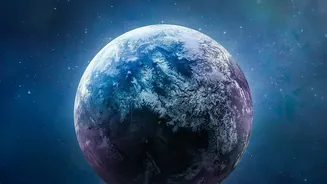
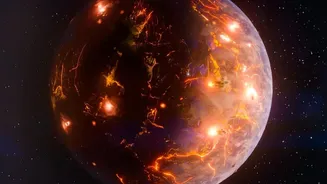
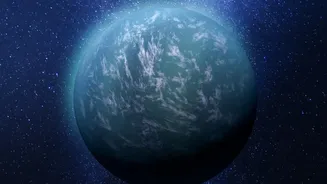
The discovery centres on an exoplanet known as K2-18 b, located 124 light-years away in the constellation Leo. While Hubble had previously hinted at water on this world, the power and precision of the JWST have now provided the clearest evidence yet,
confirming the presence of water vapour, methane, and carbon dioxide in its atmosphere. The planet is about 8.6 times the mass of Earth, placing it in a fascinating category of planets that don't exist in our own solar system. This finding transforms K2-18 b from a person of interest into a prime suspect in the ongoing investigation into worlds beyond our own.
What Exactly Is a 'Super-Earth'?
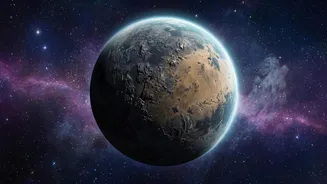
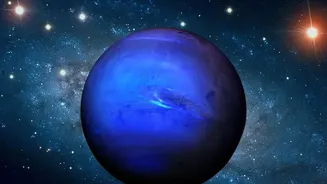
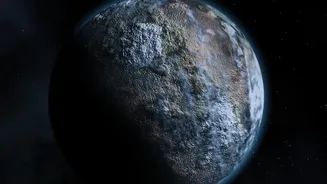
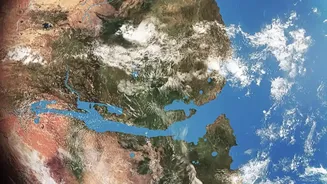
The term 'super-Earth' can be a bit misleading. It doesn’t necessarily mean a bigger, better version of our home planet. Instead, it's a classification based on size and mass. A super-Earth is a world larger than Earth but substantially smaller than ice giants like Neptune or Uranus. These planets are one of the most common types found in our galaxy, yet we have no direct example to study in our cosmic neighbourhood. This makes them a tantalizing mystery. They could be rocky worlds, water worlds, or something else entirely. The recent findings on K2-18 b suggest it might be a 'Hycean' world—a hypothetical type of planet with a hydrogen-rich atmosphere and a surface covered by a massive water ocean.
How Webb 'Sees' an Atmosphere Light-Years Away
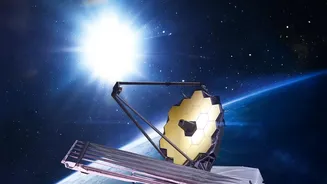
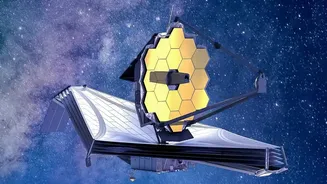
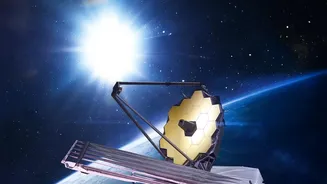
The JWST doesn't have a magical zoom lens that can see clouds on K2-18 b. Instead, it uses a brilliant technique called transmission spectroscopy. As the exoplanet passes in front of its host star from our perspective, a tiny fraction of the starlight filters through the planet's atmosphere. Different gases in that atmosphere absorb specific colours, or wavelengths, of light. The telescope’s incredibly sensitive instruments, called spectrographs, can detect this filtered light and identify which colours are missing. These missing slivers of light are the chemical fingerprints of the molecules present, allowing scientists to deconstruct the atmospheric composition of a world they can never physically visit.
Does This Mean Alien Life?
It's the question on everyone's mind, but it’s important to be cautious. Finding water vapour is not the same as finding life. While water is a crucial ingredient for life as we know it, its presence alone isn't proof. The atmosphere of K2-18 b is rich in hydrogen, unlike Earth's nitrogen-oxygen mix, and the planet is significantly heavier. Some scientists have debated whether a planet with such a thick atmosphere and deep ocean would have conditions suitable for life to begin. However, the confirmed presence of carbon-bearing molecules like methane and carbon dioxide is a huge step forward. It shows that the fundamental building blocks for life are present in the atmosphere of this distant world.
A New Era of Cosmic Exploration
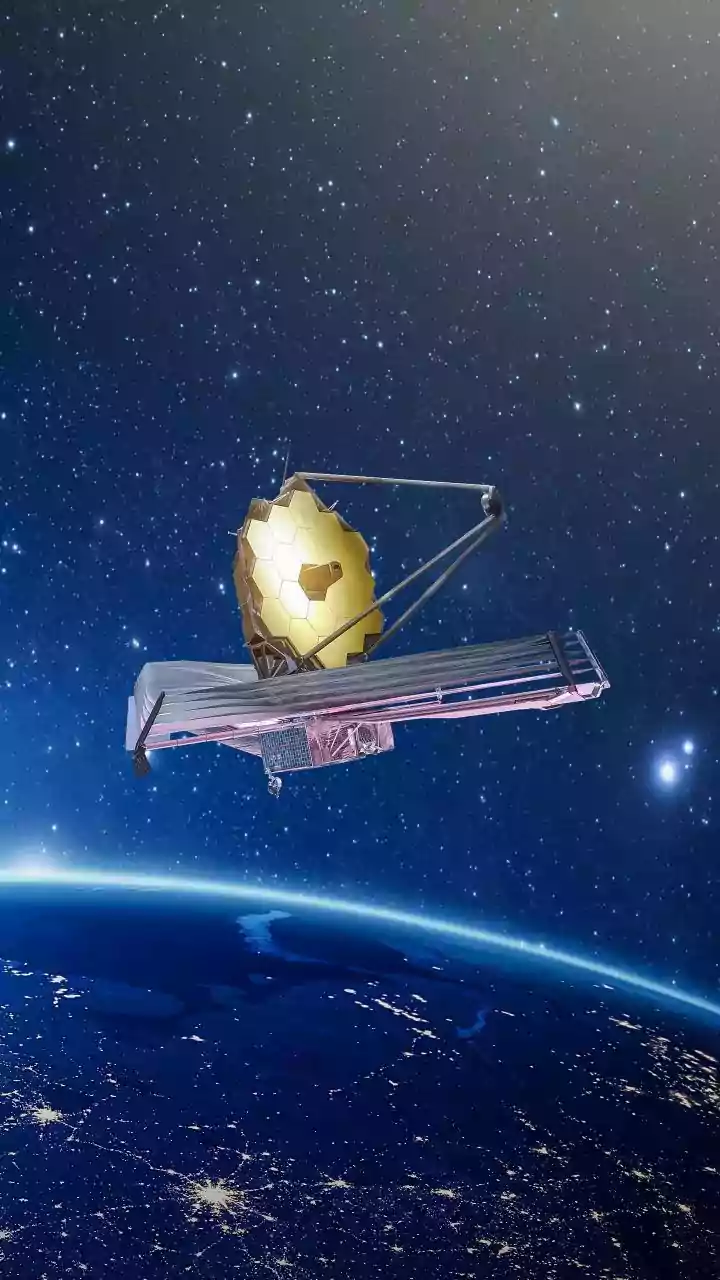
This clear detection on K2-18 b is more than just a single discovery; it's a proof of concept for the James Webb Space Telescope's incredible capabilities. For decades, astronomers have been limited to studying rocky planets in our solar system. Now, we are entering an era where we can analyse the atmospheres of worlds orbiting other stars in high definition. This opens the door to comparing different types of planets, understanding how they form, and identifying which ones might have the right conditions to foster life. Each discovery helps us refine our search, moving us closer to answering that profound question: are we alone in the universe?