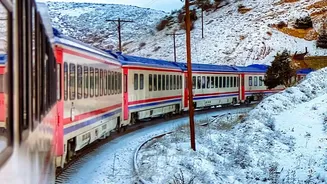


The Magic of Mountain Railways
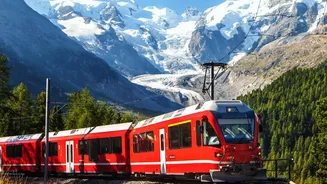
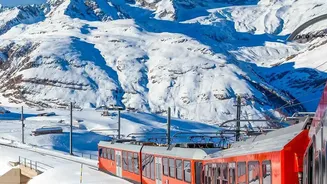
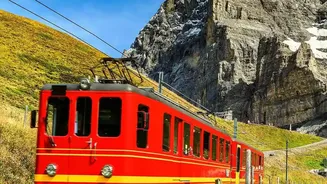
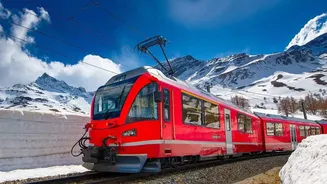
Before modern highways, British engineers built incredible narrow-gauge railways to connect the sweltering plains to cool summer capitals. Today, these 'toy trains' are not just marvels of engineering but also a core part of the travel experience. Three
of these lines—the Kalka-Shimla Railway, the Darjeeling Himalayan Railway, and the Nilgiri Mountain Railway—are collectively recognized as a UNESCO World Heritage Site, offering a journey back in time through breathtaking landscapes. By planning your trip around major railheads, you can seamlessly integrate these iconic journeys into your mountain itinerary.
Northern Gateways: The Mighty Himalayas
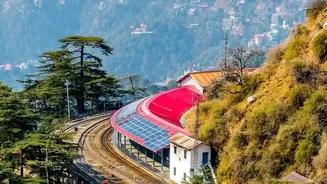
The Himalayas are more accessible by rail than you might think. For Shimla, the former summer capital of British India, the journey starts with a broad-gauge train to Kalka (KLK). From Kalka, the historic Kalka-Shimla Railway begins its 96-kilometre ascent, passing through over 100 tunnels and across 800 bridges. The five-to-six-hour journey offers spectacular views of pine forests and quaint colonial-era stations. For destinations in Uttarakhand like Mussoorie, Nainital, and Rishikesh, key gateway stations are Dehradun (DDN), Kathgodam (KGM), and Haridwar (HW). Shatabdi and Vande Bharat Express trains from Delhi provide fast connections to these foothills, from where taxis and buses complete the journey uphill. For the Kangra Valley, including Dharamshala, the nearest major railhead is Pathankot (PTK), which connects to the lesser-known but scenic Kangra Valley Railway.
Eastern Escapes: Darjeeling's Toy Train
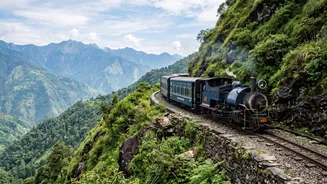
To reach the tea-clad hills of Darjeeling, your primary railway gateway is New Jalpaiguri (NJP) in West Bengal. NJP is well-connected to major cities like Kolkata and Delhi. From here, the legendary Darjeeling Himalayan Railway (DHR), affectionately known as the 'Toy Train', begins its 88-kilometre journey. This UNESCO World Heritage line, opened in 1881, is an engineering marvel, using ingenious loops and zig-zags to climb to an altitude of over 7,000 feet. The journey takes about seven to eight hours, passing through bustling market towns and offering stunning views of the Kanchenjunga range, especially from the famous Batasia Loop and Ghum, India's highest railway station.
Southern Hills: The Nilgiris and Western Ghats
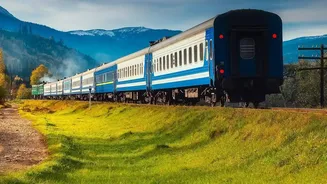
In South India, the prime mountain gateway is Ooty (Udhagamandalam) in Tamil Nadu. To get there, travellers should take a train to Mettupalayam (MTP), which is connected to major hubs like Chennai and Coimbatore. From Mettupalayam, the Nilgiri Mountain Railway (NMR) takes over. This is another UNESCO World Heritage line and the only rack-and-pinion railway in India, designed to tackle the steep gradients of the Nilgiri Hills. The blue-and-cream train slowly winds its way through 16 tunnels, dense forests, and verdant tea plantations over a scenic five-hour journey to Ooty, the 'Queen of the Nilgiris'. For other destinations in the Western Ghats like Munnar, the nearest major station is Aluva (AWY) or Ernakulam in Kerala, followed by a scenic drive.
Practical Planning Tips for Visitors
Booking train tickets in India is best done in advance, especially for the popular toy trains, which have limited seats and sell out quickly. The official booking portal is the Indian Railway Catering and Tourism Corporation (IRCTC). When booking the heritage narrow-gauge trains, remember that they are about the experience, not speed. Journeys can take five to eight hours for distances that a car might cover in three. Also, check the schedules carefully; many toy trains have early morning departures to connect with overnight trains from major cities. Finally, while the train gets you to the main hill town, always plan for last-mile connectivity via local taxis or buses to reach your final destination.