



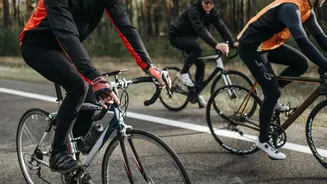
Cycling and skating are both fantastic, low-impact ways to boost your fitness. But look beyond the wheels, and you'll find two very different workouts that sculpt your body in unique ways. So, how do they really stack up against each other?
The Powerhouse Pedals of Cycling
When you think
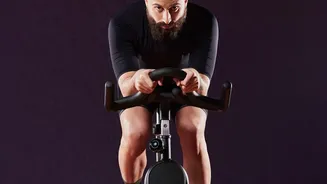
of cycling, you likely picture powerful legs. You're not wrong. Cycling is a phenomenal workout for the lower body, primarily targeting the large muscles responsible for the pedalling motion. The main players are the quadriceps (front of the thighs) and hamstrings (back of the thighs), which work in tandem to push down and pull up on the pedals. Your glutes and calves also play a significant supporting role. The consistent, repetitive motion is excellent for building muscular endurance. To increase strength, you need resistance, which you can find by tackling hills or increasing the gear on your bike. This makes cycling a fantastic choice for developing powerful, toned legs within a familiar, straightforward range of motion.
Skating's Side-to-Side Sculpting
Skating, whether inline or roller, introduces a different dimension of movement. While it also works the quads, hamstrings, and glutes, its unique side-to-side pushing motion places a special emphasis on muscles that cycling often misses. This includes the hip abductors and adductors (outer and inner thighs) and, notably, the gluteus medius—a key muscle on the side of your hip that is crucial for stability. This lateral movement not only provides a more comprehensive lower-body workout but also challenges your balance and coordination in a dynamic way. The need to stay upright and control your glide engages a wider array of stabiliser muscles.
A Tale of Two Cores
Every good workout engages the core, but cycling and skating do so differently. On a bike, particularly when properly positioned, your core works to stabilise your torso and provide a solid platform for your legs to generate power. However, skating takes core engagement to another level. The constant need to balance on a narrow base of wheels, coupled with the side-to-side and arm-swinging motions, requires continuous activation of your abdominal, oblique, and lower back muscles. This makes skating an exceptional activity for building functional core strength, balance, and agility that translates well to other sports and daily activities.
Cardio Health and Calorie Burn
Both activities are champions of cardiovascular health, strengthening your heart and lungs and improving circulation. The 'better' cardio workout often comes down to intensity. You can coast on a bike or skates, reducing the aerobic benefit, but when performed with consistent effort, both are effective. Some studies suggest that inline skating may burn slightly more calories per hour than moderate cycling because it engages more muscle groups simultaneously, including the upper body and core, to maintain momentum and balance. However, a high-intensity cycling session, like climbing steep hills, can easily surpass the calorie burn of a leisurely skate. Ultimately, the best calorie-burning workout is the one you can sustain with vigorous effort.
Kindness to Your Joints
One of the most significant shared benefits of both cycling and skating is that they are low-impact exercises. Unlike high-impact activities such as running, which can put significant stress on knees, hips, and ankles, both cycling and skating offer a smooth, gliding motion. This makes them excellent choices for individuals with joint concerns, those recovering from certain injuries, or anyone looking for a sustainable form of cardio that they can enjoy for years to come. They allow you to get your heart rate up and build strength without the pounding associated with many other forms of exercise.