



Sugar, In All Its Forms
Before we compare, it is important to understand that not all sugars are treated equally by your body. The conversation starts with two main categories: intrinsic sugars and free sugars. Intrinsic sugars are those found naturally within the cellular structure
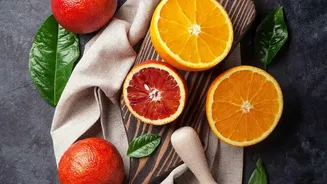
of foods, like the sugars inside an intact apple or a whole orange. Free sugars, as defined by the World Health Organization (WHO), include sugars added to foods by a cook or manufacturer, plus the sugars naturally present in honey, syrups, fruit juices, and fruit juice concentrates. This distinction is crucial. When sugar is locked inside the fibrous structure of a whole fruit, your body has to work to get it out. When it is 'free', as in juice or a sweetened beverage, it is immediately available for absorption.
The Fibre Factor: Nature's Brakes
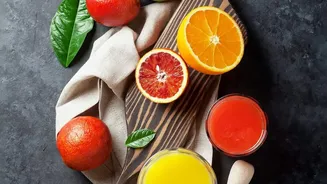
The single biggest difference between eating a whole fruit and drinking its juice is fibre. When you eat an orange, you consume not just its juice and sugars, but also the pulp and membranes that contain dietary fibre. This fibre forms a gel-like substance in your gut, which acts like a braking system. It slows down digestion and the rate at which sugar enters your bloodstream, preventing a rapid spike in blood glucose and insulin levels. This slower absorption also helps you feel full and satisfied for longer, reducing the chances of overeating. Chewing the whole fruit also contributes to this feeling of satiety, an experience you miss entirely when drinking.
Fruit Juice: A Concentrated Sugar Hit
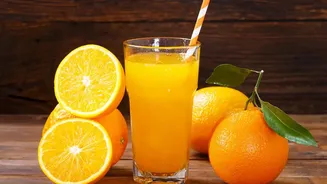
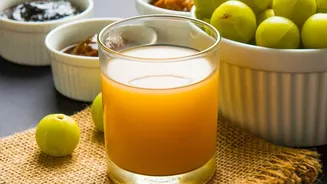
The process of juicing strips away nearly all of the insoluble fibre. What’s left is a beverage containing the water and sugar of several fruits concentrated into a single glass. For example, it might take three or four oranges to produce one 250ml glass of juice, meaning you consume the sugar of all those oranges in minutes, without the fibre to slow it down. Because these sugars are now 'free', your body absorbs them rapidly, causing a much quicker and higher spike in blood sugar, similar in some ways to a sugar-sweetened soda. This is why even 100% fruit juice, with no added sugar, is classified by the WHO as a source of free sugars.
The Glycaemic Index Tells a Story
The glycaemic index (GI) is a useful tool for understanding this difference. It measures how quickly a food raises blood sugar levels. Whole fruits typically have a low GI. For example, a whole orange has a GI of around 43. Orange juice, however, has a GI of about 57 to 66. This significant jump is almost entirely due to the removal of fibre. While 100% fruit juice does contain vitamins and minerals, its metabolic impact is dramatically different from that of whole fruit, making it a less ideal choice, especially for individuals managing blood sugar levels.
The Empty Calories of Sugary Drinks
At the far end of the spectrum are sugar-sweetened beverages like sodas, fruit punches, and energy drinks. These drinks primarily offer 'empty calories' — calories from added sugar with little to no other nutritional value. Unlike 100% fruit juice, which retains some vitamins, these drinks are directly linked to a host of negative health outcomes, including weight gain, an increased risk of type 2 diabetes, and heart disease. While some studies suggest that high consumption of fruit juice can also be linked to some of these risks, the consensus is that sugar-sweetened beverages are a far greater concern.