






A Journey for the Ages
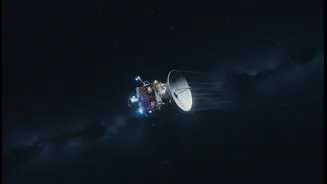
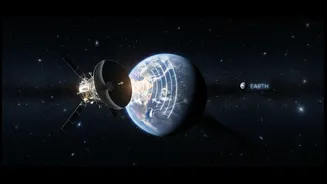
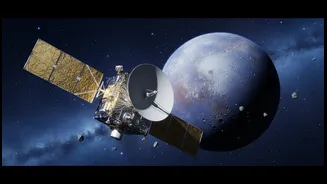
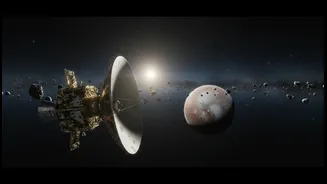
Launched in 2006, the New Horizons spacecraft was built for the long haul. Its primary mission was to conduct the first-ever flyby of Pluto, which it achieved in spectacular fashion in 2015. Since then, it has continued its journey into the Kuiper Belt,
a vast disc of icy bodies beyond Neptune. Today, it is nearly 6 billion miles from Earth, so far that a radio signal takes almost nine hours to reach it. This incredible distance and mission duration, expected to last into the 2050s, presents an enormous challenge: how to power a spacecraft for half a century in the dark, where solar panels are useless. The answer lies in a combination of a nuclear power source and the fine art of hibernation.
The Power-Saving Sleep
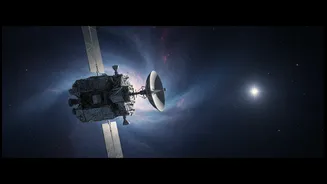
Much like a bear settling in for winter, New Horizons enters a state of hibernation during the long, quiet cruise phases of its journey. During these periods, most of its systems are powered down to save energy and reduce wear and tear on its components. Key systems like flight computers, science instruments, and transmitters go into a deep sleep. However, the probe is never completely offline. A small part of its electronic brain remains active, monitoring essential systems and sending a weekly 'green' beacon back to Earth—a simple 'I'm okay' signal for mission controllers at the Johns Hopkins Applied Physics Laboratory. After its most recent nap, which lasted 321 days, the spacecraft woke itself up on a pre-programmed command in June 2026 and began transmitting stored data.
Not A Nap—A Strategic Pause
This isn't just about saving a little battery. Hibernation serves several critical purposes. It significantly reduces the operational cost of the mission, as the craft doesn't need constant monitoring. More importantly, it preserves the longevity of the spacecraft itself. Like any machine, the components on New Horizons have a finite lifespan. By powering them down for long stretches—it has hibernated 23 times since 2007—NASA can save them for when they are needed most, such as during flybys of new objects or when performing specific scientific observations. Even while 'asleep', some instruments continue to passively collect data on the space environment, like measuring the solar wind and dust particles, making these quiet periods scientifically valuable.
The Nuclear Heartbeat
The ability to hibernate is made possible by the spacecraft's power source: a Radioisotope Thermoelectric Generator, or RTG. This 'space battery' uses the heat generated from the natural radioactive decay of plutonium-238 to create a steady, reliable flow of electricity. Unlike solar panels, an RTG works in total darkness and its power output decays slowly and predictably over decades. At its launch, the RTG provided about 250 watts of power—enough to run a few light bulbs. Over time, that output diminishes. Hibernation is therefore a crucial power management strategy, ensuring that there will be enough energy to run the spacecraft's instruments for many years to come as the RTG's output naturally wanes.
A Blueprint for Future Exploration
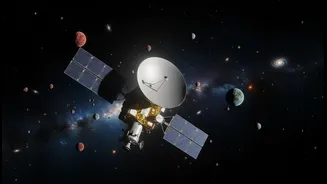
The success of New Horizons' hibernation strategy provides a vital blueprint for the even more ambitious missions of the future. Journeys to the outer planets and, one day, to other star systems will require spacecraft to operate autonomously for decades or even centuries. Power will always be a precious resource. Techniques pioneered by New Horizons—and its predecessors like the Voyager probes, which also use RTGs and careful power management—are teaching engineers how to build truly long-lived robotic explorers. By learning to 'sleep' through the void, these intrepid explorers can ensure they have the energy to awaken and show us the wonders that lie at their destination, wherever that may be.