


Your Balcony Observatory
Urban stargazing is an art of patience and preparation. First, make your viewing spot as dark as possible. Turn off all the lights in your home and on your balcony to reduce immediate glare. Position yourself to block direct light from streetlamps or
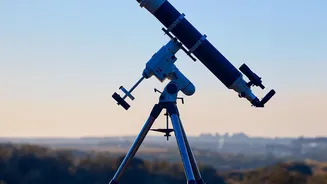
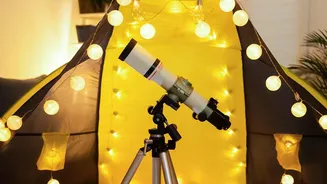
neighbouring windows. Even a strategically placed plant or screen can help. Give your eyes at least 20 minutes to adjust to the darkness; this is crucial for spotting fainter objects. You'll be surprised what emerges from the glow once your eyes are fully adapted. While a telescope is a wonderful tool, you can start with just your eyes or a simple pair of binoculars, which are excellent for getting a closer look at the Moon and bright planets.
The Ringed Jewel: Finding Saturn
October 2026 is a fantastic month for viewing Saturn. The ringed planet reaches opposition on October 4th, meaning Earth is passing directly between it and the Sun. This makes Saturn appear at its brightest and largest for the year, visible for most of the night. To find it, go out a couple of hours after sunset and look towards the east to southeast. Saturn will be a steady, yellowish-white point of light, brighter than most surrounding stars. It will be located to the lower left of the prominent Great Square of Pegasus constellation. While you can't see the rings with your naked eye, even a basic pair of binoculars will steady its light and hint at its majesty.
The King of Planets: Spotting Jupiter
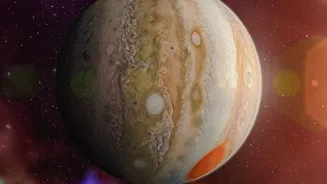
Jupiter, the undisputed king of the planets, is unmissably bright. In October 2026, it will be a brilliant beacon in the pre-dawn sky. You'll need to be an early riser or a night owl to catch it. Look to the eastern sky a few hours before sunrise. Jupiter will be one of the brightest objects there, appearing as a brilliant, steady light. On the morning of October 6th, there will be a spectacular event as the waning crescent moon passes very close to Jupiter, making it exceptionally easy to locate. In some locations, the Moon will even briefly pass in front of the planet in an event called an occultation.
Connect the Dots: Autumn's Brightest Stars
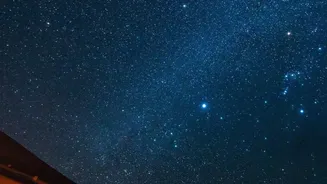
With only the brightest stars piercing through city light pollution, learning a few key patterns can help you map the sky. This October, look for the Great Square of Pegasus high in the eastern to southeastern sky after dark. This large boxy shape is one of the most recognizable signposts of the autumn sky. The four stars marking its corners are Scheat, Markab, Algenib, and Alpheratz. From there, you can try to trace a path to the famous 'W' shape of Cassiopeia, another prominent northern constellation. These patterns provide a basic map, helping you find your way around the night sky from anywhere.
Your Digital Toolkit
For a beginner, a smartphone can be the most powerful stargazing tool. Free apps like Star Walk 2, SkyView Lite, or Stellarium use your phone's location and camera to create an augmented reality view of the sky. Simply point your phone at a bright object, and the app will identify it for you, showing you the names of stars, drawing out constellation lines, and pointing you toward planets. They can show you exactly where to look for Jupiter or Saturn at any given time and are an invaluable aid for overcoming the challenges of light pollution.