






The Challenge: An Unforgiving Sun
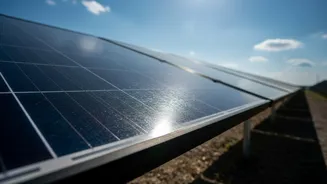
Solar panels are a remarkable technology, converting sunlight directly into electricity. But the very environment they operate in is their biggest adversary. Constant exposure to ultraviolet (UV) radiation, extreme temperature fluctuations, and moisture
slowly degrades the photovoltaic materials. This degradation reduces their efficiency over time, shortening their operational lifespan and ultimately impacting the economic viability of solar energy projects. Manufacturers add protective layers, but finding a material that is durable, effective, and sustainable has been an ongoing challenge. The goal is to maximize energy output over decades, not just years, which requires a robust shield against the elements.
Nature’s Ultimate Sunscreen
Enter melanin, the same pigment that colours our skin, hair, and eyes. In nature, its primary role is photoprotection—absorbing harmful UV radiation and dissipating it as harmless heat. This natural polymer has an incredibly broad absorption range, soaking up energy across the electromagnetic spectrum. It's also a powerful antioxidant and resists breaking down under high temperatures. Scientists have long been fascinated by these properties, wondering if this natural defense mechanism could be harnessed for technological applications. The main obstacle was producing a stable, high-quality version of melanin in a lab that could be integrated with other materials.
From Squid Ink to a Synthetic Solution
The breakthrough came from an unlikely source: the dark, rich ink of cephalopods like squid and cuttlefish. This ink is a dense source of natural melanin. Researchers developed methods to extract and purify this natural pigment, and more importantly, to understand its chemical structure. This understanding allowed them to create a bio-synthetic version. This isn't just a simple copy; it's an engineered material that mimics the protective qualities of natural melanin but is optimized for industrial use. By controlling the synthesis process, scientists can create uniform, high-quality melanin films that are ideal for coating sensitive electronic components.
A Protective Layer for Photovoltaics
When applied to solar cells, this bio-synthetic melanin acts as a multi-functional protective layer. Its primary function is to absorb the high-energy UV radiation before it can damage the delicate semiconductor materials beneath. This prevents radiation-induced degradation, which is a major cause of efficiency loss. Furthermore, melanin exhibits excellent thermal stability, helping to manage the heat that builds up in solar panels, which can also reduce performance. Studies have shown that melanin can be integrated into encapsulation layers or even used as a component in dye-sensitized solar cells (DSSCs), where its unique chemical properties help improve charge collection and overall stability. Research has shown melanin-based DSSCs can retain up to 96% of their initial performance even after 1,000 hours of continuous light exposure.
The Future of Resilient Renewables
The implications of this technology extend far beyond just making solar panels last longer. By improving weather resistance, melanin coatings could allow solar arrays to be deployed in harsher environments, from scorching deserts to high-altitude locations with intense UV exposure. It could even have applications in space, protecting satellite solar cells from cosmic radiation. The use of a biocompatible, sustainably sourced material like melanin also aligns with the green promise of renewable energy. As researchers continue to refine the synthesis and application processes, this nature-inspired innovation could play a crucial role in making solar power a more durable, efficient, and widespread energy source for the future.