


What is Nordic Walking?
Imagine cross-country skiing without the skis or the snow. That’s the essence of Nordic walking. It’s an enhanced walking technique that uses specially designed poles to work your upper body as you move. Originating in Finland as a summer training method
for cross-country skiers, this activity transforms a lower-body exercise into a coordinated, full-body workout. Unlike hiking poles, which are often used for stability in front of the body, Nordic poles are used to propel you forward, engaging your arms, shoulders, chest, and back in the process.
The Full-Body Difference
A standard walk primarily engages muscles below the waist, about 50% of your body's muscles. Nordic walking, however, activates up to 90% of your muscles. By planting the poles and pushing yourself forward, you engage the latissimus dorsi and trapezius muscles in your back, pectoral muscles in your chest, and your triceps and forearms. This upper-body engagement is what elevates it from a simple walk to a more holistic exercise, improving posture and building core strength as your torso twists naturally with the movement.
Supercharged Calorie Burn
Activating more muscles requires more energy, which translates to burning more calories. Numerous studies confirm that Nordic walking burns significantly more calories than conventional walking—with estimates ranging from an 18% to 67% increase. The Cooper Institute found an average increase of around 20% at a moderate pace. What makes this particularly appealing is that for many, it doesn't feel significantly harder. This phenomenon allows you to get a more intense workout and greater cardiovascular benefit without a proportional increase in perceived effort.
More Than Just Fitness
The benefits extend beyond muscle engagement and calorie burn. The poles provide additional points of contact with the ground, which improves stability and balance, a crucial benefit as we age. This makes it an excellent choice for individuals who may feel unsteady on their feet or want to build confidence on uneven terrain. Furthermore, using the poles helps distribute the load of each step, reducing stress on the ankles, knees, and hips. This low-impact nature makes it a joint-friendly activity that can be sustained for years. Research has also linked Nordic walking to improved heart function, reduced 'bad' LDL cholesterol, and better mental health.
Getting Started with Nordic Walking
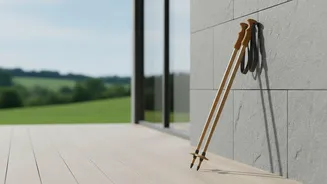
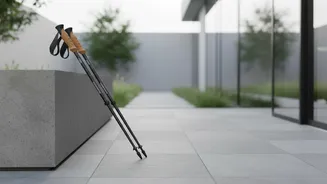
Starting is simple. The key is proper technique and the right equipment. You’ll need a pair of dedicated Nordic walking poles, which are different from trekking or hiking poles and often come with a strap system for your hands. The basic technique involves walking with your normal stride but with an exaggerated arm swing, keeping your arms relatively straight. You plant the pole of the opposite arm to your forward foot. So, as your left foot steps forward, your right arm swings forward to plant the pole. The pole should strike the ground behind you as you push off to propel yourself forward. Maintaining an upright posture with your gaze forward is key.