






Why This Trend Is Everywhere
This isn't just another fleeting internet aesthetic; it’s a perfect storm of modern values. First, there's the sustainability angle. Upcycling—transforming discarded items like old gin bottles, jam jars, or ketchup bottles into something beautiful—feels
good and costs nothing. Second, it taps into our growing desire for 'biophilic design,' which is a fancy way of saying we feel better when we're surrounded by nature. A touch of green on your desk can reduce stress and boost creativity. Finally, in India, the Money Plant (or Pothos) has deep cultural roots. Believed to bring good luck and prosperity according to Vastu Shastra, it’s a plant many of us grew up with. This trend simply gives a modern, minimalist twist to a beloved household classic, making it perfect for the WFH generation.
Gathering Your Simple Supplies
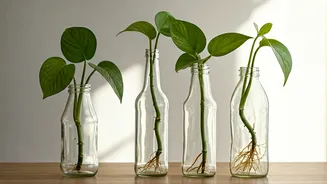
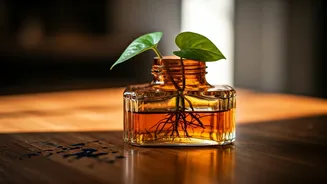
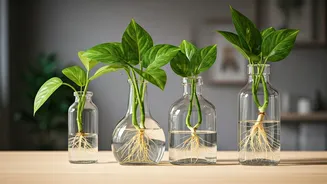
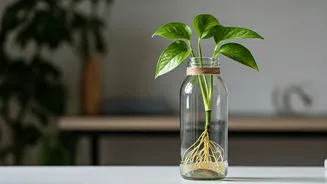
The beauty of this project is its simplicity. You don't need a trip to a specialty store or any expensive equipment. Here’s your entire checklist: 1. A Healthy Money Plant: You can either buy a small one or, even better, ask a friend or family member for a cutting from their mature plant. They grow so prolifically, most people are happy to share. 2. A Clean Glass Bottle: Look for an interesting shape. Old perfume bottles, clear or amber glass medicine bottles, or even simple sauce jars work wonderfully. Transparency is key, as you’ll want to watch the roots grow. 3. A Pair of Sharp Scissors or Pruners: Anything that can make a clean cut will do. 4. Water: Regular tap water is usually fine, but if your water is heavily chlorinated, let it sit out for 24 hours before using.
The Propagation Hack: A Step-by-Step Guide
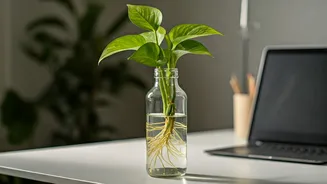
Propagating a money plant is incredibly forgiving, making it a perfect beginner's project. The magic lies in the ‘node.’ Look closely at the vine; the node is the small, brownish bump where a leaf meets the stem. This is where new roots will sprout. 1. Select a Vine: Choose a healthy, vibrant vine that has at least 4-6 leaves. 2. Make the Cut: Using your sharp scissors, cut a section of the vine about 15-20 cm long. Make sure your cutting has at least two or three nodes on it. The most important step is to cut about an inch below a node. 3. Prepare the Cutting: Gently remove the lowest leaf or two from your cutting—the ones that would otherwise be submerged in water. This prevents the leaves from rotting and keeps the water clean. 4. Place in Water: Submerge the cut end and its nodes in your prepared bottle of water. Ensure the remaining leaves are well above the waterline.
Prepping Your Bottle with Style
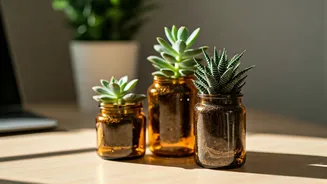
The bottle is your vase, so give it a little attention. To remove stubborn labels, soak the bottle in warm, soapy water for an hour. Any sticky residue can usually be scrubbed off with a bit of cooking oil and a cloth. Rinse it thoroughly inside and out to ensure there's no soap or dirt left. While clear bottles are classic because they showcase the growing roots, don't shy away from coloured glass. An amber or green bottle can protect the roots from harsh sunlight and add a different vintage vibe to your desk. The goal is a clean, minimalist look, so resist the urge to paint or over-decorate it. The simplicity of the glass and the green vine is the core of the aesthetic.
Styling Your Green Workstation
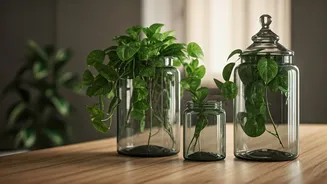
Now for the fun part: placement. Find a spot on your desk or a nearby shelf that gets bright, indirect light. Direct, harsh sunlight can scorch the leaves. Place your bottle next to a small stack of books, a scented candle, or a minimalist pen holder. The key is to create a small, curated vignette rather than just plonking it down. The trailing vine can be allowed to hang freely off a shelf or gently guided around your monitor stand. This small touch of living art instantly makes your workspace feel more personal, calm, and intentional. It’s your own little corner of green that you created yourself.