

What Are Friselle?
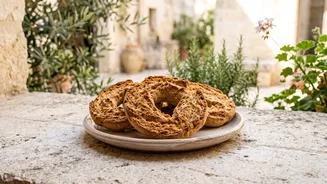
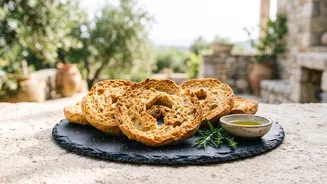
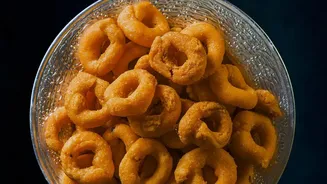
At first glance, a frisella (the singular of friselle) looks like a rough, hard, bagel-shaped cracker. Found throughout Southern Italy, particularly in Puglia, Campania, and Calabria, they are a staple of the region's 'cucina povera', or peasant cooking.
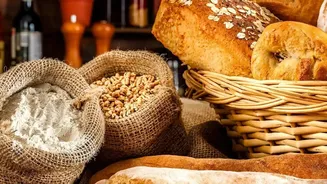
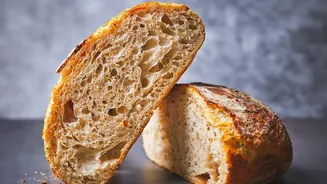
Made from a simple dough of durum wheat or barley flour, water, yeast, and salt, their magic lies not in complex ingredients but in a time-honoured technique. The name itself comes from the Latin 'fresus', meaning minced or crushed, hinting at its coarse, porous texture. One side is smooth, while the other—the inside of the bread—is rough and craggy, perfect for soaking up flavours.
The Secret to a Long Shelf Life
The frisella's incredible longevity is thanks to a double-baking process, which is why it's known as a 'pane biscottato', or twice-cooked bread. First, the dough is shaped into rings and baked until cooked through. While still warm, the rings are sliced horizontally and then baked a second time at a lower temperature until they are completely dry and rock-hard. This second bake removes virtually all moisture, which is what would typically cause bread to mould or go stale. When stored in a cool, dry place in an airtight container, friselle can last for many months, with some bakers claiming they are good for up to a year.
A Taste of History
Friselle were born out of necessity. Their origins date back centuries, serving as the ideal food for those who needed provisions for long journeys. They were a staple for fishermen, sailors, and even Crusaders, who needed food that wouldn't spoil during months at sea or on long campaigns. The ring shape was also practical; they could be easily strung onto a rope and hung for compact storage on ships. Historically, there were two versions: a more common one made with inexpensive barley flour for working families, and another made with durum wheat reserved for wealthier tables and special occasions.
The Ritual of Preparation
You never eat a frisella dry—unless you want to risk a tooth. The essential first step is rehydration, a process called 'sponzatura'. This involves quickly dipping the frisella in cold water for just a few seconds. The goal is not to make it soggy, but to 'wake it up', softening the interior while leaving a bit of its signature crunch. In ancient times, sailors would simply dip them in clean seawater before eating. Once moistened, the frisella becomes the perfect canvas for a variety of toppings, its porous surface ready to absorb olive oil and juices.
Classic Toppings and Modern Twists
The most classic way to serve friselle is 'pane e pomodoro' style, especially during the summer when tomatoes are at their peak. After moistening the bread, you simply top it with chopped ripe cherry tomatoes, a generous drizzle of high-quality extra virgin olive oil, a sprinkle of salt, and fragrant oregano or fresh basil. The tomato juices soak into the bread, creating an incredibly simple yet satisfying meal. Other popular variations include adding tuna, anchovies, capers, or creamy burrata. In Calabria, they might top it with spicy 'nduja sausage and Tropea onions, while modern interpretations treat it like an open-faced sandwich, piling on everything from smoked salmon and cream cheese to avocado.