


The Challenge of Dining in Zero Gravity
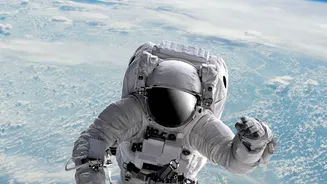
Eating in space is far more complex than just packing a lunchbox. In a microgravity environment, simple actions become significant challenges. Crumbs from bread or biscuits can float away, potentially damaging sensitive equipment or getting inhaled by
astronauts. Liquids don't pour; they form globules. Even the astronauts' sense of taste is altered. The fluid shift towards the head in zero gravity can cause congestion, similar to having a cold, which dulls the sense of smell and makes food taste bland. Furthermore, without refrigeration, all food must be shelf-stable, safe, and nutritious for the entire duration of the mission. This means every meal must be a marvel of food science, engineered for safety, nutrition, and psychological comfort.
Hyderabad's Key Role in a National Effort
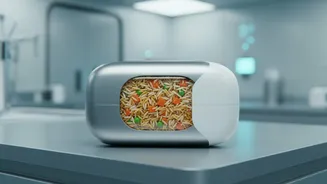
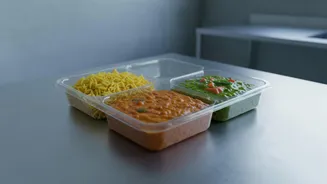
The headline is true: Hyderabad is a crucial hub for developing this cosmic cuisine. The Hyderabad-based ICMR-National Institute of Nutrition (NIN) has taken on the vital task of creating space food for the Gaganyaan crew. Scientists at NIN are deep into developing formulations that not only meet the intense nutritional demands of space travel but also cater to the Indian palate. This work complements the foundational efforts of the Mysuru-based Defence Food Research Laboratory (DFRL), which has long been the primary developer of food for India's armed forces and has created an extensive menu for ISRO. More recently, another Hyderabad-based firm, Ananth Technologies, has been collaborating with DFRL to design a smart 'tiffin box' – a sensor-fitted container to monitor the food's condition, ensuring its safety from launch to consumption.
A Taste of Home in Outer Space
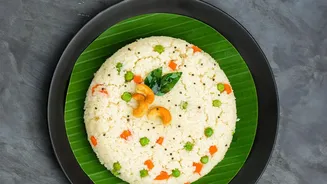
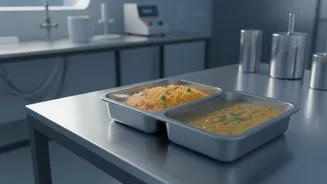
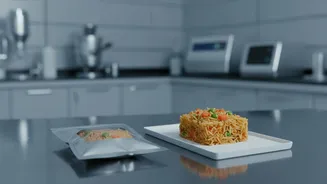
The menu being developed is designed to provide comfort and a taste of home for the astronauts. NIN in Hyderabad is working on items like khichdi, mutton rolls, and chicken nuggets. These are part of a larger menu developed primarily by DFRL that includes familiar favourites such as idli, vegetable biryani, moong dal halwa, and chicken korma. The goal is to provide a variety of dishes that are both comforting and nutritionally dense. The meals are prepared to be low-spice, but astronauts will have optional spice sachets to adjust the flavour to their liking, compensating for the altered taste perception in space. The food is typically dehydrated or in semi-solid form and can be easily reconstituted with water.
The Science Behind the Menu
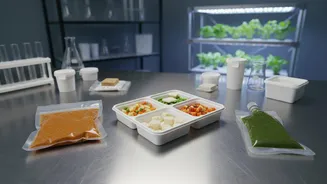
Creating food for space is a rigorous scientific process. At NIN, researchers are meticulously balancing meals to be rich in micronutrients, antioxidants, and Vitamin D, with carefully controlled sodium and fibre levels to maintain gut health. Scientists are conducting microgravity simulation studies, where participants stay in a head-down tilt position for days to mimic the physiological effects of space, helping to refine food formulations for ease of consumption. The food must be lightweight, low-volume, and produce minimal fragmentation. Each item undergoes extensive testing for stability, safety, and palatability to meet stringent standards before it can be certified for spaceflight. The process is so rigorous that for one recent mission, only three of many developed Indian dishes—Gajar Ka Halwa, Moong Dal Ka Halwa, and Amras—cleared all qualification requirements in time.
More Than Just a Meal
The focus on food goes beyond mere sustenance; it's a critical component of crew morale and psychological well-being. 'Menu fatigue' is a real concern on long missions, where eating the same meals can lead to loss of appetite and subsequent health issues. Providing a varied and enjoyable menu with familiar tastes helps combat this, ensuring astronauts remain healthy and motivated. The work being done in labs in Hyderabad and Mysuru is not just about feeding astronauts; it is about supporting the peak performance and well-being of India's pioneers as they embark on one of the nation's most ambitious scientific endeavors. It’s a testament to how every detail, right down to a comforting plate of khichdi, is vital to the success of the Gaganyaan mission.