
More Than Just a Sweet Tooth
In Bengali culture, 'mishti' is not just a dessert; it is an emotion, a language of its own. It represents joy, celebration, hospitality, and devotion. Sharing sweets is an essential custom, a way to convey good wishes and forge community bonds. During
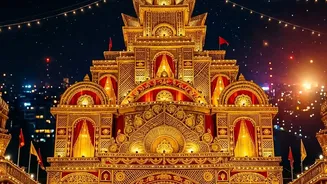
Durga Puja, this tradition reaches its zenith. A box of mishti is the standard greeting when visiting friends and family, and no festive meal is complete without it. These confections are far more than a culinary indulgence; they are an integral part of rituals and social etiquette, a universal symbol of prosperity and togetherness.
The Holy Trinity of Chhena
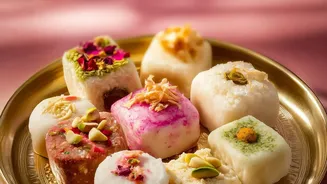
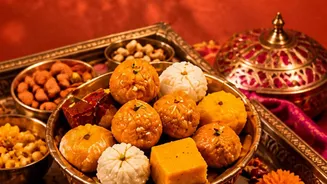
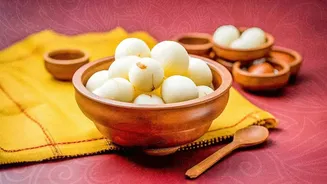
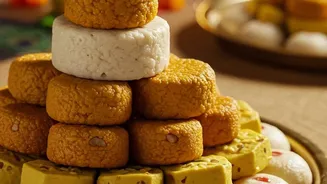
The foundation of many iconic Bengali sweets is 'chhena', a fresh, unpressed cottage cheese. The introduction of chhena-making techniques, believed to be influenced by the Portuguese in the 17th and 18th centuries, revolutionized Bengal's sweet-making traditions. This led to the creation of legendary sweets like the Rosogolla, a spongy orb soaked in light sugar syrup, popularized by confectioner Nobin Chandra Das in the 19th century. Another is the Sandesh, a delicate, drier sweet made by kneading chhena with sugar or jaggery, which can be moulded into various artistic shapes. Finally, there is Mishti Doi, a caramelized, fermented sweet yogurt, often set in earthen pots that impart a unique earthy aroma. Together, they form the cornerstone of the festival's sweet offerings.
Offerings of Devotion and Community
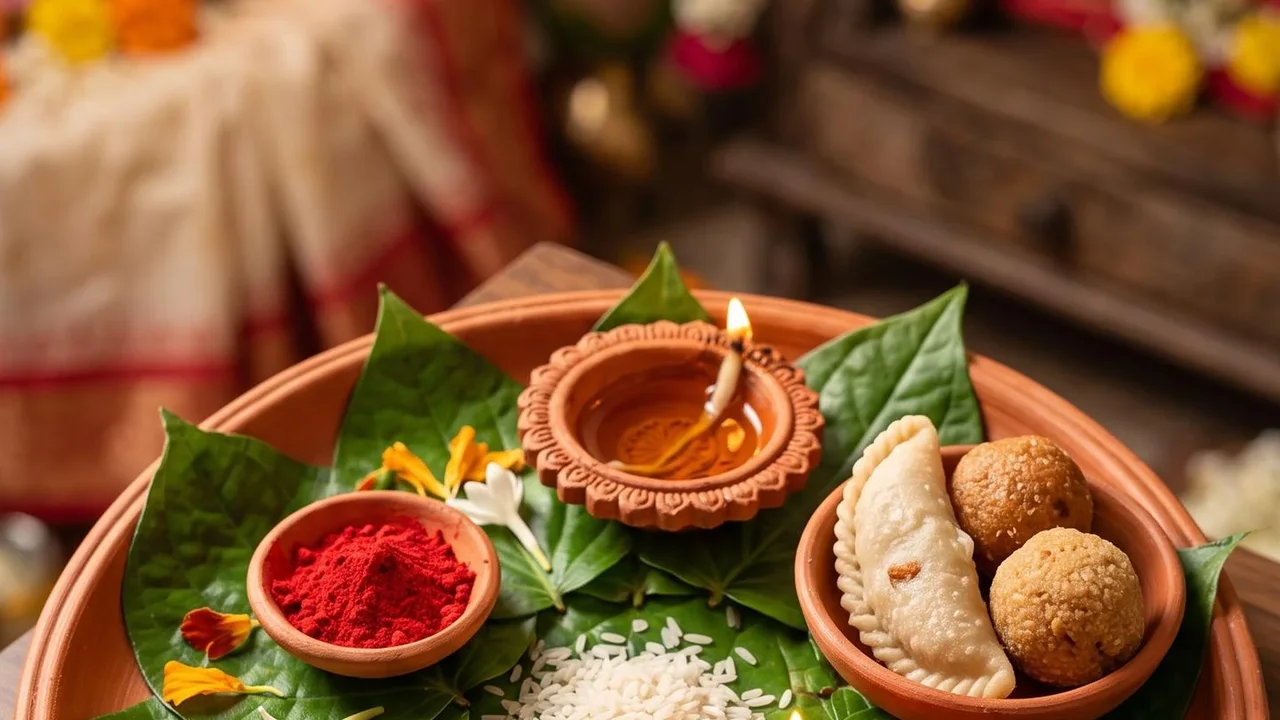
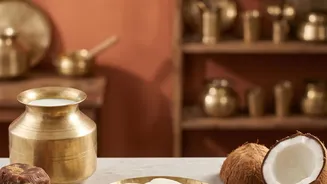
During Durga Puja, sweets are central to the act of worship. They are offered to the goddess as 'bhog' or 'prasad', a sacred offering symbolizing devotion and gratitude. Sweets like Rosogolla and Chhena Payesh (a creamy pudding) are considered pure and ideal for these rituals. Simpler, homemade sweets like Narkel Naru, which are round coconut balls made with jaggery or sugar, are also prepared and offered, symbolizing purity and prosperity. After the rituals, this prasad is distributed among devotees, fostering a sense of community and shared blessing that is core to the festival's spirit.
The Guardians of Heritage
Kolkata's culinary landscape is dotted with heritage sweet shops, some of which are centuries old and run by the same families for generations. Establishments like Girish Chandra Dey & Nakur Chandra Nandy, founded in 1844, and Adi Haridas Modak Mistanna Bhandar, dating back to around 1780, are not just businesses but cultural institutions. These shops, known as 'mishti'r dokan', are the guardians of tradition, preserving age-old recipes and techniques passed down through generations. During Durga Puja, these shops are at their busiest, with loyal customers lining up to procure their favorite festive delicacies, from classic Sandesh to seasonal specialties.
Tradition with a Modern Twist
While tradition remains paramount, Bengali sweets are not frozen in time. Many contemporary sweet makers are experimenting with new flavours and forms. It's not uncommon to find inventive creations like Chocolate Sandesh, Black Forest Sandesh, or even mango-infused Pantuwa. A particularly beloved seasonal variation is the 'Nolen Gurer Sandesh', made with fresh date palm jaggery available only in winter. This jaggery imparts a unique smoky and caramel-like flavour that is highly sought after. These innovations show that Bengali culinary heritage is a living tradition, capable of evolving while staying deeply connected to its roots.