






Your Body’s Internal Clock
Deep inside your brain is a master clock known as the circadian rhythm. This 24-hour cycle governs everything from your energy levels to your body temperature and hormone secretion. For millennia, it has relied on one primary cue to stay in sync: natural
light. Bright morning sunlight signals your body to be alert and awake, while the gradual fade into darkness tells it to prepare for rest. However, our modern world, filled with artificial light, often sends confusing signals that disrupt this ancient biological process. Exposure to light at night can throw this delicate system off balance, making it harder to wind down.
The Melatonin Connection
The key hormone in this process is melatonin. Often called the 'hormone of darkness', its job is to help regulate the sleep-wake cycle. As darkness falls, your brain's pineal gland begins to produce melatonin, which signals to your body that it's time to get sleepy. The problem is that artificial light, especially in the hours before bed, suppresses melatonin production. Even standard room light can significantly delay the onset of melatonin release and shorten its duration by about 90 minutes, essentially tricking your brain into thinking it's still daytime. This disruption not only makes it harder to fall asleep but also impacts the quality of that sleep.
Not All Light Is Created Equal
The type of light you are exposed to matters immensely. The colour temperature of light, measured in Kelvins (K), has a direct physiological effect. Cool, blue-toned light, common in fluorescent bulbs, standard LEDs, and screens from phones and televisions, has a short wavelength that is particularly effective at suppressing melatonin. This type of light mimics the brightness of midday sun, keeping you alert and energised. In contrast, warm-toned light with red, amber, or orange hues has a longer wavelength. This light, found in the 2700K to 3000K range, is far less disruptive to melatonin production. It mimics the natural glow of a sunset or a campfire, sending a biological signal of safety and relaxation to your brain, helping it prepare for rest.
How to Create a Sleep Sanctuary
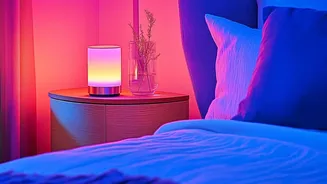
Adjusting your evening lighting is one of the most effective ways to support your natural sleep cycle. About one to two hours before you plan to sleep, begin your 'wind-down' routine by changing your lighting environment. Start by turning off bright, overhead fixtures. Instead, rely on task lighting like bedside lamps. Swap out cool, white bulbs for warm white alternatives, specifically those in the 2700K range. Many smart bulbs now offer the ability to change both brightness and colour temperature, allowing you to automate a transition from cool to warm light as the evening progresses. Using dimmers is also highly effective, as lowering the intensity of light further encourages relaxation. Finally, enable 'night mode' or 'eye comfort shield' on your electronic devices to shift their screens to a warmer colour spectrum, reducing the impact of disruptive blue light.
Beyond Falling Asleep
The benefits of proper light hygiene extend beyond just helping you fall asleep faster. By allowing melatonin to rise naturally, you enable your body to transition more smoothly through the different sleep cycles, including the deep, restorative stages. Nighttime light exposure can cause more fragmented sleep and repeated awakenings, preventing you from reaching these critical stages where your body repairs tissues, consolidates memories, and regulates hormones. Over time, protecting your evening from disruptive light can lead to waking up feeling more refreshed, with better energy levels and sharper focus throughout the day. It’s a simple change that addresses a fundamental biological need, paving the way for truly restful nights after your longest days.