


First, What Is Space Weather?
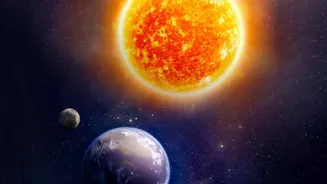
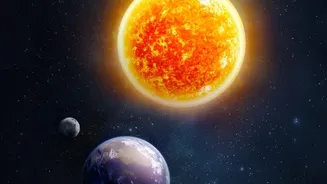
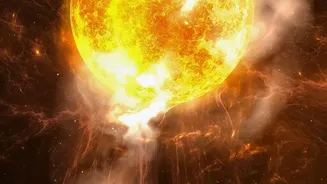
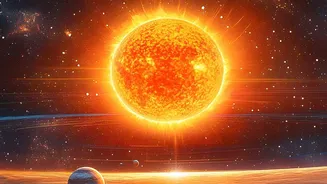
Just like weather on Earth, space has its own conditions, driven not by wind and rain, but by the Sun. Space weather refers to the changing conditions in space caused by the Sun's activity. The main events are solar flares and coronal mass ejections (CMEs).
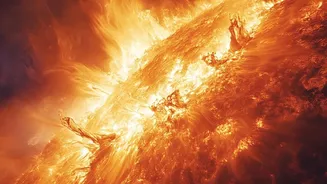
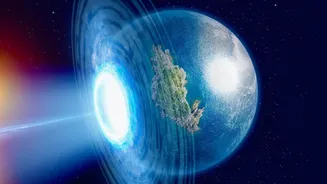
A solar flare is a massive burst of radiation. A CME is a giant cloud of charged particles, or plasma, hurled into space. When these events are directed at Earth, they can have significant effects on our technology, even though our planet's magnetic field and atmosphere protect us from the worst of it. This solar activity follows a roughly 11-year cycle of highs and lows.
The Triple Threat to Satellites
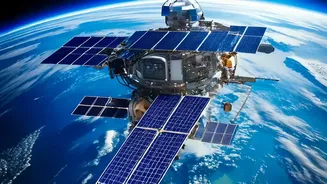
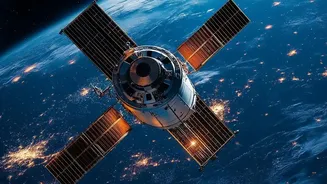
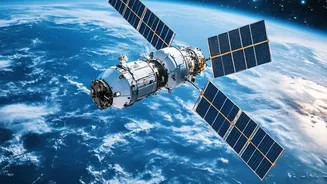
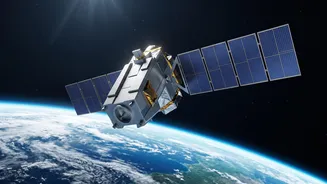
For satellites orbiting outside Earth’s protective shield, space weather poses several distinct dangers. The first is atmospheric drag. During a geomagnetic storm caused by a CME, the Earth’s upper atmosphere heats and expands. This increases the density of gases, creating more drag on satellites in low-Earth orbit (LEO). This increased friction can cause them to slow down, lose altitude, and even fall out of orbit if they can't correct their position. In February 2022, a geomagnetic storm caused the loss of dozens of brand-new Starlink satellites this way. The second threat is radiation damage. Energetic particles from a solar storm can degrade solar panels, reducing a satellite's power supply over time. They can also penetrate a satellite's electronics, causing what are called single-event upsets—flipping a 0 to a 1 in the computer's memory—which can lead to system errors and phantom commands. The third major risk is spacecraft charging. Hot plasma can build up on a satellite's surface, creating a voltage difference that can cause an electrostatic discharge—essentially a powerful zap of static electricity. This can damage sensors, coatings, and internal circuits, and has been blamed for several complete satellite failures.
Why It Matters on the Ground
Satellite disruptions aren't just a problem for space agencies. Our daily lives are deeply intertwined with this orbital infrastructure. The most direct impact is on GPS and other navigation systems. Solar flares can disrupt the ionosphere, the atmospheric layer that GPS signals must travel through. This can reduce positioning accuracy from a few metres to a complete loss of signal, affecting everything from ride-sharing apps and food delivery to commercial aviation and shipping. Satellite communications for television, internet, and long-distance calls can also be disrupted or blacked out. Furthermore, the weather forecasts we rely on are compiled using data from satellites that are vulnerable to these same solar storms. Damage to this infrastructure doesn't just cause inconvenience; it can have significant economic and public safety consequences.
Forecasting and Fighting Back
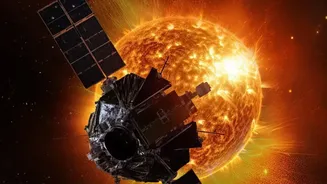
We can't stop space weather, but we can prepare for it. Agencies around the world constantly monitor the Sun to provide forecasts and warnings. This gives satellite operators time to take protective measures, such as placing a spacecraft into a protective 'safe mode' to ride out the storm. To better predict these events, India launched its own dedicated solar observatory, Aditya-L1, in September 2023. Positioned 1.5 million kilometres from Earth, it has an uninterrupted view of the Sun, tracking CMEs and solar wind to provide crucial early warnings. The data from Aditya-L1 is shared globally, contributing to a worldwide effort to understand our star's behaviour. On the hardware side, engineers are constantly developing new ways to protect satellites. This includes building them with radiation-hardened electronics and specialised shielding to absorb the impact of energetic particles. For large constellations, redundancy is also a key strategy—building so many satellites that losing a few is not catastrophic.