


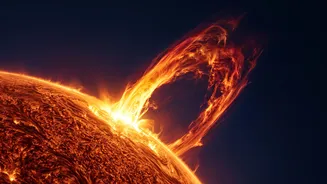
The Sun’s Restless Cycle
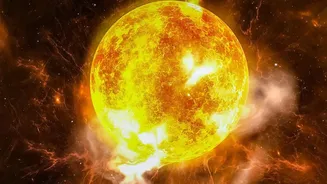
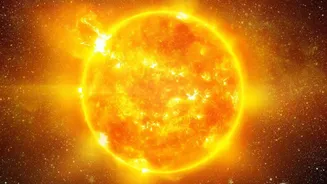
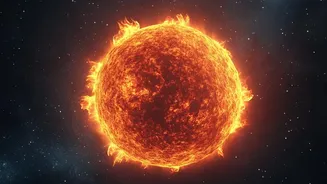
The Sun operates on an approximately 11-year cycle, moving from a period of quiet (solar minimum) to intense activity (solar maximum). We are currently in Solar Cycle 25, which began in 2019 and is predicted to reach its peak activity between late 2024
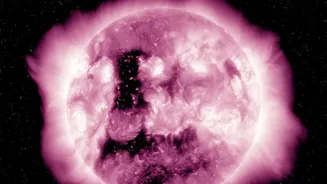
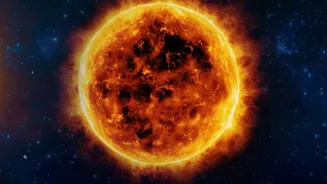
and early 2026. During this solar maximum, the Sun's magnetic field becomes unstable, leading to a dramatic increase in sunspots, solar flares, and coronal mass ejections (CMEs)—massive explosions of plasma and magnetic fields from the Sun's corona. This cycle is proving to be more intense than originally predicted, setting the stage for significant space weather events.
What Exactly is a Solar Flare?
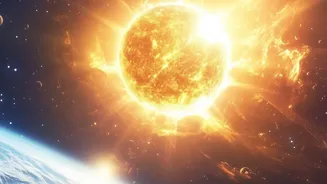
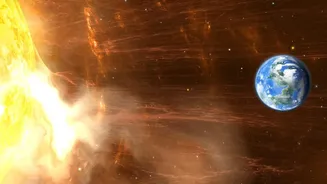
A solar flare is an intense burst of radiation erupting from the Sun's surface. These eruptions release vast amounts of energy, which travel at the speed of light and reach Earth in just eight minutes. When this energy hits our planet, it interacts with the upper atmosphere, specifically the ionosphere. This interaction can cause a range of effects, most notably disrupting high-frequency radio signals used for aviation and communication. While Earth's atmosphere protects life on the ground from harmful radiation, our technological infrastructure is far more exposed to these solar tantrums.
Understanding Space Weather
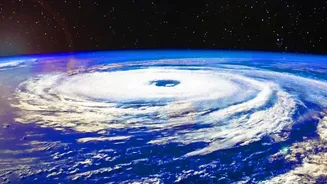
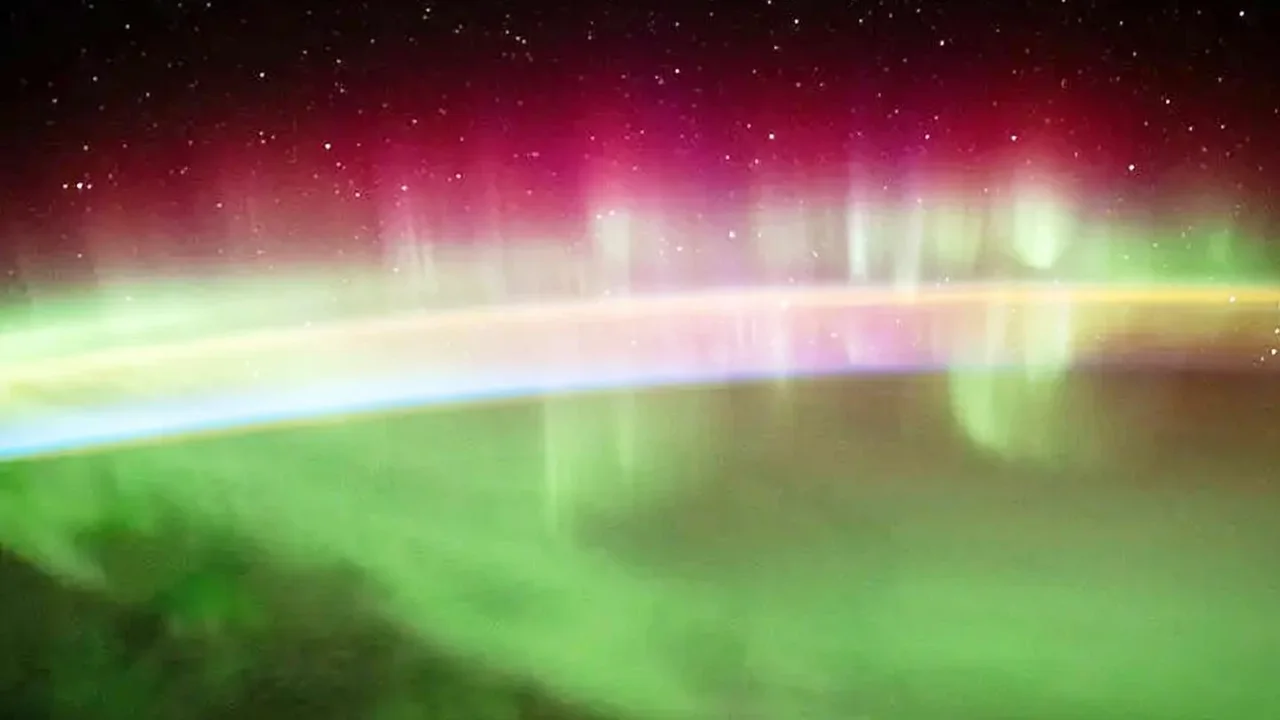
Space weather refers to the changing conditions in space caused by the Sun's activity. Think of it like weather on Earth, but instead of wind and rain, it involves solar wind, magnetic fields, and energetic particles. The primary drivers of significant space weather are solar flares and CMEs. When a CME, a massive cloud of solar plasma, is aimed at Earth, it can trigger a geomagnetic storm. These storms are major disturbances in Earth's magnetic field and are responsible for some of the most significant impacts on our technology. They can also produce spectacular auroras, or northern and southern lights, visible at lower latitudes than usual.
The Impact on Our Digital World
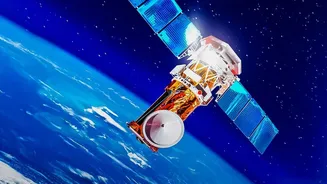
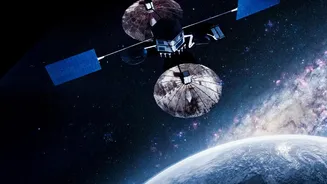
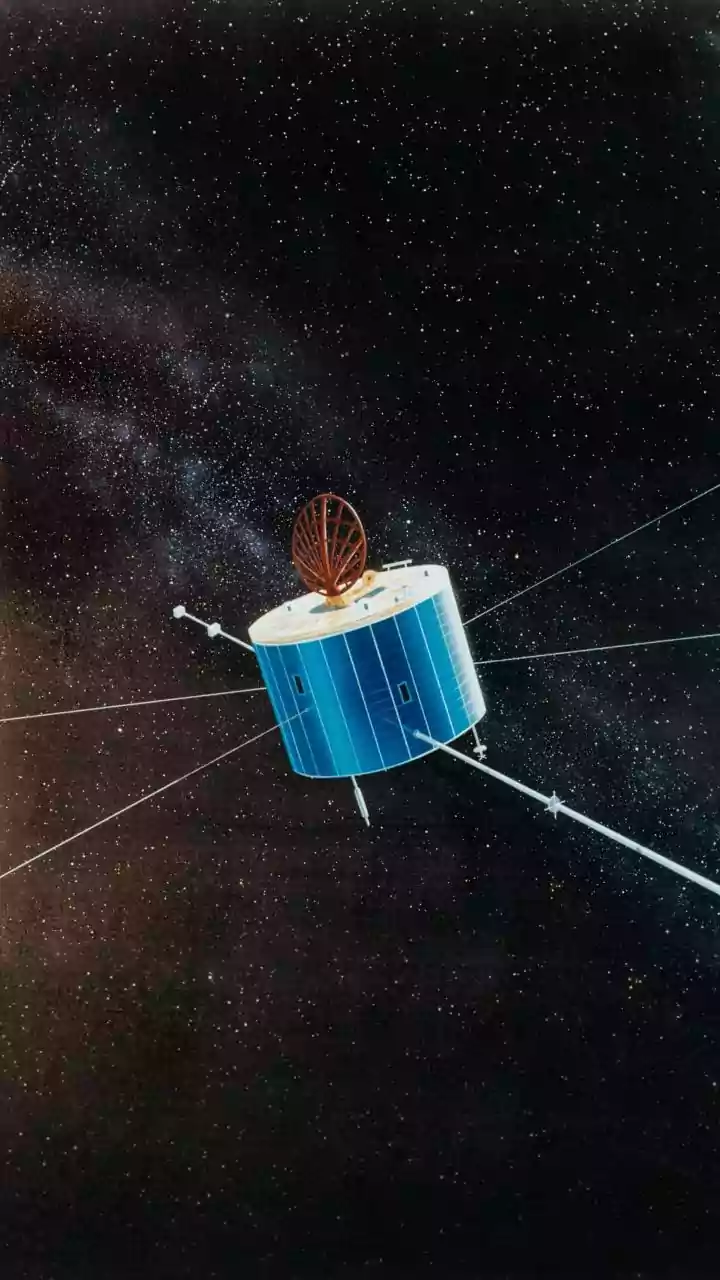
Our modern, hyper-connected society is particularly vulnerable to space weather. Satellites, which are the backbone of global communication, weather forecasting, and navigation, are directly in the line of fire. The radiation from solar events can damage their electronics and solar panels, potentially shortening their lifespan or causing complete failure. Geomagnetic storms can also heat and expand Earth's upper atmosphere, increasing drag on low-orbiting satellites and causing them to lose altitude. Furthermore, disruptions in the ionosphere can degrade GPS signals, leading to errors in navigation for everything from aeroplanes to ride-sharing apps.
Threats to Power Grids and Aviation
The impact of severe space weather extends down to the ground. A strong geomagnetic storm can induce powerful electrical currents in long conductors like power lines. These geomagnetically induced currents (GICs) can overwhelm power grids, potentially damaging critical transformers and triggering widespread blackouts. The risk is highest at high latitudes, but an extreme event could have far-reaching consequences. Aviation is also affected; solar radiation storms can pose a risk to crew and passengers on polar flights, often forcing airlines to reroute planes, while radio blackouts disrupt essential communication between pilots and air traffic control.
How India is Preparing
Space agencies around the world, including the Indian Space Research Organisation (ISRO), are actively monitoring the Sun to provide early warnings. ISRO's Aditya-L1 mission, India's first solar observatory, is strategically positioned 1.5 million kilometres from Earth to track solar activity in real-time. Along with ground-based networks like the Indian Network for Space Weather Impact Monitoring (INSWIM), Aditya-L1's data on solar winds and magnetic fields helps safeguard India's critical satellite infrastructure. These observations are crucial for forecasting space weather and mitigating its potentially disruptive effects on our nation's technology.