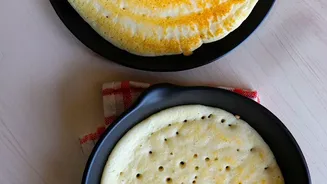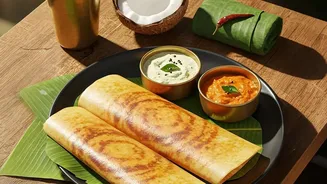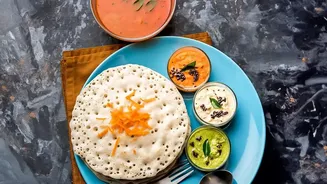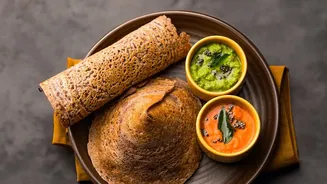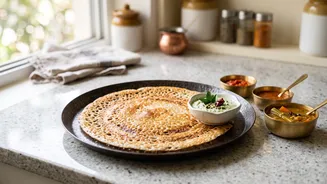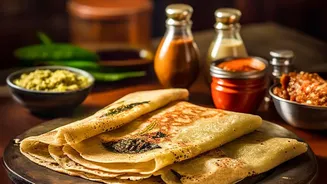


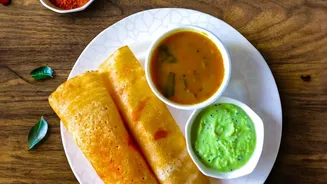
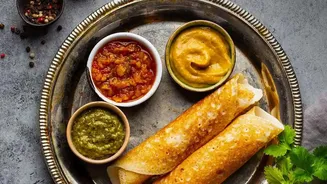
The quest for the perfect dosa—golden, paper-thin, and shatteringly crisp—often ends in a sticky, limp disappointment. The batter gets the blame, but the real culprit is hiding in plain sight: your cast-iron tawa’s temperature.
The Foundation: A Well-Seasoned Tawa
Before we even discuss heat,
the secret to a non-stick dosa lies in a properly seasoned cast-iron tawa. Seasoning is the layer of polymerised oil baked onto the iron's surface, creating a natural, slick coating that improves with every use. A new tawa needs to be seasoned, and an old one may need its seasoning restored if it becomes rusty or dull. This process involves applying a thin layer of oil and heating the pan until it smokes slightly, which can be repeated a few times to build a strong base. Many experts also suggest that a tawa used exclusively for dosas will perform better over time, as making other foods like chapati can interfere with the delicate seasoning required. Without this essential foundation, even perfect heat control won't save your dosa from sticking.
The Sweet Spot: Signs of a Perfectly Hot Tawa
A 'hot' tawa is one that's reached the ideal temperature for cooking. Cast iron retains heat exceptionally well, but it also heats up slowly and sometimes unevenly. It’s best to preheat your tawa on a medium flame for several minutes. The most reliable way to check the temperature is the water test: sprinkle a few drops of water onto the surface. If the drops sizzle and evaporate within a few seconds, or 'skitter and dance' across the pan, your tawa is ready. If they just sit there and boil slowly, it's not hot enough, and your dosa will be pale, soft, and likely to stick. Before pouring the batter, it's also a good practice to wipe the hot surface with a cloth or half an onion dipped in a little oil to ensure it's lightly greased and ready.
The Danger Zone: When Hot Becomes Overheated
Herein lies the most common dosa-making mistake. An overheated tawa is just as bad, if not worse, than an underheated one. When the pan is too hot, the batter seizes and begins to cook the instant it makes contact. This prevents you from spreading it into a thin, even circle, resulting in a thick, clumpy dosa that's often burnt on the bottom and raw on top. You’ll know the tawa is overheated if the oil on it is smoking excessively or if sprinkled water disappears instantly with a loud crackle. The extreme heat essentially 'burns off' the delicate seasoning layer, making the surface prone to sticking.
Mastering Temperature Control
The key to a stack of perfect dosas is maintaining that ideal temperature from the first one to the last. After heating the tawa properly, it's often wise to lower the flame to medium-low right before pouring the batter, as cast iron holds heat so well. If you find your tawa has become overheated, you need to cool it down slightly. The most common technique is to sprinkle some water on it; it will hiss and steam, lowering the surface temperature. After the water evaporates, wipe it clean and you’re ready for the next dosa. Some cooks also rub the pan with half an onion between dosas, which not only cleans and greases the surface but also helps regulate the temperature. This continuous cycle of slight cooling and reheating ensures every dosa gets the same perfect start.