





Beyond Traditional Solar Panels
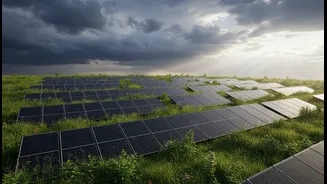
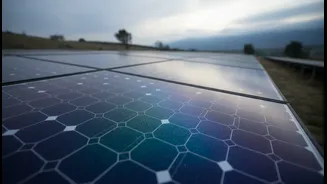
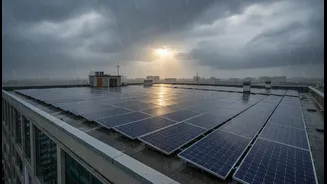
The familiar sight of rigid, silicon-based solar panels on rooftops has become a symbol of India's green energy ambitions. Traditionally, these panels have one major drawback: their efficiency plummets on overcast days. On heavily cloudy days, output
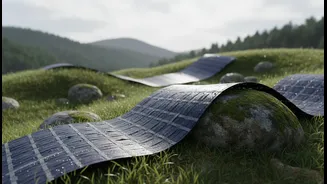
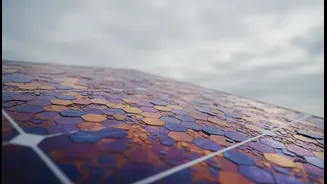
can drop to as little as 10-25% of their peak capacity. This is a significant challenge in a country where the monsoon season can last for up to four months. The headline, however, points to emerging technologies that are changing this equation. These aren't just incremental improvements; they are fundamentally different approaches to capturing solar energy, often referred to as 'solar sheets' due to their flexible and lightweight nature.
The Science of Capturing Diffused Light
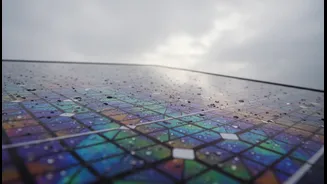
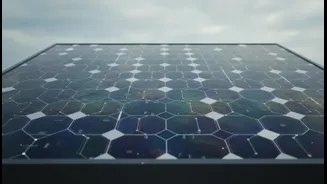
So, how can a solar panel work without direct, bright sunlight? The answer lies in technologies optimised for low-light and diffuse light conditions. Unlike conventional panels that rely on direct sunbeams, these new solar sheets are designed to be more sensitive to a wider spectrum of light, including the scattered light that filters through clouds. Two key technologies are leading this charge: Organic Photovoltaics (OPV) and Perovskite Solar Cells (PSCs). OPVs use carbon-based materials that can be processed into thin, flexible, and even transparent films. These materials are particularly good at absorbing light in indoor or low-light outdoor conditions. Perovskite cells, meanwhile, have shown remarkable efficiency in converting diffuse light into energy, making them ideal for cloudy climates. Research in India, including by institutes like CSIR-NIIST, is actively exploring these next-generation cells.
A Game-Changer for India's Monsoon
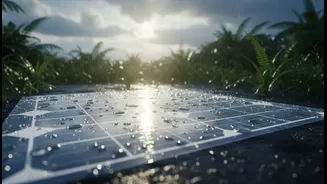
The implications for India are enormous. The country has ambitious targets for solar energy, but the monsoon presents a seasonal hurdle for grid stability and energy planning. Technologies that perform well in low light could smooth out this seasonal dip in production, providing a more consistent and reliable source of power year-round. Imagine solar installations continuing to contribute significantly to the grid even in the middle of a heavy downpour. These 'solar sheets' are also often lightweight and flexible, opening up new possibilities for deployment. They could be integrated into building facades, windows, vehicle roofs, or temporary shelters without the need for heavy, reinforced structures that traditional panels require. This versatility is a major advantage for a country with diverse and dense urban landscapes.
From the Lab to Your Rooftop
While the promise is immense, it's important to manage expectations. Many of these advanced technologies are still moving from the laboratory to commercial production. While some thin-film and bifacial panels that offer better low-light performance are already on the market, the most advanced organic and perovskite sheets are in earlier stages of commercialisation. Key challenges remain, including long-term stability and durability, especially in the harsh heat and humidity of Indian weather. However, researchers are making rapid progress. For instance, Indian scientists have developed methods to improve the stability of perovskite cells, a crucial step towards making them viable for the mass market. As manufacturing scales up and costs come down, these technologies could become a common sight within the next decade.
Powering India's Green Future, Rain or Shine
The development of solar technologies that can effectively generate power on cloudy days marks a pivotal moment in the renewable energy transition. For India, it’s not just an interesting scientific development; it’s a strategic necessity. By overcoming the intermittency caused by the monsoon, these new solar sheets can enhance the country's energy security, reduce reliance on fossil fuels during the rainy season, and accelerate the push towards a clean energy future. The ability to generate power when the sun isn't shining brightly transforms solar from a fair-weather friend into a dependable, all-season energy source. It ensures that progress on green energy doesn't have to stop when the clouds roll in.