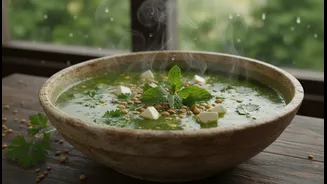









Why Broth and Protein Are Your Monsoon Allies
During the monsoon, the humid and damp environment can make our bodies more susceptible to infections. Warm, spiced broths are a cornerstone of traditional Indian wisdom for staying healthy. They are hydrating, easy to digest, and deliver the healing
properties of herbs and spices directly to your system. Spices like turmeric, ginger, and black pepper are known for their anti-inflammatory and antimicrobial qualities. But to truly fortify your body's defences, you need protein. Protein is essential for building and repairing tissues and, most importantly, for creating the antibodies and immune cells that fight off pathogens. Insufficient protein can weaken your immune response. By combining the herbal power of traditional broths with the strength of protein, you create a delicious, modern shield against seasonal ailments.
The Classic Rasam, Reimagined with Lentils
Rasam is a beloved South Indian soup, traditionally made with tamarind, tomatoes, and a special blend of spices. While it often includes a small amount of toor dal, you can easily transform it into a high-protein meal. The key is to increase the quantity and variety of lentils. A classic high-protein rasam can be made with a cup of cooked toor dal (split pigeon peas) as its base. For a lighter but still protein-rich version, consider using moong dal, which cooks quickly and has a creamy texture. Another powerful option is horse gram (kulthi), which creates a robust and nutrient-dense broth lauded for its iron and protein content. Simply blend a larger portion of cooked lentils into your rasam base to create a thicker, more substantial soup that's both comforting and incredibly nourishing.
Power-Packed Shorbas with Plant-Based Proteins
Shorba, a light soup found across India, is another perfect canvas for a protein upgrade. A simple vegetable shorba can be instantly enhanced by adding plant-based proteins. For a creamy and satisfying soup, blend in soft tofu or a handful of soaked cashews. For more texture, add whole chickpeas or kidney beans. You can also make a delicious lentil and spinach soup using masoor dal (red lentils), which cooks down into a creamy base in minutes. This not only adds significant protein but also iron and fibre. Even paneer can be used; crumbling it into a simmering tomato or mixed vegetable shorba during the last few minutes of cooking provides a soft, satisfying texture and a serious protein boost.
The Modern Kadha: From Decoction to Meal
Kadha is typically a water-based herbal decoction, not a soup. It’s made by boiling herbs and spices like tulsi, ginger, black pepper, and cinnamon. While potent, it isn’t a source of protein. However, you can use a freshly prepared kadha as the flavour base for a light, protein-fortified broth. After straining your kadha, use the aromatic liquid as a stock. To this, you can add shredded, cooked chicken and vegetables for a simple, Anglo-Indian style mulligatawny soup. For a vegetarian alternative, add cooked quinoa or a scoop of unflavoured, plant-based protein powder, which can dissolve easily and increase protein content without altering the core flavour much. Some even turn to bone broth protein powders to instantly fortify any liquid base.
Essential Herbs for Your Monsoon Broth
No matter which broth you choose, the right blend of herbs and spices is key to its immune-supporting power. Tulsi (Holy Basil) is revered in Ayurveda for its ability to help the body fight infections. Turmeric, with its active compound curcumin, is a powerful anti-inflammatory and antioxidant. Adding black pepper significantly increases curcumin's absorption. Ginger is excellent for digestion and soothing sore throats, while garlic has well-known antibacterial and antiviral properties. Cinnamon and cloves not only add warmth and flavour but also bring their own antioxidant benefits. Using these herbs generously in your high-protein broths will ensure you get a full spectrum of protective benefits.