




A New Era of Ambition
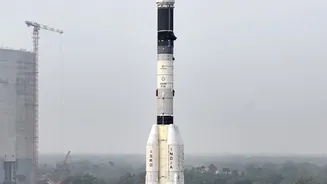
For decades, ISRO built its reputation on frugal innovation and flawless execution of practical missions, mastering satellite launches and lunar orbits. The triumphant landing of Chandrayaan-3 near the lunar south pole was a global announcement of India's
arrival as a top-tier space power. Now, the agency is shifting its focus from proving its capabilities to setting the agenda. The upcoming slate of missions is less about asking "Can we?" and more about declaring "We will." This new chapter involves not just exploring space, but creating a sustained human presence, venturing to new planetary neighbours, and developing next-generation technology that will define space exploration for decades to come.
The Human Frontier: Gaganyaan and a Home in Space
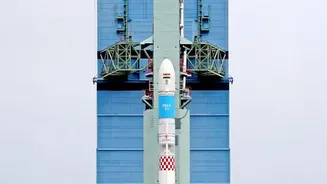
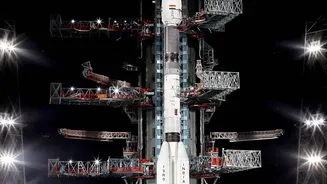
The most visible sign of this confidence is the Gaganyaan programme, India's quest to send its own astronauts into orbit. After a series of crucial qualification tests for the crew module were successfully completed in mid-2026, the path is clearing for the first uncrewed flights. The G1 mission, an uncrewed test flight, is expected in the third quarter of 2026, followed by the G2 mission carrying the humanoid robot Vyommitra. These are critical steps toward the first crewed flight, currently planned for 2027. Beyond just sending humans to orbit, ISRO has an even bolder long-term vision: the Bharatiya Antariksha Station (BAS). This modular space station is planned to be fully operational by 2035, with the first module launching as early as 2028. The station will allow for long-duration stays for astronauts and serve as a microgravity laboratory, cementing India's place as a nation with a permanent address in space.
Revisiting Our Neighbours: Mars and Venus
ISRO isn't just focused on low-Earth orbit. It's preparing to make ambitious return trips to our planetary neighbours. The sequel to the hugely successful Mars Orbiter Mission, Mangalyaan-2, is a massive leap in complexity. Unlike its predecessor, this mission aims to include a lander, a rover, and even a helicopter, demonstrating technologies like the 'sky crane' landing system pioneered by NASA. This represents a move from simply observing Mars to interacting directly with its surface. Simultaneously, the Shukrayaan-1 mission to Venus is officially in the works, with a launch planned for March 2028. This orbiter will study the dense, mysterious atmosphere of 'Earth's twin' and investigate its subsurface. Undertaking two complex interplanetary missions concurrently is a clear indicator of an agency that has mastered the fundamentals and is ready for bigger challenges.
Building Sustainable and Reusable Technology
True confidence in the space sector isn't just about spectacular missions; it's also about building sustainable and cost-effective infrastructure. Here, ISRO's Reusable Launch Vehicle (RLV) program, named Pushpak, is paramount. The goal is to develop a winged vehicle that can launch payloads and then land autonomously like an aircraft, drastically reducing the cost of access to space. ISRO has already conducted several successful landing experiments (LEX), where the winged vehicle was released from a helicopter and demonstrated its ability to land autonomously on a runway at high speed. Perfecting this technology is a game-changer, not just for ISRO's own missions but for India's ambitions in the global commercial launch market. It's a long-term investment in the foundational tech that will power India's space efforts for the next half-century.