






Know What's Up There
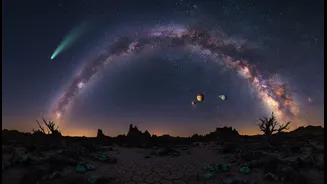
Even with cloudy skies, it helps to know what you're missing. July 2026 is packed with celestial events. Around July 7th and 8th, the Moon pairs up with Saturn in the pre-dawn sky. On July 11th, a crescent moon will form a striking triangle with Mars
and the Pleiades star cluster. A particularly beautiful sight occurs just after sunset on July 17th, when a slim crescent moon meets the brilliant planet Venus in the west. The end of the month brings the Full Buck Moon on July 29th and the peak of two meteor showers: the Southern Delta Aquariids and the Alpha Capricornids on July 30-31. While the bright moon might interfere with the meteor showers, knowing the schedule helps you take advantage of any sudden clear patches.
Embrace Indoor Astronomy
When the weather is uncooperative, your laptop or smartphone becomes your best observatory. Powerful and free planetarium software like Stellarium can show you a realistic 3D map of the sky from your exact location, helping you learn constellations and track celestial events. Mobile apps such as SkyView, Star Walk, or Indian Sky Map turn your phone into an augmented-reality window to the stars, identifying planets and satellites when you point it at the sky. This is an excellent way to learn star navigation, so when the skies do clear, you’ll know exactly where to look.
Visit a Planetarium
For a guaranteed starry experience, nothing beats a trip to a planetarium. Major cities across India have excellent facilities that offer immersive shows regardless of the weather outside. The M.P. Birla Planetariums in Kolkata, Chennai, and Hyderabad are iconic institutions. The Nehru Planetarium in Mumbai and the Priyadarshini Planetarium in Thiruvananthapuram are also renowned for their state-of-the-art projectors and engaging educational programs that bring the universe to life on their domed screens. Some, like the Swami Vivekananda Planetarium in Mangalore, even offer stunning 3D shows. It's the perfect family-friendly, rain-proof way to get your astronomy fix.
Plan a Strategic Stargazing Trip
If you are determined to see real stars, your best bet is to travel to a rain-shadow region where the monsoon has little to no effect. Areas like Ladakh and Spiti Valley in the Himalayas are high-altitude deserts that remain dry and clear throughout July and August. Hanle in Ladakh is famously home to India's first Dark Sky Reserve, offering some of the most pristine skies in the world. Western Rajasthan, including Jaisalmer, also experiences very little rainfall. Another option is the Coromandel coast of Tamil Nadu; places like Dhanushkodi get almost no rain from the southwest monsoon, saving their wet season for later in the year. These trips require planning but reward you with spectacular, cloud-free nights.
Use Downtime to Level Up
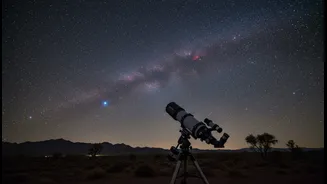
Cloudy nights are the perfect opportunity to sharpen your astronomy skills. This could be the time to finally clean your telescope lenses, learn how to collimate your instrument, or read that classic astronomy book you've had on your shelf. You can dive into online workshops about astrophotography, learning how to process images from space telescopes like Hubble or Webb. Many local amateur astronomy clubs move their meetings and workshops online during the monsoon, creating a virtual community to share knowledge and plan for the clear skies of autumn. Think of the monsoon not as an obstacle but as an off-season for training and preparation.