






In the vast expanse of our solar system, a tiny space rock is causing a big stir. Known as 1998 KY26, this bus-sized asteroid is not just hurtling through space; it's doing so in a way that has scientists both puzzled and intrigued.
Meet the Cosmic Spinner
First discovered in
1998, 1998 KY26 is a near-Earth asteroid that is remarkable for its incredibly small size and astonishing rotational speed. Recent observations have pegged its diameter at just 11 meters (about 36 feet), making it smaller than a city bus. What's more, it spins on its axis once every 5.35 minutes. This rapid rotation is so extreme that if the asteroid weren't a solid, monolithic piece of rock, the centrifugal forces would likely tear it apart. Early observations suggested it was rich in water and organic compounds, similar to certain types of meteorites, making it a point of scientific fascination from the start.
An Orbit with a Nudge
The core of the mystery surrounding 1998 KY26 lies in its orbit. Like all celestial bodies, its path is primarily dictated by the gravitational pull of the Sun and other planets. However, its trajectory shows a slight but persistent deviation—a form of acceleration that gravity alone cannot explain. This phenomenon is particularly noticeable as a non-gravitational push that alters its path in a way perpendicular to its orbital plane. For years, scientists have worked to understand the source of this gentle but steady nudge that is altering the asteroid's journey through the cosmos.
The Yarkovsky Effect Explained
The leading explanation for this acceleration is a subtle phenomenon known as the Yarkovsky effect. This effect occurs when an asteroid absorbs sunlight and then re-radiates that energy back into space as heat. Because the asteroid is rotating, this heat isn't emitted evenly in all directions. One side is always warmer than the other. This uneven thermal emission creates a tiny, continuous thrust that, over long periods, can significantly alter an object's orbit. For a small, fast-spinning body like 1998 KY26, the Yarkovsky effect is believed to be a major driver of its orbital changes. Some researchers had floated the idea that the asteroid could be a 'dark comet,' propelled by escaping gases invisible to telescopes, but recent modeling suggests the asteroid is too warm to sustain the buried ice needed for such activity.
A Mission to Uncover Its Secrets
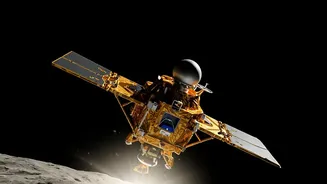
The peculiarities of 1998 KY26 have made it a high priority target for close up study. Japan's Aerospace Exploration Agency (JAXA) has tasked its Hayabusa2 spacecraft, famous for returning samples from the asteroid Ryugu, with an extended mission to rendezvous with 1998 KY26 in July 2031. This will mark the first time a spacecraft has visited such a small, rapidly rotating object. The mission aims to provide ground truth data on its composition, structure, and the forces acting upon it, helping to confirm whether the Yarkovsky effect is indeed the cause of its strange orbit. The updated, smaller size and faster spin present new challenges for the mission's engineers, who must navigate these tricky conditions to study the rock up close.
Why This Tiny Rock Matters
Studying an object like 1998 KY26 is about more than solving a cosmic curiosity. Understanding the physics of small asteroids is crucial for planetary defense. Objects in this size range are the most common type to enter Earth's atmosphere, and knowing their structure—whether they are solid monoliths or loosely bound rubble piles—is vital for predicting how they might behave during an impact event. Furthermore, these tiny bodies are considered remnants from the formation of the solar system. By studying them, we can gain invaluable insights into the building blocks of planets and the history of our cosmic neighborhood.