

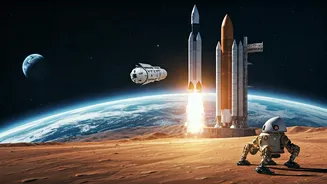


The Race to the Lunar South Pole
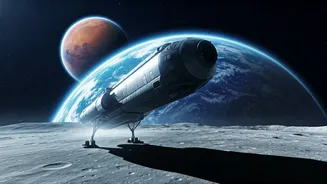
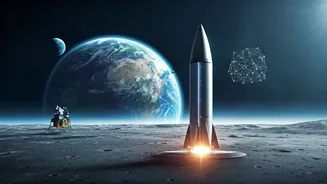
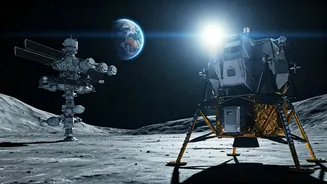
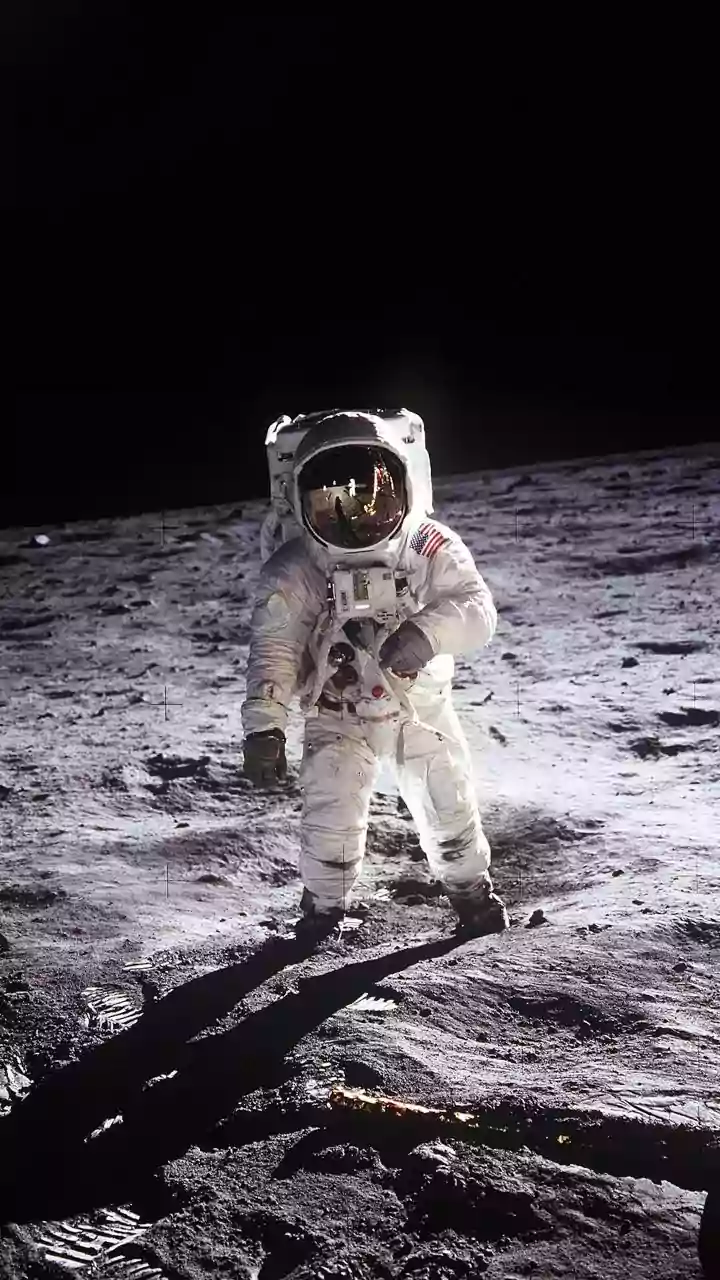
The Moon, particularly its south pole, is the primary focus of competition in 2026. This region is believed to contain water ice in permanently shadowed craters, a resource that could be vital for future long-term missions. China is pushing ahead with
its ambitious Chang'e program. The Chang'e-7 mission, scheduled for launch in August 2026, is a complex robotic endeavor involving an orbiter, lander, rover, and a unique mini-hopping probe designed to explore these shadowed craters for water. This mission is a crucial step in China's plan to establish an International Lunar Research Station. Meanwhile, the United States is advancing its Artemis program, though the first crewed landing, Artemis III, has been rescheduled to 2027, where it will perform tests in Earth orbit. In 2026, NASA will instead focus on a series of robotic landings with commercial partners like Intuitive Machines and Firefly Aerospace to deliver science and technology payloads, preparing the ground for future human explorers. Private companies like Blue Origin are also planning robotic demonstration missions of their lunar landers.
Beyond the Moon: Mars and Asteroids
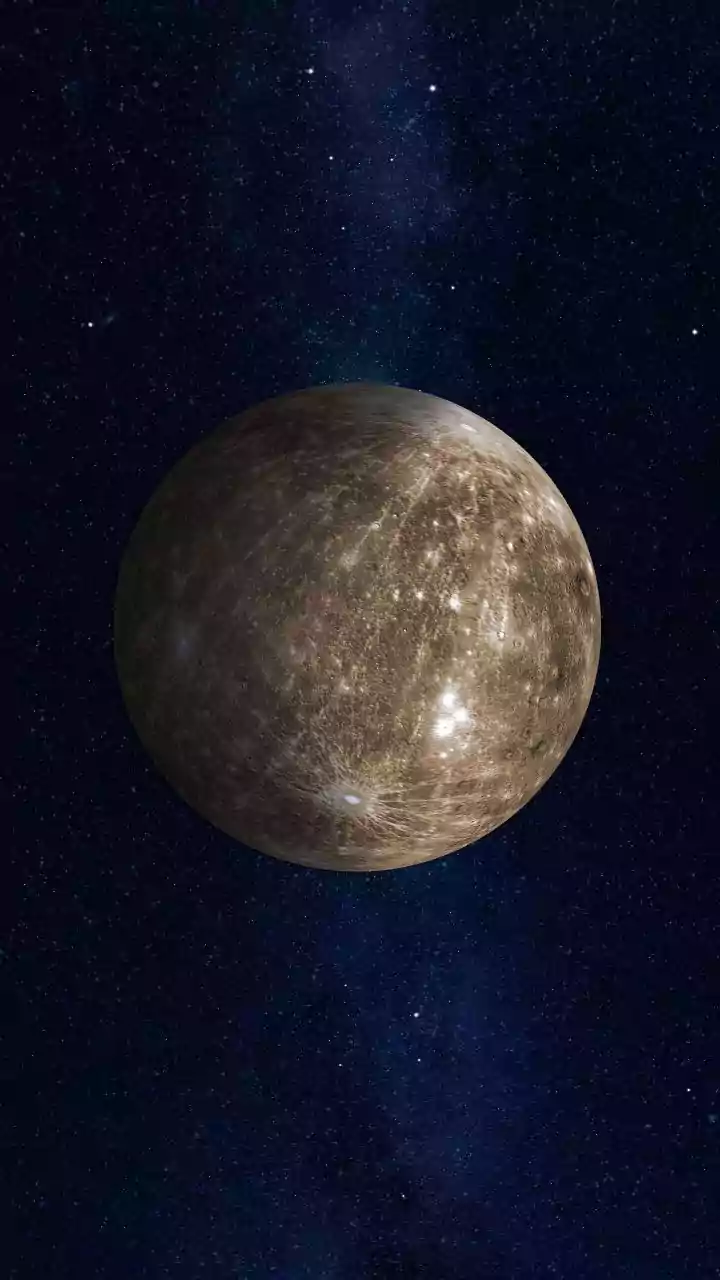
While the Moon takes center stage, other celestial bodies are also targeted for landmark missions. Japan's Aerospace Exploration Agency (JAXA) is set to launch its Martian Moons eXploration (MMX) mission in late 2026. This ambitious probe will travel to Mars, study its two small moons, Phobos and Deimos, and attempt the first-ever sample return from Phobos, which could finally reveal the moons' origins. The European Space Agency (ESA) is also looking beyond Earth. In November 2026, its Hera spacecraft is scheduled to arrive at the Didymos asteroid system to survey the crater left by NASA's DART impact in 2022, providing crucial data for planetary defense strategies. Additionally, the joint ESA-JAXA BepiColombo mission is expected to finally enter orbit around Mercury in late 2026 after an eight-year journey, promising to unveil new secrets about the Solar System's innermost planet.
India's Ascending Ambitions
Building on its recent successes, the Indian Space Research Organisation (ISRO) is planning a busy year. While specific timelines can shift, ISRO has outlined an ambitious roadmap leading up to March 2026 and beyond, including multiple missions. A key focus is the Gaganyaan program, India's quest for human spaceflight. The first uncrewed orbital test flight, Gaganyaan-1 (G1), is slated for the second half of 2026 and will carry the Vyommitra humanoid robot. This mission is a critical precursor to sending Indian astronauts into orbit. ISRO also plans to launch the TRISHNA satellite in 2026, a joint mission with France to monitor climate and water resources. These efforts are part of a broader national strategy to execute dozens of launches in the coming years, enhancing India's capabilities in communication, navigation, and commercial satellite deployment.
The Commercial Space Boom
The role of private companies has become more central than ever. SpaceX continues to push the boundaries with its Starship system, the fully reusable vehicle designed for missions to the Moon, Mars, and beyond. The company dominates the launch market and is expanding its Starlink constellation, with a potential IPO eyed for late 2026 or 2027. Blue Origin, founded by Jeff Bezos, is aiming for a high launch cadence for its New Glenn heavy-lift rocket in 2026. Other companies like Sierra Space are developing reusable spaceplanes like the Dream Chaser and habitats for future commercial space stations, as NASA plans to transition away from the International Space Station around 2030. This growing ecosystem of private players is not just supporting government missions but is actively developing the infrastructure for a permanent human presence and economy in space.