




What Exactly Is the New UPI Fee?
The National Payments Corporation of India (NPCI) has announced a new rule that will end the six-year era of entirely free UPI transactions for businesses. Starting October 15, 2026, a Merchant Discount Rate (MDR) of 0.4% will be applied to person-to-merchant
(P2M) UPI transactions that are over ₹2,000. This is not a fee for consumers. The charge is paid by the merchant who receives the payment. For very large transactions, this fee is capped at ₹300. For instance, a payment of ₹3,000 will attract an MDR of ₹12, while a payment of ₹1 lakh will hit the ₹300 cap. This move is designed to create a sustainable revenue stream for the banks and payment companies that maintain the vast UPI infrastructure.
Do I Have to Pay More Now?
The short and most important answer is no. The government and NPCI have been very clear that consumers will not pay any fee for using UPI. You will continue to pay only the listed price of goods and services. Merchants are explicitly prohibited from passing this MDR on to customers as a separate surcharge. Furthermore, the new fee structure does not affect all transactions. Person-to-person (P2P) payments, like sending money to friends or family, remain completely free. Crucially, any merchant transaction up to ₹2,000 is also exempt from the fee, which covers the vast majority—over 95%—of all UPI merchant payments.
Why Is This Happening Now?
The timing, right before the Navratri-Diwali festive period, has certainly caused a stir. However, the rationale behind the fee is about long-term sustainability. For years, banks and payment service providers have absorbed the costs of running the UPI network, which processes trillions of rupees in transactions. As UPI's scale grew, so did the operational costs for infrastructure, cybersecurity, and innovation. Officials argue that without a revenue model, the system's continued growth and security could be at risk. The new MDR is intended to be a 'calibrated' approach, creating an economic model for higher-value transactions while protecting small, everyday payments. The revenue is distributed among ecosystem players to support the network's expansion and resilience.
The Festive Shopping Connection
The introduction of this fee just before the busiest retail season has merchants worried. During the festive rush, transaction values for items like electronics, apparel, and gifts often exceed the ₹2,000 threshold. Retailers, many of whom operate on thin profit margins of just 1-2%, are concerned that the 0.4% charge will eat into their earnings. While they cannot directly charge customers a UPI fee, some retailers have warned that they may be forced to reduce discounts or, in some cases, factor the cost into their overall pricing. There are also fears that some smaller businesses might start encouraging cash payments for larger purchases to avoid the fee, a potential step back in India's digital payment journey.
The Real-World Impact for Shoppers
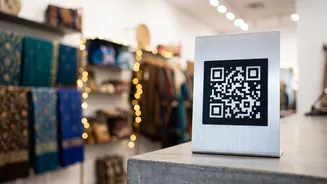
For the average shopper, the direct impact is minimal. Your daily coffee, grocery run, and other small purchases remain unaffected. The experience of scanning a QR code and paying will not change. However, the 'cost conversation' is about the indirect effects. As merchants absorb this new cost on higher-ticket items, shoppers could see less aggressive festive discounts than in previous years. Some merchants might try to find workarounds, like asking customers to split a large payment into multiple smaller ones to stay under the ₹2,000 limit, though the compliance of such practices is unclear. The key takeaway for consumers is that while UPI itself remains free for you to use, the introduction of a merchant fee signals a maturing of the ecosystem, where the costs of convenience are being redistributed behind the scenes.