

A Telescope on a Continental Scale
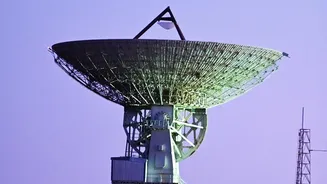
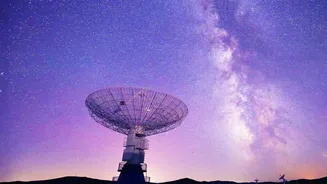
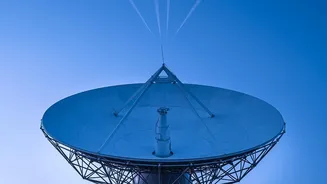
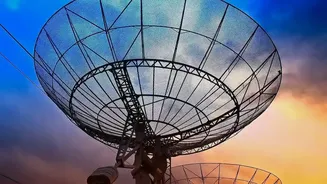
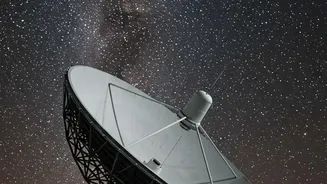
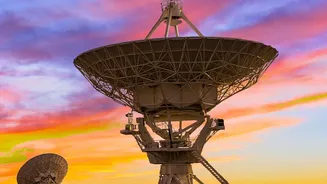
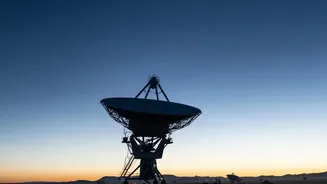
The Square Kilometre Array isn't a single telescope, but a continent-spanning network of radio antennas. It is being constructed at two remote sites chosen for their pristine, radio-quiet skies: Western Australia and South Africa. The Australian site,
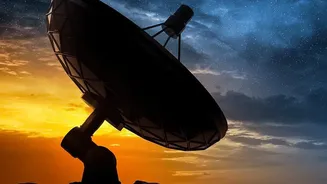
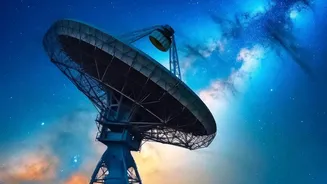
SKA-Low, will feature over 131,000 Christmas tree-like antennas to capture low-frequency radio waves. The South African site, SKA-Mid, will consist of nearly 200 traditional-looking dishes, including the already powerful 64-dish MeerKAT array, to observe mid-range frequencies. Overseen by the SKA Observatory (SKAO), an intergovernmental organisation headquartered in the UK, this massive project involves more than a dozen countries in a collaborative effort to build the most sensitive radio instrument ever conceived.
Listening to the Cosmic Dawn
The SKA's primary mission is to answer some of the most profound questions in astrophysics, many of which concern the early universe. One key target is a period known as the Cosmic Dawn, just a few hundred million years after the Big Bang, when the first stars and galaxies ignited and began to light up the cosmos. The faint signals from this era are incredibly difficult to detect, but the SKA is designed to do just that by mapping the universe's most abundant element: hydrogen. The SKA-Low telescope, in particular, will tune into the specific frequencies emitted by hydrogen gas as it transitioned from a neutral state to being ionised by the light of the first stars, a period called the Epoch of Reionisation.
Unlocking Primordial Secrets
While the full array is still under construction with scientific operations expected to begin around 2027-2028, its pathfinder telescopes and early integrations are already yielding revolutionary insights. The precursor MeerKAT telescope has produced the clearest radio images of the center of our own Milky Way galaxy. Pathfinders like Australia's ASKAP telescope have discovered mysterious phenomena like "odd radio circles" and are rapidly mapping millions of new radio sources. Recent theoretical work and early data are preparing astronomers to use the SKA's full power to test the standard model of cosmology, probe the nature of dark matter, and refine our understanding of cosmic inflation. These initial phases are not just tests; they are active scientific instruments uncovering cosmic secrets and setting the stage for even bigger discoveries.
An Unprecedented Data Challenge
The sheer sensitivity of the SKA—designed to be 50 times more sensitive than any other radio instrument—creates a monumental technical challenge. When fully operational, the telescopes will generate data at a rate exceeding the entire world's internet traffic from just a few years ago. This deluge of information will require supercomputers with processing power far beyond current capabilities to sort, store, and analyse. This has spurred innovation not only in astronomy but also in high-performance computing and data science, creating technological spin-offs that could have wide-ranging impacts. The project is as much a big-data endeavor as it is an astronomical one.