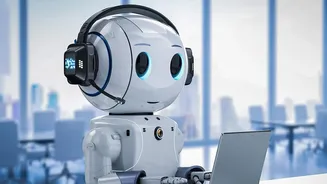




Your New Research Assistant
The first step in any interview preparation is research, and this is where AI shines. Instead of spending hours sifting through corporate websites and news articles, you can use AI tools like ChatGPT or Gemini to get a quick, digestible summary. Ask the
AI to research the company's recent achievements, its market position, its key competitors, and its company culture. You can even paste the job description and ask the AI to identify the core responsibilities and skills the employer is looking for. This process helps you move beyond a surface-level understanding and prepares you to ask insightful questions, showing the interviewer you’ve done your homework.
Brainstorming, Not Scripting
Once you understand the role and the company, you can use AI to anticipate likely interview questions. Feed the job description into the tool and ask it to generate a list of potential technical, behavioural, and situational questions. This gives you a strong foundation for your preparation. The next step is crucial: use these prompts to brainstorm your own answers based on your unique experiences. You can outline your responses using popular frameworks like the STAR method (Situation, Task, Action, Result) to structure your stories. The goal is to use AI to generate ideas and structure, not to write a complete script that you memorize. Authentic, personal stories will always be more compelling than a perfectly polished but generic AI-generated answer.
The Danger of Sounding Like a Robot
Hiring managers are becoming adept at spotting AI-generated content. Overly formal language, a lack of personal inflection, and generic buzzwords are all red flags. A survey found that nearly 20% of recruiters would reject a candidate if they suspected their application materials were entirely AI-written. The same principle applies to interview answers. Your personality, passion, and unique voice are what help you stand out. If you simply copy and paste an answer from an AI, you lose the human element that builds connection and trust. Always review and heavily edit any text generated by AI to ensure it reflects your own voice and experiences. The tool should be a starting point, not the final product.
Practice and Refine with an AI Partner
One of the most powerful uses of AI is as an untiring practice partner. Many platforms now offer AI-powered interview simulators that can ask you questions and provide feedback on your answers. You can use these tools to practice your delivery, check your pacing, and refine your talking points. Recording yourself and watching it back can reveal nervous habits or areas where your answers are unclear. This practice builds confidence and helps you deliver your responses more naturally during the actual interview. It turns the abstract preparation into a concrete skill, ensuring you are ready for the pressure of a real interview.
Fact-Check Everything
A significant risk of using generative AI is its tendency to produce incorrect information, sometimes called "hallucinations." An AI tool might invent statistics, misrepresent a company's history, or suggest skills you don't actually possess. Submitting a resume with false information or stating an incorrect fact in an interview can instantly disqualify you. It is your responsibility to verify every piece of information that AI provides. Cross-check facts with reliable sources like the company's official website, recent financial reports, and credible news articles. Your credibility is on the line.
Never Use AI During the Interview
While using AI to prepare is smart, using it during a live interview is a major mistake that could get you blacklisted. Hiring managers report catching candidates using AI tools off-screen to generate answers in real-time, often leading to immediate disqualification. The awkward pauses, the sound of typing, or the unnatural, screen-read delivery are obvious giveaways. An interview is a test of your ability to think on your feet and communicate your own knowledge. Relying on an AI crutch signals to the employer that you may not be qualified for the role and raises serious questions about your integrity.