





The Hidden Cost of Sitting Still
For many professionals in India and across the globe, the eight-hour workday is largely spent in a chair. While seemingly harmless, this prolonged sedentary behaviour has a significant impact on our bodies. When we sit for long periods, our metabolic
rate slows down. This inactivity is linked to a host of health concerns, including an increased risk of weight gain and metabolic issues. The phrase 'sitting is the new smoking' has gained traction for a reason, highlighting the serious, cumulative effect that a lack of movement can have on our long-term health. Even for those who exercise regularly, spending the majority of the day seated can partially counteract the benefits of their workouts. This makes finding ways to stay active during work hours not just a bonus, but a necessity for modern wellness.
Meet NEAT: Your Secret Metabolic Engine
The key to understanding the benefit of small movements lies in a concept called Non-Exercise Activity Thermogenesis, or NEAT. NEAT is the energy we expend for everything we do that isn't sleeping, eating, or formal exercise. This includes daily activities like walking to the breakroom, typing, fidgeting, and even standing up from your chair. While each of these actions may seem minor on its own, their cumulative effect on your daily caloric expenditure can be substantial. By consciously increasing our NEAT, we can effectively turn up our body's background calorie-burning furnace. This is where integrating quick stretches and other small movements into your workday becomes a powerful strategy for boosting your metabolism.
Do Stretches Truly Burn Calories?
Let's address the main question: does stretching at your desk significantly boost your calorie burn? The answer is nuanced. Compared to vigorous exercise, a few minutes of stretching won't burn hundreds of calories. Estimates suggest that a 10-minute stretching session might burn around 30-40 calories, while an hour could burn between 120 and 180 calories, depending on body weight and intensity. However, the real value isn't just in the immediate calories burned. The act of breaking up prolonged sitting is what truly matters. Studies show that even short, intermittent periods of standing or moving can increase energy expenditure more than uninterrupted sitting. Simply transitioning from sitting to standing engages muscles and has a metabolic cost. Therefore, while a single neck roll is modest, a day filled with these micro-breaks adds up, contributing to your NEAT and helping to keep your metabolism active.
Simple Stretches to Start Today
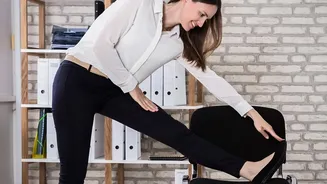
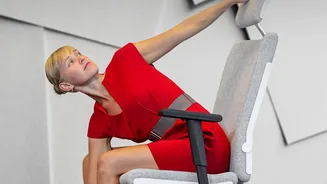
You don't need a yoga mat or special equipment to get started. These simple stretches can be done right at your desk to release tension and get your body moving. Neck Rolls: Gently drop your chin to your chest and slowly roll your right ear toward your right shoulder. Hold for 15 seconds, then repeat on the left side. This helps relieve neck strain from looking at a screen. Seated Spinal Twist: Sit upright and turn your torso to the right, using the armrest or back of the chair for a gentle twist. Hold for 20 seconds, feeling the stretch in your spine, then switch sides. Chest Opener: Interlace your fingers behind your back, straighten your arms, and gently lift your hands upward. This counteracts the slouched posture many of us adopt at a desk. Forearm and Wrist Stretch: Extend one arm in front of you with the palm facing up. With your other hand, gently pull your fingers down and back toward your body. Hold for 20 seconds and repeat with the other arm. This is crucial for anyone who spends hours typing.
Building a Habit of Movement
The greatest challenge is making these breaks a consistent part of your routine. The key is to make it effortless. Set a recurring timer on your phone or computer to remind yourself to stand up and stretch every hour. Another effective strategy is 'habit stacking'. Link your stretching break to an existing routine, such as after you finish a call, send an email, or refill your water bottle. You could also try a 'sit-stand' cycle. For every 30-60 minutes of sitting, make it a point to stand for a few minutes while you work or take a short walk. Breaking up your sitting time doesn't have to be disruptive; even small, consistent efforts can lead to significant benefits in how you feel and how your body functions throughout the day.