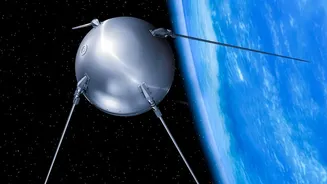

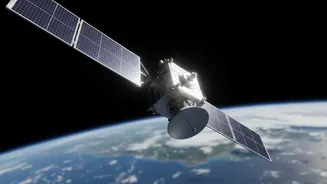
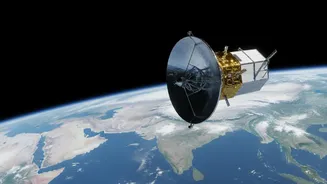

From a Single Star to a Constellation
For most of India's history in space, the Indian Space Research Organisation (ISRO) was the sole destination for aspiring space professionals. It was, and remains, a prestigious path defined by national missions and scientific discovery. However, since
the government opened the sector to private enterprise in 2020, the landscape has transformed dramatically. Today, there are more than 400 space-tech startups registered with the regulatory body IN-SPACe. This boom means the Indian space economy, currently valued around $8-9 billion, is projected to surge to $44 billion by 2033, creating a massive demand for new talent. This shift represents a move from a single, government-led employer to a dynamic ecosystem of private innovation.
Meet the New Trailblazers
This new era is being defined by a host of ambitious startups founded by a mix of former ISRO scientists and young entrepreneurs. Companies like Skyroot Aerospace, which developed India's first privately-built rocket, and Agnikul Cosmos, known for its 3D-printed rocket engines, are pioneering launch vehicle technology. In the satellite domain, Pixxel is building a constellation for hyperspectral Earth imaging, while Dhruva Space offers full-stack satellite solutions. Others, like Bellatrix Aerospace, are focused on crucial subsystems like satellite propulsion. These are not just research projects; they are full-fledged businesses hiring aggressively across multiple domains, moving beyond components to offer end-to-end services.
The In-Demand Job Roles
The popular image of a space career is often limited to astronauts and rocket scientists, but the reality is far broader. The new commercial space sector has created a huge demand for specialists in fields that go well beyond traditional aerospace engineering. Some of the most sought-after roles include Guidance, Navigation, and Control (GNC) engineers, propulsion systems experts, and avionics specialists who design the brains and engines of rockets and satellites. As companies like Pixxel and SatSure build out their services, there is a growing need for geospatial data analysts and remote sensing engineers to turn satellite images into actionable insights for agriculture, urban planning, and climate monitoring. Furthermore, roles in mission operations, managing ground control for active spacecraft, are also becoming crucial.
Skills for the New Space Age
While a foundation in engineering, physics, and mathematics remains vital, the private space industry is also looking for a wider range of skills. Software is a critical component, with demand for specialists in embedded systems, AI/ML for image analytics, and cybersecurity for space systems. Experience with CAD, simulation software, and data analysis tools like Python is highly valued. Importantly, the fast-paced, product-focused nature of startups requires professionals with system-level thinking—the ability to understand how different components work together under extreme conditions. Beyond technical skills, these companies also need experts in business development, marketing, and a particularly new and growing field: space law and policy, to navigate the complex regulations of the cosmos.
ISRO's Evolving Role in a New Galaxy
The rise of the private sector doesn't diminish ISRO's importance; it changes its role. The national agency is now transitioning to focus more on frontier science, deep-space exploration like the Gaganyaan human spaceflight program, and strategic R&D, while private players handle more routine commercial launches and satellite manufacturing. The government actively facilitates this through IN-SPACe, a single-window agency that helps private companies access ISRO's facilities and expertise. While this has led to some talent moving from ISRO to the private sector, many see it as a natural evolution of a maturing ecosystem, strengthening India's overall space ambitions rather than weakening them.