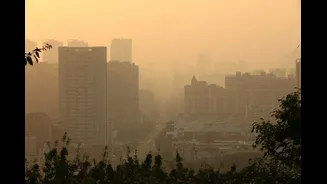







The desire to exercise outdoors often clashes with the reality of poor air quality. This guide offers practical advice on how to continue your fitness journey safely by understanding and adapting to changing environmental conditions.
Why Air Quality Matters for Your Workout
When you exercise,
your breathing rate increases significantly, and you tend to breathe more deeply through your mouth. While this process fuels your muscles with oxygen, it also means you inhale a greater volume of airborne pollutants. Unlike breathing through the nose, which filters some particles, mouth breathing allows pollutants like fine particulate matter (PM2.5) and ozone to travel deeper into your lungs and even enter your bloodstream. This can lead to a range of health issues, from immediate effects like coughing, throat irritation, and chest tightness to more serious long-term risks, including increased cardiovascular stress, impaired lung function, and exacerbated asthma symptoms. For athletes, this can also translate into a measurable hit on performance.
Understanding the Air Quality Index (AQI)
The Air Quality Index, or AQI, is a simple, colour-coded tool used to communicate how polluted the air is. In India, you can check the real-time AQI through government resources like the SAFAR (System of Air Quality and Weather Forecasting and Research) and CPCB (Central Pollution Control Board) apps and websites. The scale typically runs from 0 to 500 and is broken into categories: 'Good' (0-50), 'Satisfactory' (51-100), 'Moderate' (101-200), 'Poor' (201-300), 'Very Poor' (301-400), and 'Severe' (401-500). A higher number signifies a greater level of air pollution and a more significant health concern. Making it a habit to check the daily AQI can help you make informed decisions before heading out for a run or walk.
A Practical AQI-Based Workout Guide
Knowing the number is one thing; knowing what to do with it is another. Here’s a simple breakdown for healthy individuals:
AQI 0-100 (Good to Satisfactory): Air quality is considered safe for all outdoor activities. Train as you normally would.
AQI 101-150 (Moderate/Unhealthy for Sensitive Groups): Most healthy people can still exercise, but it's wise to reduce the intensity or duration of long, strenuous workouts. Sensitive groups—including children, older adults, and those with heart or lung conditions—should consider moving their workout indoors.
AQI 151-200 (Unhealthy/Poor): Everyone is at a higher risk of experiencing negative health effects. It's strongly recommended to avoid intense or prolonged outdoor exercise. If you must be outside, opt for a very light activity, like a short walk, and consider an indoor alternative like a treadmill or gym session.
AQI 201+ (Very Unhealthy/Poor to Severe): All outdoor exercise should be avoided. The health risks significantly outweigh any potential fitness benefits. This is the time to fully embrace indoor workouts until conditions improve.
Smart Strategies to Reduce Exposure
Beyond simply skipping a workout, you can make several strategic adjustments to minimise your exposure to pollutants. The time of day matters; air quality is often better in the early morning before traffic and sunlight have caused pollutants to accumulate. Location is also key. Try to exercise in parks or on trails away from high-traffic roads, as pollution levels drop significantly even a short distance from vehicle emissions. If you're near a busy road, try to move around vehicles rather than following directly behind them. On days with moderately poor air, consider changing your activity. Instead of a high-intensity run that forces deep mouth breathing, opt for a brisk walk or a gentle yoga session. This reduces the volume of air you inhale, thereby lowering your pollutant dose.