





Artemis: The Return to the Moon
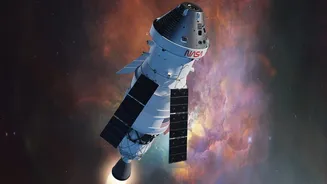
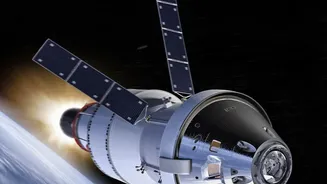
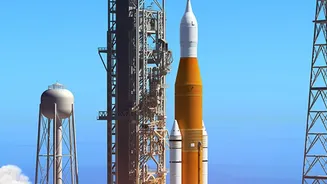
The biggest and most immediate push is the Artemis program, which aims to establish a sustainable human presence on the Moon for the first time since the Apollo era. After the successful uncrewed Artemis I and crewed Artemis II fly-by missions, all eyes
are on Artemis III, which will land astronauts, including the first woman, on the lunar surface. But this is about more than just flags and footprints. The ultimate goal is to build a long-term lunar base and an orbiting outpost called the Gateway. This infrastructure will serve as a deep-space proving ground, allowing scientists to study the effects of long-duration spaceflight on the human body and test technologies needed for an even more ambitious goal: sending humans to Mars. The impact here is twofold: it re-establishes human deep-space capability and creates a commercial and scientific ecosystem around the Moon.
Europa Clipper: The Ocean World Explorer
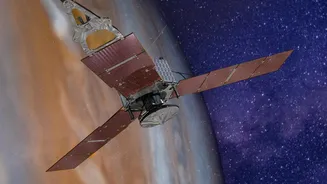
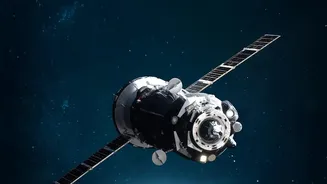
One of the most profound questions is whether we are alone in the universe. The Europa Clipper mission is designed to take a major step toward answering it. Launched in October 2024, the spacecraft is on a multi-year journey to Jupiter's moon Europa. Scientists believe Europa hides a vast saltwater ocean beneath its icy crust, potentially containing more water than all of Earth's oceans combined. This ocean is considered one of the most promising places in the solar system to find a habitable environment. Europa Clipper isn't looking for life itself, but it will perform dozens of close flybys, some just 25 kilometers above the surface, to characterize the ice shell, confirm the ocean's existence, and search for the chemical ingredients necessary for life. Its nine science instruments will map the surface and analyse any plumes of water vapour that might be erupting into space, essentially sampling the ocean from a distance.
Mars Sample Return: Bringing the Red Planet to Earth
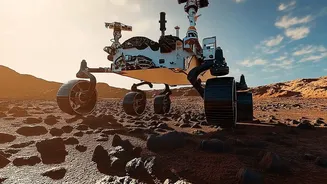
We've sent rovers and landers to Mars, but to truly understand its secrets, we need to bring a piece of it home. The Mars Sample Return (MSR) campaign is an audacious, multi-part mission to do just that. NASA's Perseverance rover is already on Mars, drilling and caching rock and soil samples in Jezero Crater, the site of an ancient river delta. The next, highly complex step involves sending a lander to retrieve these samples, launching them into Mars orbit with a small rocket, and having another spacecraft capture them for the long journey back to Earth. Analyzing these samples in advanced laboratories on Earth will allow for a level of investigation impossible with robotic instruments, no matter how sophisticated. It could definitively answer whether microbial life ever existed on Mars and provide critical information for the eventual human exploration of the planet. While facing budget and timeline challenges, the potential scientific return is considered revolutionary.
Dragonfly: A Drone on a Distant Moon
Perhaps the most sci-fi of all of NASA's upcoming missions is Dragonfly, a nuclear-powered, car-sized drone destined for Saturn's largest moon, Titan. Scheduled to launch in 2028, Dragonfly will arrive at Titan in 2034 to explore a world that is both strangely Earth-like and utterly alien. Titan has a thick atmosphere, weather, and liquid on its surface—but its clouds, rivers, and lakes are made of liquid methane and ethane, not water. Dragonfly will fly from one location to another, sampling and analysing the complex organic chemistry happening on the surface. Its goal is to investigate how far prebiotic chemistry—the steps that lead from chemistry to biology—has progressed in an environment without liquid water. By exploring diverse locations, from impact craters to dunes, it will provide unprecedented insights into the building blocks of life.