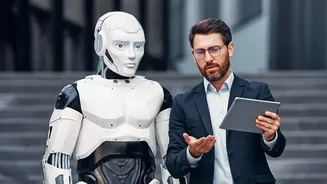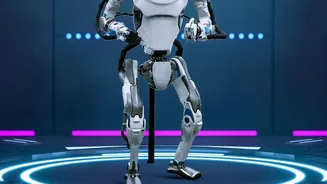




Viral videos show humanoid robots with stunning agility. But as these machines step out of the lab and into real-world factory trials, the industry faces a critical test: proving they can deliver real economic value, not just impressive demos.
The New Wave of Workers
The world
of humanoid robotics is no longer science fiction. A growing roster of companies is racing to build and deploy autonomous, two-legged robots designed to work in environments built for people. Names like Tesla with its Optimus robot, Figure AI, Apptronik, and the veteran Boston Dynamics are leading the charge. Their pitch is compelling: a general-purpose robot that can be trained to perform a variety of unsafe, repetitive, or boring tasks, from logistics and material handling to manufacturing and assembly. The core idea is that a robot shaped like a person can slot into existing workflows without requiring expensive, large-scale facility redesigns. This has attracted billions in investment and partnerships with major industrial players, all betting that these robots are the next frontier in automation.
From the Lab to the Factory Floor
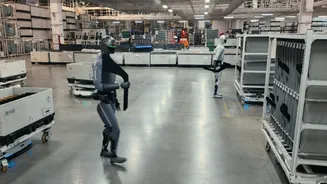
The era of real-world testing is already here. In 2026, the focus has firmly shifted from laboratory demonstrations to pilot programs on active factory floors. Figure AI has a widely publicised partnership with BMW, testing its robots on logistics and component-handling tasks in manufacturing plants. Similarly, Apptronik's Apollo robot is being trialled by Mercedes-Benz for delivering parts to the production line. Boston Dynamics, whose Atlas robot has long been a benchmark for dynamic mobility, is now producing a commercial version targeted at industrial applications with partners like Hyundai. These pilot programs are crucial, as they move the robots from controlled, predictable settings into the messy, dynamic reality of a busy industrial site. The goal is to see if they can perform useful work reliably, safely, and efficiently alongside human workers.
The Billion-Dollar Question of Value
Despite the progress, significant hurdles remain before humanoid robots become a common sight in workplaces. The primary challenge is proving their economic value proposition. A robot must be able to perform a task not just as well as a human, but better, faster, or more cheaply. Early pilot results show that robots are often still slower than their human counterparts for the same task. Hardware limitations are a major factor. Battery life is a critical issue, with most humanoids unable to complete a full eight-hour shift on a single charge. Dexterity is another obstacle; while robot hands have improved, they still struggle with the fine motor skills and adaptability required for many tasks. Reliability and maintenance over thousands of hours of operation are also largely unproven.
Beyond Physical Labour
A robot's body is only half the equation; its 'brain'—the AI and software—is arguably more important. The biggest software problem is generalisation. While a robot can be trained to perform a specific, repetitive sequence, its performance often drops significantly when it encounters unfamiliar objects, lighting conditions, or situations. This is why many current deployments are focused on very narrow, structured tasks, like moving totes in a warehouse. To achieve true general-purpose utility, these robots need to learn and adapt quickly. This has led to a race for training data, with companies using simulation, human teleoperation, and real-world deployment to feed the AI models that will give these machines their intelligence. Partnerships with AI leaders like Google DeepMind are becoming common, aiming to create foundational models for robotics.
What's at Stake for Industry
The potential payoff for cracking the humanoid code is enormous. For industries like manufacturing, logistics, and healthcare, these robots could help solve persistent labour shortages, especially for physically demanding or undesirable jobs. They could improve workplace safety by taking over hazardous tasks and reduce the ergonomic strain that leads to injuries. For companies, this translates to increased productivity, better quality control, and ultimately, a stronger bottom line. In economies with a strong manufacturing base, the successful integration of humanoid robots could be a transformative economic force. However, this potential is balanced against the challenge of ensuring the technology is reliable, cost_effective,
and safely integrated into shared human_robot environments.