





Why July is a Stargazer’s Dream
July offers a perfect cocktail for amateur astronomers and casual sky-watchers alike. Across much of India, summer nights provide clearer skies, and this month is packed with celestial events that are both beautiful and easy to spot. The main attraction
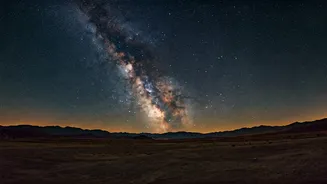
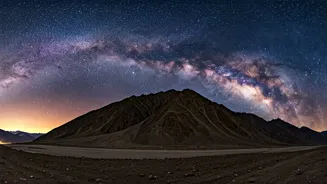
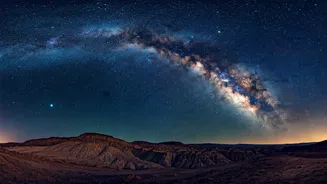
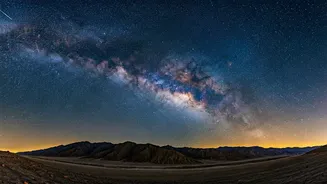
is the heart of our own galaxy, the Milky Way, which becomes highly visible. The period around the new moon on July 14th will offer the darkest skies, making it the ideal time to gaze upwards. This is when the galaxy’s dense, star-filled core stretches across the sky like a shimmering river of light, a sight often lost to city dwellers.
Ladakh: India's Window to the Cosmos
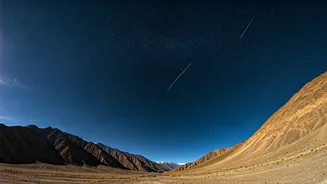
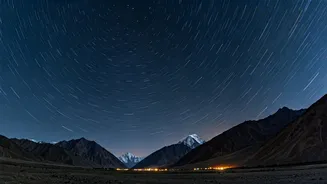
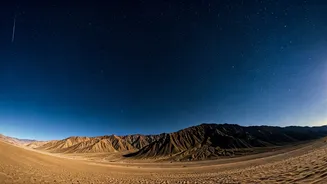
For the ultimate stargazing experience, nowhere in India compares to Ladakh. Its high altitude, dry climate, and minimal light pollution create near-perfect viewing conditions. The crown jewel is Hanle, officially designated as India’s first Dark Sky Reserve. Located in the remote Changthang region at an altitude of about 4,500 metres, Hanle is home to the Indian Astronomical Observatory. The entire area is protected from artificial light, ensuring the night sky remains profoundly dark and revealing celestial objects in breathtaking detail. Even without a telescope, the Milky Way is so bright here it can seem to dominate the sky.
Your July 2026 Night Sky Planner
Here are the must-see events this month: Mars Meets Uranus (July 4): The month kicks off with a rare close alignment of Mars and Uranus. They will appear very close together in the eastern sky before sunrise. While Mars will be a faint orange dot to the naked eye, you'll need binoculars to spot Uranus right beside it. Moon and Saturn Pairing (July 7-8): In the early morning hours, watch as the third-quarter Moon pairs up with Saturn. The ringed planet will appear as a steady, golden point of light, making for a beautiful, serene sight. The Milky Way’s Peak (Mid-July): The days surrounding the new moon on July 14th are your best bet for seeing the Milky Way. With no moonlight to wash out the stars, the galactic core will be gloriously visible from dark-sky locations. Delta Aquariids Meteor Shower (July 30-31): July ends with the peak of the Southern Delta Aquariids meteor shower. This shower is known for a steady stream of meteors, offering up to 25 per hour under ideal conditions. However, the nearly full moon on July 29th will make it challenging to see fainter meteors this year, so your best bet is to look during the hours before dawn.
The Hanle Dark-Sky Coordinates
Hanle is located in eastern Ladakh, approximately 270 km from Leh, which is a journey of about 6-7 hours by road. The village itself is situated at coordinates around 32.77° N latitude and 79.00° E longitude. When planning a trip, the destination is simply 'Hanle village'. Permits are mandatory for this sensitive border area. Indian citizens need an Inner Line Permit (ILP), while foreign nationals require a Protected Area Permit (PAP), both of which can be arranged in Leh. Due to the extreme altitude of 14,764 feet, proper acclimatisation is crucial. Spend at least two nights in Leh before proceeding to higher areas like Hanle.
Tips for a Perfect Night of Stargazing
Whether you're in Ladakh or a dark spot closer to home, a few tips can enhance your experience. First, get away from city lights. The darker your surroundings, the more you'll see. Allow your eyes at least 20 minutes to adjust to the darkness. Avoid looking at your phone screen, as its bright light will ruin your night vision. Using a stargazing app like Star Walk or SkyView can help you identify constellations and planets. Finally, dress warmly. Even in summer, nights at high altitudes can be freezing. Pack layers, a warm hat, and gloves to stay comfortable while you enjoy the show.